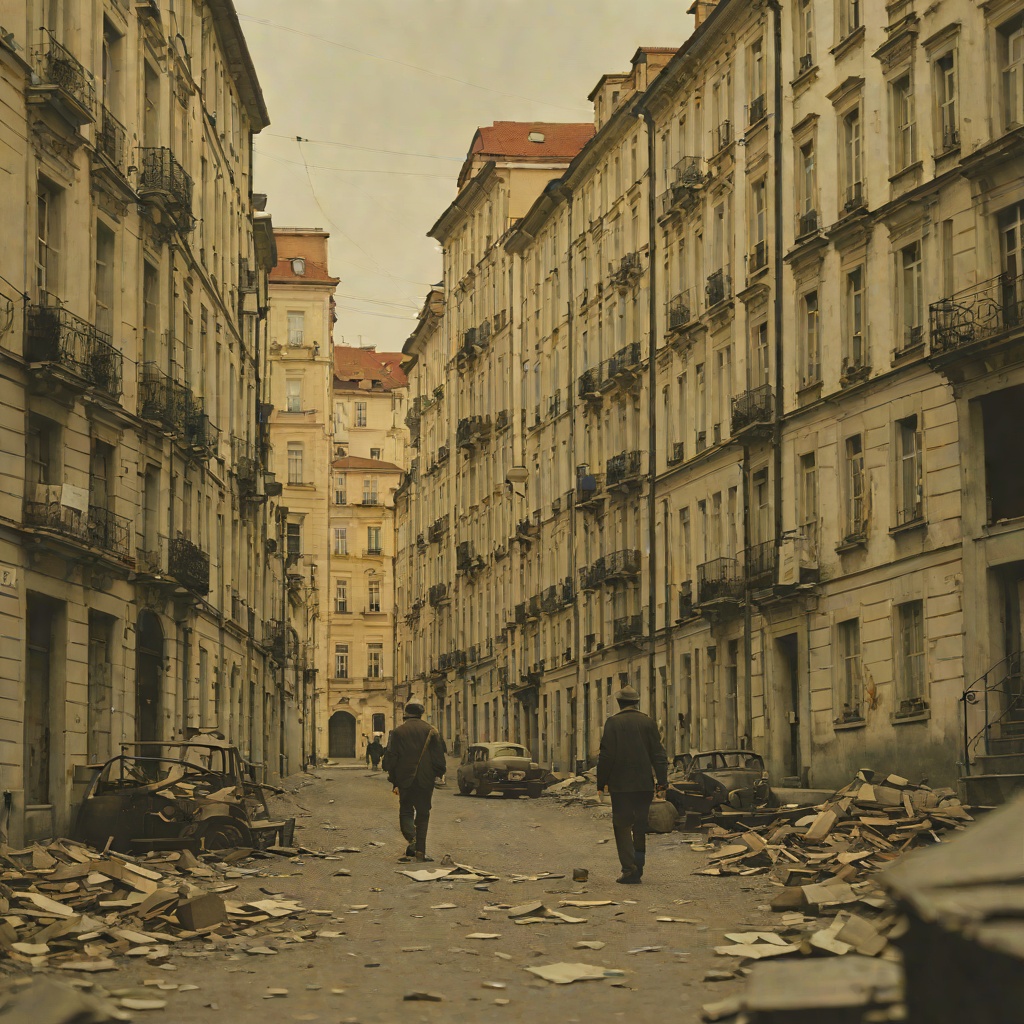
Moscow
City of GodMoscow enters the novel as the destination of Thomas Pemberton's most audacious undertaking: the search for Josef Barbanel's hidden ghetto diary. When St. Timothy's was deconsecrated and Pem was left unassigned while the See deliberated his fate, his first response was to assign himself to a hospice on Roosevelt Island. Yet it was in Moscow that his true mission unfolded—a quest that would carry him into the vaults of the KGB itself, transforming the Russian capital into the stage for an act of recovery that blurred the lines between priestly devotion, diplomatic negotiation, and outright con artistry.
The Quest for the Archive
Pem's search for the ghetto diary took him to Moscow, a city he described as "a really interesting place right now." His training as the Divinity Detective—his self-fashioned role as an investigator of sacred mysteries—stood him in good stead as he navigated the labyrinthine corridors of power. The vaults of the KGB, he later told Sarah, were "like a flea market," where the Russians had swept up anything that might conceivably be of importance, even though ninety-nine times out of a hundred they would never look at it again. "It took some time, but they'll sell you anything if the price is right," he remarked, revealing the strange economy of post-Soviet Moscow, where the detritus of a fallen empire could be purchased by anyone bold enough to ask.
The Negotiation and Its Methods
Pem's approach in Moscow was a masterclass in adaptive performance. He had flown into the city and made calls, speaking "as a priest to the fathers, a diplomat to the attachés, a con man to the hustlers." He flashed his roll, laid on a lot of attitude, and fearlessly penetrated the KGB. The intelligence officer who had questioned the father of the archive's keeper had signed his name and serial number on top of the chest, ordering the soldiers to remove it without disturbing the seal. Pem recognized this as the work of an intelligence officer who had swept up anything that might conceivably be of importance, and he exploited this bureaucratic indifference to his advantage. Yet even as he succeeded, he wondered about his own motives—whether he was incapable of an act that did not contain its own corruption, whether this had been at heart no more than a seductive stunt.
The City as Threshold
Moscow in Pem's account is a city of contrasts: the vaults of the KGB like a flea market, the fathers and attachés and hustlers all with their hands out like beggars. It is a place where the sacred and the profane intermingle, where a former priest could move between the roles of confessor, diplomat, and con man with equal fluency. The city's significance lies not in its geography but in its function as the threshold between the buried history of the Kovno Ghetto and its resurrection in the present. The archive that Barbanel had hidden in the earth of Eastern Europe, in its rubble, in the wreckage and ruination and dust of its Christian tradition, had been swept up by the Russians and deposited in Moscow's vaults, where it waited for someone with Pem's peculiar combination of audacity and reverence to retrieve it.
The Aftermath and the Journey to JFK
Having secured the chest, Pem arranged for its transport to New York, where it was impounded at JFK Airport until, at his request, he could get in touch with the Justice Department and have one of their attorneys present when it was cracked open. The circumstances of the unsealing had to be irreproachable, for if the archive included documentary proof of the identity of the ghetto commander, S.S. Major Schmitz, it would have to resist a challenge in court. Moscow thus became the origin point of a chain of events that would culminate in the emotional unsealing of the chest in the International Arrivals Building, where Sarah would find her father among the seven little boys in front of a wood cabin, looking into the camera in the full knowledge of death. The city's role in the novel is thus double-edged: it is both the place where the archive was recovered and the place where Pem's own doubts about his motives began to surface, the old familiar bleakness rising behind his eyes as he rode out to JFK in the rain, wondering if he was incapable of an act that did not contain its own corruption.