Srebnitsky's Defiance
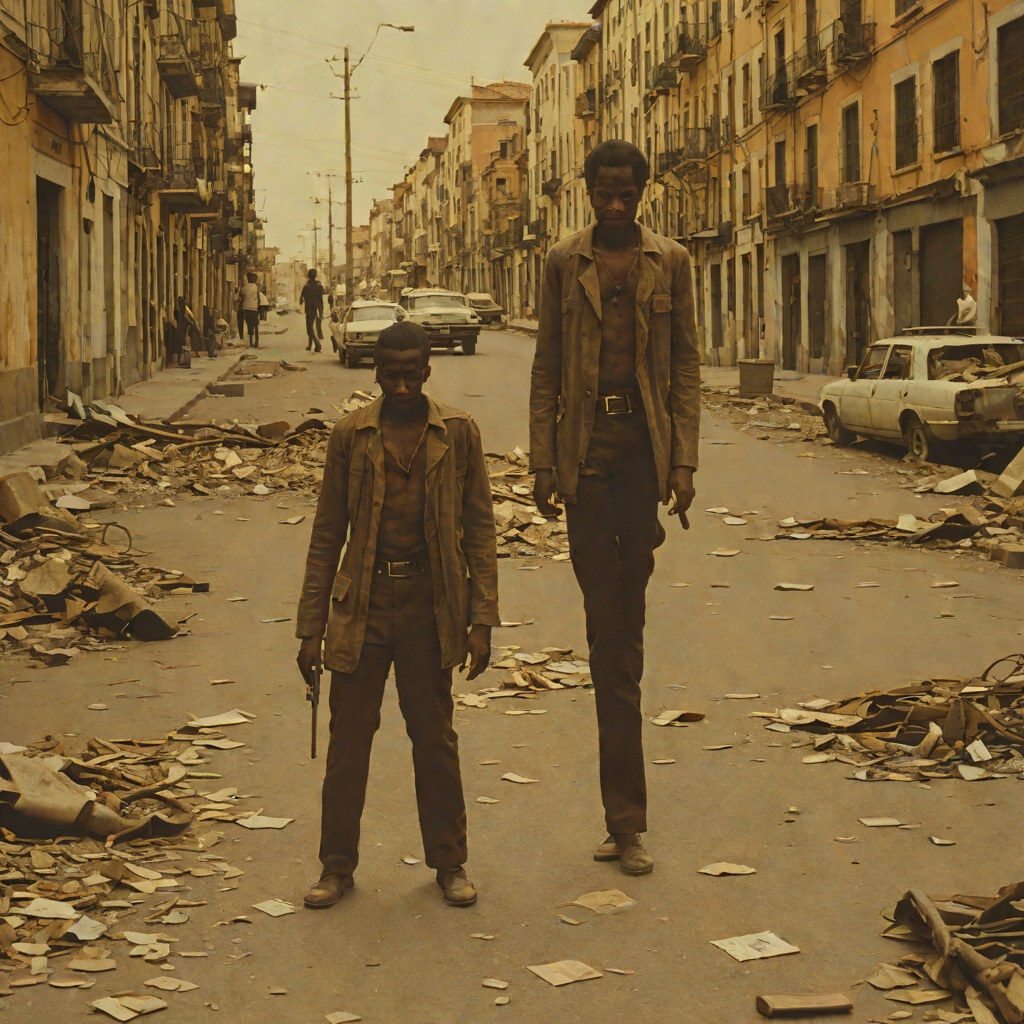
City of GodIn the snow of the Kovno Ghetto, an old tailor named Srebnitsky commits an act of defiance that will ripple through the entire community. The event unfolds when a portly German major, Schmitz, arrives to collect a uniform that Srebnitsky has sewn for him. Behind the tailor stands Srebnitsky himself, carrying the old uniform over his arm, while the major's driver springs forward to take it, opening the rear door for his commandant and then the front door, and occupying himself in the next moments settling the uniform carefully over the front seat. Schmitz poses in his smart uniform and black boots with his hands on his hips and a contemptuous smile on his face, and the confrontation begins with a question of payment.
The Refusal to Pay and the Tailor's Art
The exchange starts as a bitter joke. "But you won't pay?" Srebnitsky asks in a coy voice, and the officer laughs. "Not one pfennig for Srebnitsky's beautiful work, even the sleeves lined, and all of it done in double stitching?" the tailor continues, and he begins to laugh as well. "Not even a cigarette for the old tailor who has worked so hard, the artist who has made this garment for the beautiful major of the Third Reich?" They are both laughing heartily at this joke, a Jew expecting to be paid. The humor is a mask for the brutal reality of the transaction: Srebnitsky has poured his craft into the uniform, lining the sleeves and double-stitching every seam, and he will receive nothing for it. The laughter is shared, but it is a laughter of unequal power, the German major amused by the absurdity of a Jew expecting compensation, and the tailor joining in because he has no other choice.
The Slash of the Scissors
The mood breaks in an instant. Srebnitsky suddenly frowns, his shoulders rounded as he peers closely at something on the new uniform. In his hand are his scissors. "Forgive me, Your Excellency, a bit of thread, one moment," he says, and putting his hand to the chest of the commandant, who looks skyward to endure this final snip of perfection, he yanks at the lapel and slashes the scissors-point downward across the front. The gesture is so sudden that from one moment to the next a big flap of the ruined tunic hangs down to the officer's knee. The tailor's artistry, the careful lining and double stitching, is destroyed in a single motion, and the garment that was to be a symbol of German authority becomes a symbol of Jewish resistance. "Sew it yourself then, thief!" the tailor shrieks. "Thief, that's what you are, that's all you are. All of you, thieves, thieves of our work, thieves of our lives!" The accusation is not merely about the unpaid uniform; it is a condemnation of the entire German occupation, which has stolen the work and the lives of the Jewish people.
The Beating and the Witness
The major stands dumbfounded, and the narrator believes he had even cried out in fear. But his driver leaps upon the old man and clubs him to the ground with the butt of his pistol, then begins kicking him. "You dare to attack a German officer?" he shouts. "You dare to lift your hand!" He then aims his pistol at the stricken tailor and would have shot him then and there had the major not commanded him to stop. Holding his ripped tunic against his chest, Schmitz is like a woman covering her breasts, a humiliating image that reverses the power dynamic of the scene. He looks around to see who has witnessed his humiliation, and thank God he does not see the narrator's face, for the boy has turned his back and is disappearing into the alley between two houses. From this vantage point in the shadows moments later, the boy sees the car flash by in the street and listens to the fading sound of the motor. He then runs back to Srebnitsky, who lies in the snow where he has fallen, his head bleeding, coughing and poking at his throat and trying to speak. The boy kneels down beside him, and the old tailor begins to shake his head.
The Ghetto Reacts
The boy's arrival at the council office immediately stills everyone in that busy place, the pale terrified face of a child a warning signal they know all too well. What he has to say puts them on the alert. Several boys are summoned and dispatched to spread the word among the houses and shops for people not known to the Germans to go into hiding. The boy sits there dumbly while these boys, whose ranks he is to join, run off in all directions. In a matter of minutes, everyone in the ghetto knows what the tailor has done. After a while the news comes back that Srebnitsky has been apprehended and taken to the Gestapo headquarters. The question now is how the Germans will adjudicate his crime. People begin to gather in the street in front of the council office, and rumors are rife—the price for Srebnitsky's act would be thirty, fifty, a hundred Jewish dead. Several times Mr. Barbanel, the chief of staff, has to go outside and tell the crowd to disperse and go about their business.
The Calm of the Council
In clear distinction to the public, who are becoming increasingly agitated, the council staff remain calm. The calmest of everyone, perhaps the source of the calm, is the council president, Dr. Sigmund Koenig, a handsome man in his sixties, a man of great dignity, a good six feet tall. Eventually he goes outside and his mere appearance stills the small crowd that is gathered. He tells them he is awaiting a call from the ghetto commandant as to exactly what is to be done but that he doubts there is any immediate danger of a major action. He speaks almost in a whisper. Standing behind him in the doorway, the boy can barely hear what he says. Koenig wears no coat or hat, and the cold does not seem to bother him. He is neatly dressed in a gray double-breasted suit with a clean shirt and tie. The contrast between the agitated crowd and the composed president is stark, and it is Koenig's dignity that holds the ghetto together in the immediate aftermath of Srebnitsky's defiance.
The Meaning of the Act
Srebnitsky's defiance is a moment of pure, uncalculated resistance in a world where survival depends on submission. The tailor knows he will not be paid, and he knows the consequences of attacking a German officer, yet he chooses to destroy the uniform and to name the Germans as thieves. The act is both personal and political: it is the revenge of an artist whose work has been stolen, and it is the protest of a people whose lives are being stolen. The boy who witnesses the scene and carries the news to the council is marked by it, and his narration preserves the memory of the old tailor's courage. The event also reveals the structure of the ghetto's leadership, with the council working to contain the panic and Dr. Koenig's calm presence serving as a bulwark against the terror of reprisal. The threat of mass death hangs over the scene, and the question of how the Germans will adjudicate Srebnitsky's crime remains unresolved, leaving the reader with the knowledge that the tailor's defiance, however heroic, has placed the entire community in danger.