Thomas Pemberton and Sarah Blumenthal
City of GodThomas Pemberton and Sarah Blumenthal are joined by a relationship that begins in theological curiosity and gradually becomes a marriage without ever escaping the dead, the traditions, and the doubts that make it possible. Their union is not presented as a simple romantic resolution. Sarah is the widow of Joshua Gruen, a rabbi whose absence remains active in her household and congregation; Thomas is an Anglican priest moving through a crisis of faith toward Judaism. Their convergence therefore joins personal desire to religious reorientation, historical memory, and the question of whether ethical commitment can survive the collapse of doctrinal guarantees.
First Meeting and Immediate Recognition
Sarah first enters Thomas’s awareness through his visit to the small congregation associated with Joshua Gruen. He encounters a converted parlor serving as a synagogue, with an Ark, a platform for reading the Torah, shelves of prayer books, and rows of bridge chairs. Sarah, a rabbi at Temple Emanuel, is introduced as Joshua’s wife: a woman with a short light haircut, granny glasses, high cheekbones, and an unadorned smile. Thomas’s attraction is immediate, but his response is not confined to physical interest. He imagines what it would mean for Trish to wear his clerical collar and celebrate the Eucharist with him, then recognizes in Sarah and Joshua a domestic and spiritual partnership that exposes the incompleteness of his own life.
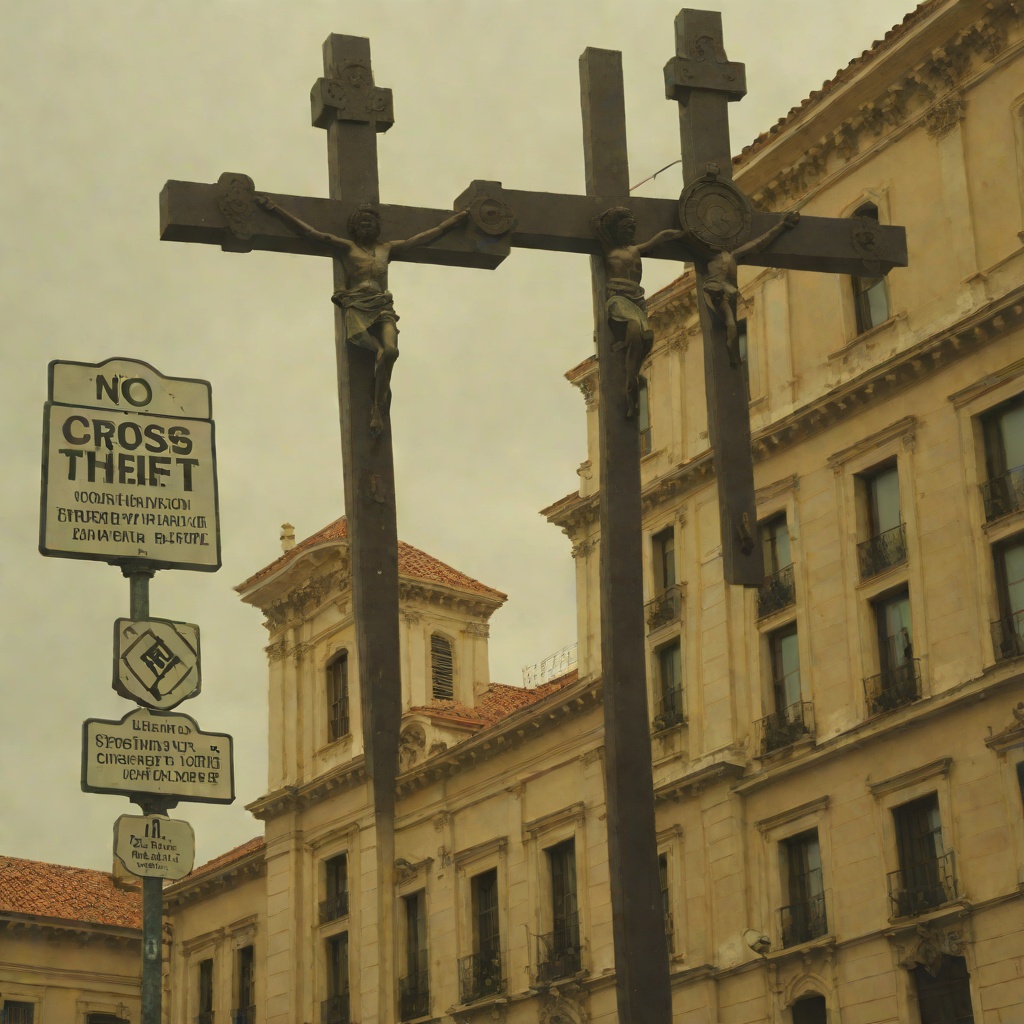
The relationship is initially mediated by Joshua’s disappearance and by the circumstances surrounding the brass cross of St. Timothy’s. Thomas sees Sarah in the orbit of a congregation destabilized by the cross’s theft and unexpected appearance on the synagogue roof, while his own priestly identity is being forced into a public theological crisis. Sarah is thus not merely a possible companion encountered after a mystery; she is part of the religious world that challenges Thomas’s assumptions about Christianity, Judaism, and divine authority.
Thomas’s private admiration becomes more precise when he reflects on Sarah’s welcome and self-possession. He describes her as naturally grave and modestly graceful, someone who seems to inhabit New York City while also living in a realm of ultimate concern. The distinction matters: he does not treat her as a saint removed from ordinary life, but as a functioning woman whose moral seriousness has become inseparable from the practical burdens of raising children, sustaining a household, and continuing a diminished religious community.
Grief, Friendship, and Slow Convergence
After Joshua’s death, Sarah remains responsible for their two sons and for what is left of the Synagogue of Evolutionary Judaism. Her condition is represented as deeper than ordinary mourning. She continues to function, raises the children, runs the household, and works for the small congregation, yet grief has become a durable spiritual condition rather than a temporary interruption. Thomas understands that this makes any new attachment ethically complicated, because Joshua’s presence persists in Sarah’s mind even when she begins to share time with another man.
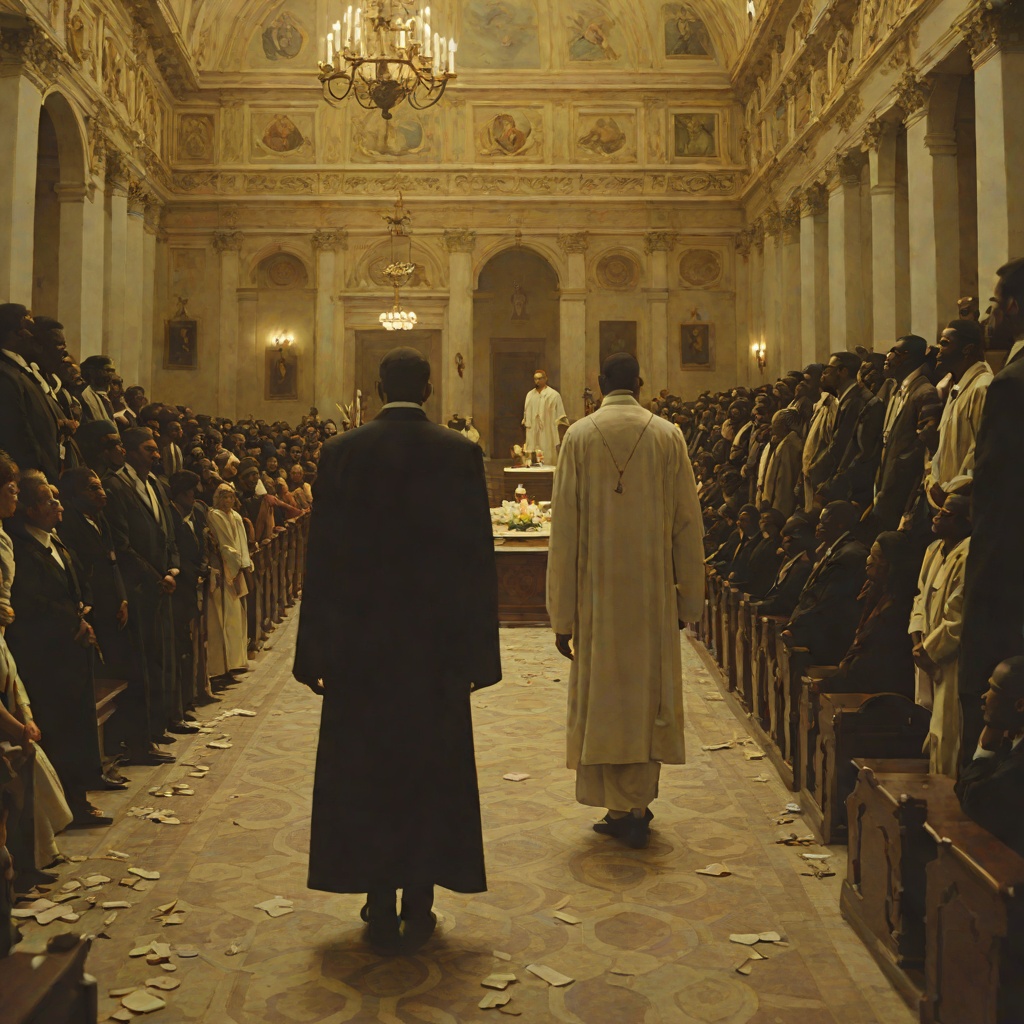
Thomas and Sarah’s closeness develops through her friendship with Thomas’s companion, Pem. On Friday evenings, Thomas goes with Pem to services at the Synagogue of Evolutionary Judaism, where Sarah conducts worship for only ten or twelve people, fewer than half the congregation’s number when Joshua presided. The reduced attendance gives their encounters an intimate, exposed quality. The congregation is not a triumphant institution but a remnant, and Sarah’s leadership places her within a community whose survival depends on personal seriousness rather than public strength.
Their social meetings reveal a courtship that neither participant initially names. Thomas sometimes joins Pem and Sarah for dinner at Amarillo on Broadway. When Sarah consents to come, Thomas feels like a chaperone because Pem and Sarah attend to one another with an intensity that they scarcely recognize. Their simultaneous attention to Thomas becomes an effort of restraint, as though both are afraid of what private proximity might permit. Pem does not want to descend into importunity, while Sarah is held back by the continuing presence of Joshua. The relationship therefore advances through patience and ethical hesitation rather than through a decisive romantic gesture.
Sarah’s mourning is not governed rigidly by a formal one-year rule. The Synagogue of Evolutionary Judaism treats memorialization as something that must arise naturally from the heart, and Thomas sees this flexibility as both humane and consequential. The period of grief may be more for the living than for the dead, a means of closure that allows the survivors to continue, but continuation cannot be forced. Sarah is already in the second year of her loss, and her gradual drawing together with Pem must proceed through psychological and moral inevitability rather than social convenience.
Religion as the Ground of Intimacy
Thomas’s attraction to Sarah grows within his larger argument with religious authority. In his sermon, he questions whether God is a story and whether the competing claims of faith can be distinguished except through the stories believers cherish. He distrusts the ease with which people submit to any claim of divine authority simply to become unburdened, yet he cannot dismiss the religious question. Sarah’s presence gives this abstract crisis a human form. She represents a tradition that is neither a simple refuge nor a decorative alternative to Christianity, but a disciplined way of carrying doubt, memory, and obligation.
Thomas also experiences history as a force that has bent both of them toward each other. His reflections move through sacrifice, the recurrence of civilization, and the suspicion that time and culture may be running backward. The idea that a part can be surrendered to save the whole becomes relevant to the relationship’s structure: Sarah has lost Joshua and carries the cost of survival, while Thomas must surrender the clerical identity through which he has understood himself. Their intimacy is therefore built from renunciation, not from an escape from renunciation.
The relationship becomes more explicit as Pem undertakes conversion studies with a rabbi other than Sarah, a former colleague of hers at Temple Emanuel. Sarah and Pem deliberately separate instruction from courtship, preserving a boundary that acknowledges both rabbinical responsibility and emotional vulnerability. Pem is grateful that circumcision was performed in infancy, but he still wants to enter the ritual bath in a mikvah before three witnessing rabbis. He imagines immersion as rebirth and finds its physical symbolism comforting, even comparing its baptismal quality to the Christianity he is leaving. His conversion is not merely a change of affiliation; it is an attempt to make his developing bond with Sarah part of a hallowed life.
Pem tells Thomas that, through Sarah, he is getting back to religion, though the return will reach farther back than Sarah may realize. He has been studying the history of Jewish wandering and difficulty, imagining a long trek through a thorny wood toward the one God. The language of return makes the relationship sound both personal and civilizational. Sarah is not simply welcoming a lover into her life; she is becoming the figure through whom Pem reinterprets the religious inheritance he had previously inhabited as a Christian priest.
Marriage and the Ethics of Memory
Thomas expects that Sarah and Pem will marry before Pem completes his conversion studies. Sarah’s progressivism, he believes, allows her to meet Pem halfway. Their marriage takes place downtown in the middle of the week, and there is no best man. Instead, Joshua’s sister Judy serves as best woman. The choice gives the wedding a visible ethical structure: Sarah’s joy does not erase her loss, and the marriage acknowledges Joshua’s continuing relation to both Sarah and the new couple.
At the reception, Pem speaks into a cordless microphone after the band stops playing. His double-breasted blazer hangs open, his tie is loosened, and his cowlicked forehead gives the scene an awkwardly triumphant physicality. He offers thanks for Sarah’s attention and promises to spend the rest of his life earning what she has given him. He also declares that he will soon be a Jew and will seek the joy of a hallowed life. The speech makes conversion a marital promise as much as a theological procedure: his future identity is bound to his responsibility toward Sarah.
Pem’s wedding address refuses to treat the marriage as private happiness alone. He connects their union at the end of the Christian millennium to the continuing catastrophes of their generations and to the deaths that made their coming together possible: the destruction of Sarah’s father’s childhood, Joshua’s death, and the possible death of redemption and hope for the species. The marriage is thus blessed and morally resonant, but its blessing is inseparable from historical damage. It does not redeem the dead or restore the world; it creates an obligation among survivors.
When Pem returns the microphone, Sarah crosses the room, hugs him, and kisses him. The gesture is the wedding’s clearest answer to the speech’s grave abstractions. Her embrace does not cancel the dead or resolve the theological crisis, but it confirms that the relationship has entered a public, bodily, and reciprocal reality. The couple’s union is enacted through ritual, speech, witness, and touch, while remaining haunted by the knowledge that no ceremony can resurrect the people destroyed by history.
Aftermath and Postsecular Significance
Sarah’s later address to the Conference of American Studies in Religion gives the relationship its widest intellectual context. She argues that doubt has been the great civilizer of the twentieth century: theological uncertainty, balanced belief, skepticism, and grief have restrained people more effectively than absolute conviction. In her account, true believers of many kinds have committed murder, while the impulse to excommunicate, satanize, eradicate, and ethnically cleanse is itself religious. Her preference is for symbolic comfort over historic guarantees, a position that clarifies the kind of religious life her marriage with Pem represents.
Their relationship therefore does not culminate in a return to unquestioned orthodoxy. Sarah continues to inhabit a progressive Judaism shaped by memory and uncertainty, while Pem approaches Judaism through the dissolution of his Christian identity. Thomas, watching them, sees a convergence that must be more than personal because both are committed to explicit moral seriousness. The marriage becomes a postsecular arrangement: religious forms remain powerful, but their authority is tested by doubt, catastrophe, and the ethical demand to remember those who cannot return.
The relationship also changes the people around it. Pem’s search for the ghetto archive transforms his appearance and vitality; he cuts his hair, loses some of his bulk, and moves with renewed purpose after completing his self-appointed quest. Thomas reads this change through a literary image of Christian knighthood, made possible by the fact that the beloved lady is Sarah, a rabbi and widow with two children on the Upper West Side. The image is affectionate but also self-conscious, revealing how Thomas turns the couple’s life into a narrative of quest, conversion, and reward while recognizing that the reward has been enabled by loss.
The final paradox belongs to Pem. He tells Thomas that he has never felt so completely Christian as he does while studying to become a Jew. The statement does not resolve the difference between the two traditions; it shows that conversion has made the underlying moral and spiritual seriousness of Christianity newly legible to him. Thomas and Sarah’s marriage consequently stands less for a completed doctrinal answer than for an unfinished practice: two people attempt to live faithfully after certainty has been damaged, carrying grief into ritual and allowing love to become a form of responsibility rather than an escape from history.