Yehoshua's Archive Smuggling
City of GodYehoshua's Archive Smuggling stands as the novel's most concentrated act of archival resistance: a boy's clandestine courier runs that carried Josef Barbanel's secret ghetto diary out of the Kovno Ghetto, across a river, and into the keeping of a Catholic priest who hid the materials in the earth of Eastern Europe. The operation was born of necessity when Barbanel, the chief aide to Dr. Koenig and the ghetto's unofficial historian, decided the archival material he had assembled—and that Greta Margolin had been hiding for him—was no longer safe within the ghetto walls. "It must be moved," he told Yehoshua in private, and from that moment the boy understood, without needing to ask, why he was being confided in: he was Barbanel's star runner. The danger was intoxicating to the boy, a feverish, unhealthy feeling, a drug, an amphetamine—the thrill of knowing that if he were caught he could be tortured and shot. Yet, as Yehoshua later reflected, knowing Barbanel, the expeditions were reasonably safe, for the bulk of the archive, a footlocker's worth, had already been transported over the bridge to the city by means of subterfuge or bribery that was never revealed to him. His task was to smuggle out the current material, wrapped in oilcloth and held with precious strips of adhesive tape to his chest and back, making perhaps seven, perhaps eight trips over as many weeks, from the late summer into the fall, feeling safer as the weather grew colder and he could add a sweater and a jacket over his shirt to cover the contraband.
The Archive and Its Keeper
The materials Yehoshua carried were the life's work of Josef Barbanel, a man who had become a historian by necessity. Whenever Barbanel received reports, he either wrote down verbatim what he was told or asked the person reporting to write a statement. He kept a diary in which he reported everything that happened, along with the relevant documentation: the latest regulations, the execution orders, the deaths, minutes of the council meetings, orders signed by the infamous Commandant Schmitz, proscriptions, dicta, identity papers for the work details—every imaginable item went into this history of his. Yehoshua often saw him writing, using whatever paper he had on hand, even unused student exercise books. The handwriting was a neat Yiddish, like stitches sewn into the page, the characters very small, the words flying off his pen line after line in his passion to say what happened each day, each moment, of their lives as captives. This supple, deft determination to put it all down, to record it indelibly as something of immense human importance, was illegal; the Germans, quite aware of their culpability, forbade unauthorized writings or photographs and had confiscated all cameras. But as the chief aide to Dr. Koenig, Barbanel had always to be writing something, and it was relatively easy for him to enfold his secret work within his formal duties. When Yehoshua, sitting on the bench in his office while he interviewed a new arrival, finally asked if he was by profession a historian, Barbanel looked surprised, then smiled and shook his head. "You are one smart kid, Yehoshua," he said. "Yes, I'm a historian, by necessity. But you wouldn't tell anyone, would you." It was a statement, not a question, and Yehoshua swore he wouldn't, and they shook hands on it.
The Smuggling Runs
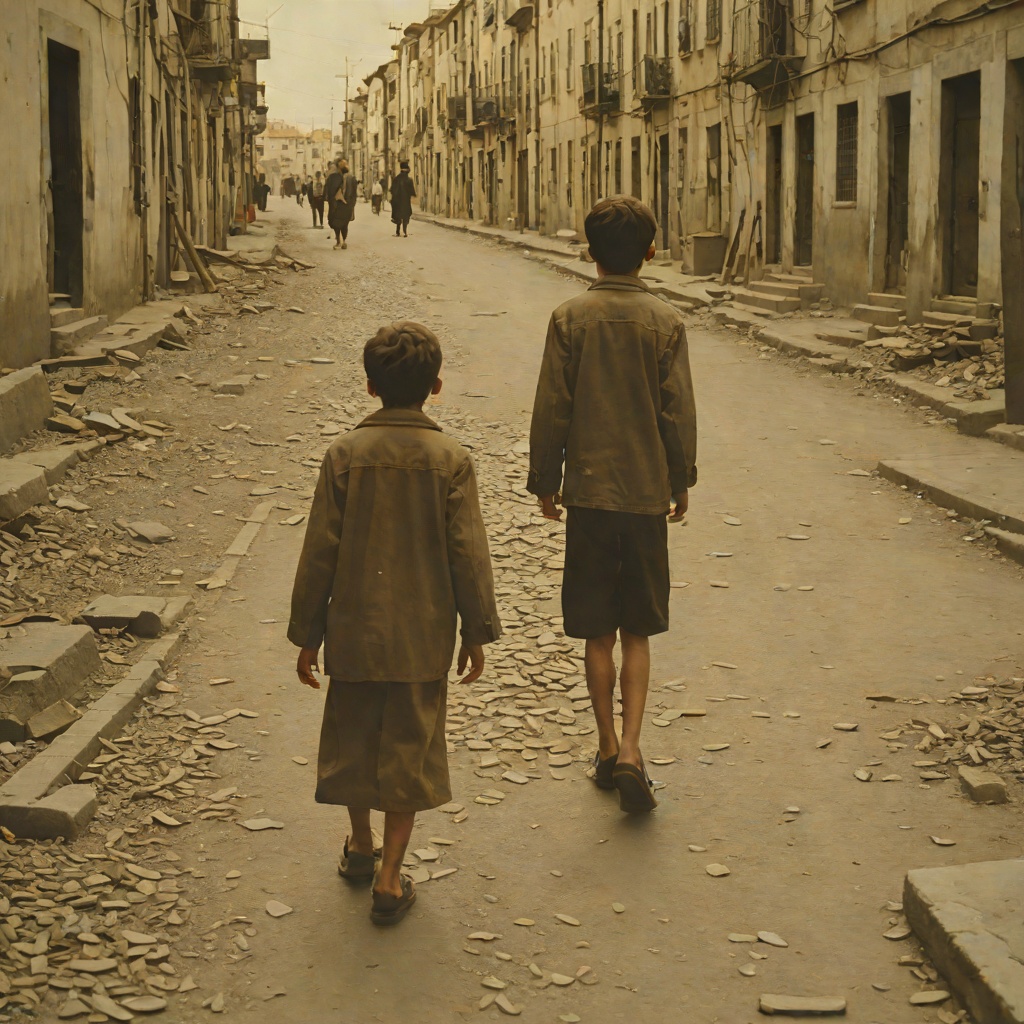
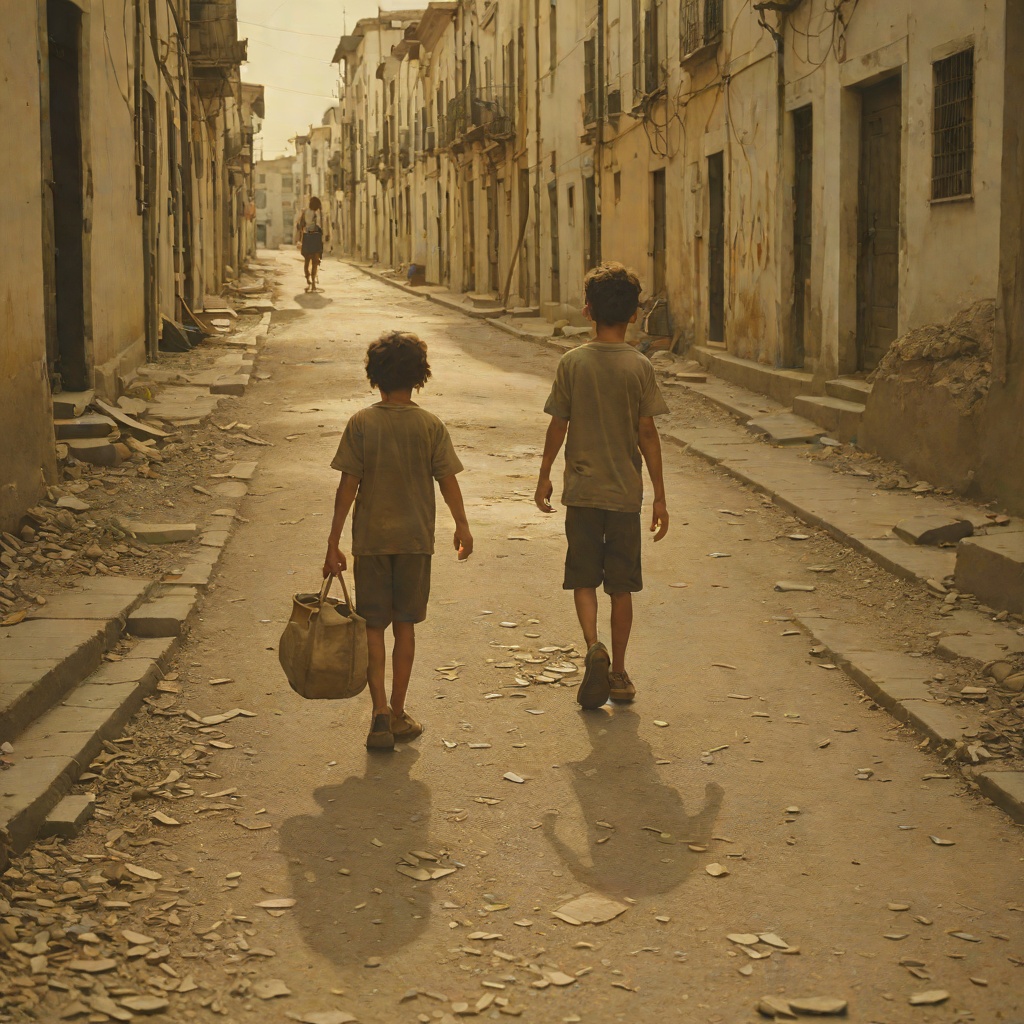
The operation required elaborate preparation to make the boy as inconspicuous, as non-Jewish, as possible for the city. His thick head of hair was trimmed closely and dyed to a color not exactly blond but certainly lighter. He was outfitted in clothing his own size, not too small as his own clothes were, and given a fairly decent pair of shoes, which he carried tied by their laces hung from his neck as he made his way out of the ghetto through an abandoned viaduct so antiquated that the Germans did not know about it. The access to this pipe was by means of the cistern inside a stone mill house. He was not entirely comfortable scurrying along in a crouch like one of the rats who lived down there, trying unsuccessfully to hold his breath because of the cold, rotten smell of iron viscera and earth and animal droppings. But it was not that far to go; the viaduct ended in a pile of boulders and rubble at the river's edge maybe a half-mile upstream of the barbed wire fencing. The procedure in which he had been trained required him, upon reaching a stone church in a neighborhood not far from the railroad station, to kneel and cross himself and then repair to one of the confessionals off to the side, on an aisle. Here he would wait for a few minutes until, having seen that the coast was clear, a priest, Father Petrauskas, opened the door and led him to his rectory. The moment he entered through the oaken doors was always the uneasiest moment of his journey, the church dark with banks of flickering votive candles that reminded him of the yahrzeit or memory candles lit in the ghetto for the dead, with gates like prison bars separating the altar from the people praying in the pews, and a large, painted, and very realistic plaster Christ hanging on his crucifix in the apse behind the altar with blood dripping from his forehead and hands and feet.
Father Petrauskas and the Hidden Record
Father Petrauskas was a kind man who would nod and smile in genuine friendship when he greeted the boy. Some of his teeth were missing; his head was shaven, and his face was so wrinkled with grooves, folds, and crosshatches that it seemed made of parchment. His eyes were slitted in his cheeks, and his black suit was tight on him and very shiny. After Yehoshua removed his shirt, the father would unwind the adhesive tape, always taking care where it had to be peeled from his skin, and accept the packets of material. When the boy was again buttoned up, the priest would give him something to eat—a piece of bread with jam, or some soup—and sit across the table from him and watch him eat. Yehoshua later wondered, without any evidence, whether this father may have been a Jewish convert to Catholicism. Somehow he was known to Barbanel as a trusted friend and had taken this risk for what, given the exigencies of the times, might have seemed an almost abstract cause: the cause of the historical record, the helpless cause of no redress but memory. Neither Barbanel nor Greta Margolin was to survive the destruction of the ghetto, and to this day those papers, by the time Yehoshua was aware of them already running into thousands of pages, volumes, a whole trunk full of material, are hidden there in the earth of Eastern Europe, in its rubble, in the wreckage and ruination and dust of its Christian tradition.
The Recovery and Its Meaning
Decades later, the archive surfaces in a scene that transforms the boy's desperate runs into a recovered inheritance. At JFK Airport, in a small office in the International Arrivals Building, Sarah, Pem, a young woman from the U.S. Attorney's office in New York, and various customs people watch as an inspector takes up a hammer and chisel and goes to work on a chest larger and deeper than Sarah had understood from Pem's description—she had imagined it as the size of a footlocker, but it is larger, deeper, homemade, hammered together with big heavy nails and metallic corner pieces, painted white but with raw lumber showing where the paint has flaked off. The customs man finds the rusted locks impervious and asks if he can pry off the hasps, which will splinter the wood; Sarah nods her approval, yet the sound of the splitting wood makes her wince, as if her father's history is seeping into the room. The inspectors lift out packages of various sizes wrapped in oilskin, with an oilskin lining against the inner sides of the chest—the fierce preservation of these materials unmistakable and, to Sarah, itself an urgent message that brings a sob to her throat. They unwrap the packages to find sheaves of paper bound in twine, booklets, manuals, folders, rolled-up blueprints, diagrams, stapled documents, envelopes of various sizes, each labeled in a small, neat Yiddish script. Finding nothing of interest to them, they replace everything and excuse themselves. Pem and the attorney dive in, discovering in notebooks, students' bluebooks, and unbound pages a diary in one increasingly familiar hand covering a period of three years, 1941 to the date in 1944 when the ghetto is dismantled and the survivors are marched to the railroad station, along with reams of documentation, rules and regulations issued by the Germans, innumerable orders with the signature of Commandant Schmitz. Among the forbidden little black-and-white photos Sarah finds a line of men and women marching to work behind barbed wire, a husband and wife and their child on a bench having their picture taken with cloth stars sewn to their coats, a body in a business suit hanging from a gallows with the head awry staring heavenward, and seven little boys in front of a wood cabin, wearing military-school caps and stars on their breasts that might possibly be imagined as insignia of their office as runners for the council—unsmiling little boys, underdressed, with short pants and sweaters and jackets they have outgrown, each of them at attention, feet together, arms pressed against his sides, looking into the camera in the full knowledge of death. Sarah finds her father in the first row. The recovery completes the arc of Yehoshua's Archive Smuggling: what the boy risked torture and death to preserve becomes, in his daughter's hands, a living testimony that collapses the distance between the historical record and the present, the newly dead being written down as she reads, with the thunderings of jets and the drone of passing traffic in her ears.