Anti-technology ideology
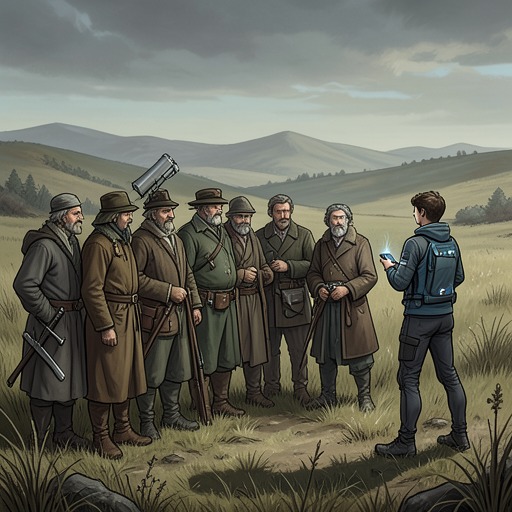
Clown in a CornfieldAnti-technology ideology in Kettle Springs turns generational distrust into a justification for control and, ultimately, violence. Sheriff George Dunne treats phones, the internet, music, and social media as possible forces corrupting young people, but the conspiracy’s exposure through digital records makes the story’s sharpest reversal: the technology condemned by its perpetrators helps identify them.
Claims and Public Rhetoric
At a town meeting, Sheriff George Dunne speaks into an existing atmosphere of anxiety about the Baypen factory investigation and the town’s future. Cybil Barton asks how the investigation is progressing after charges against Cole Hill were dropped. Sheriff George Dunne declines to comment on an ongoing investigation, then invites the crowd to hear his personal view off the record. By shifting from official restraint to an informal appeal, he presents the law as insufficient to protect the community and urges residents to unite against behavior he considers unacceptable.
Sheriff George Dunne links that appeal to the town’s economic and demographic anxieties. He recalls that Arthur Hill lost a child the previous year and that the factory burned the previous week; he also points to Kettle Springs’ declining population and portrays young people as indifferent to local history and heritage. His speech moves from grief and civic decline to a demand that the younger generation be brought into line and that residents take action. The rhetoric presents a threatened town and a wayward generation as parts of one crisis, allowing hostility toward young people to sound like community protection.
Technology as Explanation and Excuse
Later, Sheriff George Dunne explains his view directly to Cole Hill. He says that the young people involved in the night of Victoria Hill’s death were bad, whether they were born that way or made that way by phones, the internet, music, and social media. Yet he immediately qualifies the accusation: he is not blaming those things, because, in his reasoning, the result matters more than its cause. Technology therefore functions less as a carefully examined source of harm than as a list of modern influences attached to a prior judgment about young people.
Sheriff George Dunne gives that judgment a farming metaphor. He calls the young people a blighted crop and describes cutting and culling, rooting out the problem, and burning an entire harvest to save the land. The language converts a conflict between generations into a problem of contamination and eradication. It also makes his anti-technology rhetoric part of a larger claim: that young people are a threat to the town’s survival and that extreme action can be recast as necessary cultivation.
The Gap Between Rhetoric and Conduct
The novel places these accusations beside scenes in which young people use technology and behave recklessly, but neither detail amounts to proof that technology caused the harms Sheriff George Dunne assigns to it. At the reservoir, Tucker Lee handles an M-80 firecracker with its fuse still burning and initially dismisses the danger; Cole Hill tells him to put it out. At Founder’s Day, Tucker Lee recalls being drunk, planning fireworks, swapping days with Dave Sellers, and hiding sparklers, while remaining unsure whether he placed the M-80s that contributed to the parade’s multi-float collision. These incidents establish real carelessness, while also distinguishing specific actions and failures of judgment from Sheriff George Dunne’s sweeping indictment of a generation.
At Tillerson’s, Matt Trent and Ronnie Queen film an incident they call an accomplishment. Cole Hill confronts Matt Trent, warning that their actions could have got the group killed; Matt Trent replies that they did not. The camera and the boastful recording sit awkwardly beside Cole Hill’s recognition of the danger. In another argument over responsibility, Cole Hill says Baypen factory was his family’s property and had been empty for over a year when he burned it; Tucker Lee defends him by stressing that no one was hurt and that the fire got out of control. These episodes show people minimizing risky or destructive conduct, but they do not establish the technological causes Sheriff George Dunne invokes. His language takes disparate grievances and incidents and makes them evidence for a predetermined generational case.
Digital Evidence and the Ideology’s Reversal
The conspiracy’s practical failure exposes the contradiction at the heart of its anti-technology posture. After the Federal Bureau of Investigation arrives, Arthur Hill’s phone records, sheriff’s-office emails, and GPS data from phones that had pinged at Kettle Springs Improvement Society meetings help investigators identify accomplices. The conspirators’ digital traces connect people who had tried to conceal their involvement; the records make their membership and movements legible to investigators.
Quinn Maybrook recognizes the irony: the phones the conspirators hated are what help get them caught. Many of the clowns, especially Sheriff George Dunne, had not been technically capable of covering their digital footprints, and the investigation produces questioning and arrests. The story thus distinguishes the conspiracy’s denunciation of technology from the actual means by which it is undone. Its leaders invoke modern devices as symbols of youth’s supposed corruption, yet their own reliance on phones and email leaves a trail.
The aftermath also undercuts the blighted-crop doctrine’s claim to necessity. When school resumes at the beginning of December, around twenty students who had been at the Tillerson B-field that night are among those returning; roughly fifteen other students had not attended the party. The young people the conspirators sought to cull persist. The ideology’s rhetoric had treated an entire generation as a single diseased mass, while the survivors and nonattendees make visible the individuals that metaphor erased.