Kettle Springs
Clown in a CornfieldKettle Springs is a small Missouri town shaped by cornfields, economic decline, and a widening conflict between generations. At first it appears to Quinn Maybrook as a possible yearlong stopover after leaving Philadelphia; by the end, it has become the place she chooses to defend as home. Its streets and fields make the town more than a backdrop: they give the conspirators’ farming metaphors a physical setting, and make the survivors’ decision to remain a rejection of the violence committed in its name.
Setting and First Impressions
When Quinn arrives, she expects Kettle Springs to be little more than a quiet, sleepy town surrounded by cornfields. The first view complicates that judgment: there is more to see than she anticipated, enough that she can imagine making the coming year at least partly enjoyable. Yet its layout also feels confining. Her new house is a five-minute ride from downtown, and Main Street seems to be both the central road and practically the only way out, giving the place the air of a cul-de-sac.
Downtown offers a modest collection of businesses: a fifties-style diner, a bookstore Quinn imagines as devoted to secondhand romances and mysteries, a second-run cinema, and two thrift stores, one already shuttered. The Eureka Theater sometimes shows newer films, though its usual fare is older; the frozen-yogurt shop that once offered another diversion has closed. Quinn compares the theater and thrift shops with the trendier equivalents in Philadelphia, but recognizes that in Kettle Springs they count as premium entertainment. The mixture of small pleasures and visible limits establishes the town as neither wholly empty nor flourishing.
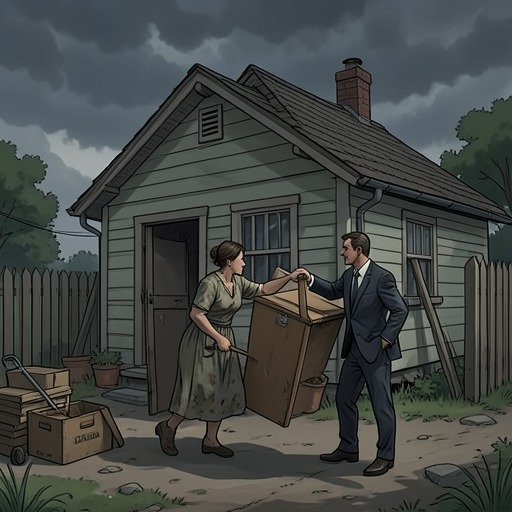
The route toward school gives Quinn a harsher measure of its condition. She chooses the less depressing of two cross streets, passing larger, more widely spaced houses marked by faded decorations, lights tangled in overflowing gutters, and flowers dying in their pots. The details are not simply signs of age: against her memory of Philadelphia, where decay is continually demolished and replaced, they suggest a town that has stopped renewing itself. Quinn’s impression is that Kettle Springs has left its best days behind and given up.
Industry, Fields, and Local Identity
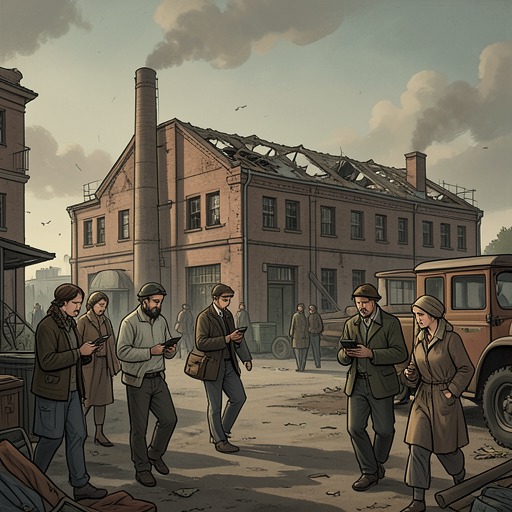
The abandoned Baypen factory is a conspicuous reminder of the town’s changed prospects. Quinn sees it from her window and wonders whether it made clowns, because a clown is associated with the site. Ruston Vance explains that the clown is Frendo, Baypen’s mascot, while the company made corn syrup. The refinery burned down, and the closure had consequences beyond the factory grounds: the frozen-yogurt business had also disappeared. The industrial ruin thus connects a lost local enterprise to the limited choices Quinn finds in town.
Cornfields frame both the landscape and the town’s political imagination. Sheriff George Dunne tells a public meeting that the law may not be enough to preserve the community as he knows it, and invokes the loss suffered by Arthur Hill, one of his oldest friends. Later, Dunne gives the violence behind this rhetoric its bluntest form: he describes young people as a blighted crop and argues for cutting, culling, and burning a harvest to save the land. The surrounding fields make that analogy immediately legible, but also reveal its distortion. A metaphor borrowed from agricultural maintenance becomes a justification for eliminating a generation of people.
Conflict and the Town’s Cost
The attack exposes how far the restorationist vision has turned against the town’s young residents. Cole Hill identifies its logic as a demand to make Kettle Springs great again, one that treats generational disagreement as proof that young people deserve to be wiped out. The town’s streets, refinery, school, and surrounding fields therefore sit inside a larger struggle over who belongs to its future. The conflict is not only between old and young, but between preserving a preferred image of the community and allowing its living inhabitants to change it.
The scale of the aftermath becomes visible two months later. Roughly 20 percent of Kettle Springs’ population is dead, headed to prison, or gone. The figure gathers several different consequences into one measure: deaths, criminal accountability, and people who have left. The violence has not restored the town to an earlier condition; it has radically diminished the community in which that promise was made.
Aftermath and Persistence
Quinn persuades her father, Glenn Maybrook, that they should stay. Leaving would have been an easy way to put the attack behind them, but she regards the town as their home now and sees retreat as allowing the killers to win. That choice does not mean the experience has left her untouched. Her hands sometimes shake, she keeps lights on around the house, and her dreams remain terrible. Staying is instead an effort to refuse the attackers’ claim to the place.
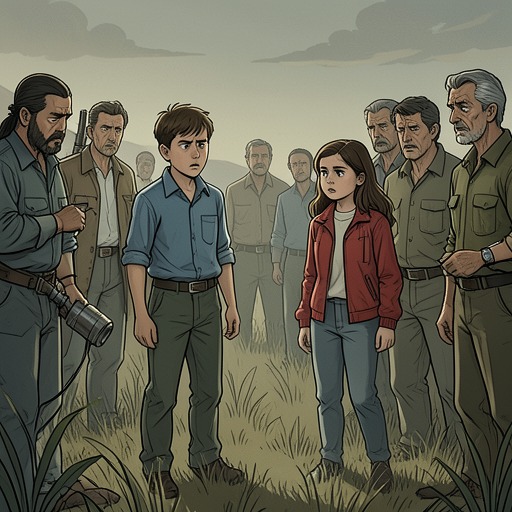
The town’s recovery begins amid an unexpected influx. Television crews, state and federal law enforcement, and true-crime documentarians arrive; their need for lodging and food brings a sustained, months-long boost to the local economy. School resumes at the beginning of December. Many returning students had been at the Tillerson B-field party, survived being locked in a barn, and escaped into the corn before further clown reinforcements arrived. Other students had not attended the party at all. For Quinn, their continued presence confirms that the supposed blighted crop has not been culled: even if she, Cole, and Ruston Vance had died in the refinery, the young people would have persisted.
The investigation also turns the town’s technological antagonism back on its conspirators. Arthur Hill’s phone records, emails from the sheriff’s office, and location data from phones present at Kettle Springs Improvement Society meetings help investigators identify accomplices. The devices their opponents despised become evidence against them. Meanwhile, Kettle Springs’ public image changes: businesses remove Frendo-themed displays, and residents paint over murals and signage or wash the clown from them. The town remains scarred and diminished, but its survivors continue living there, and its streets begin to shed the mascot that had come to represent the violence.