The survivors’ post-traumatic stress
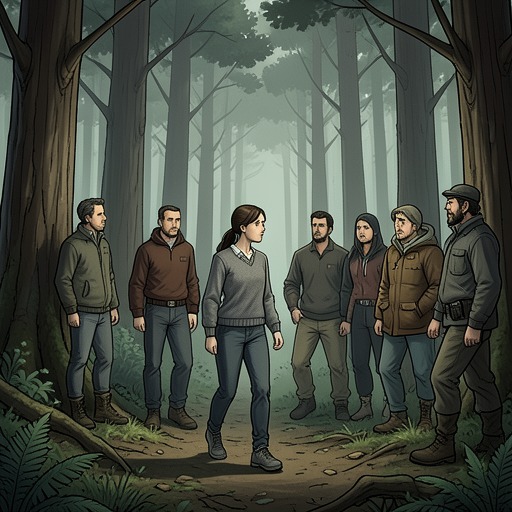
Clown in a CornfieldThe survivors’ post-traumatic stress persists beyond the attack, shaping ordinary moments as well as the decision to remain in Kettle Springs. Quinn Maybrook, Cole Hill, and Ruston Vance are all in counseling, but their symptoms differ: vigilance and readiness to strike in Ruston, a checked impulse in Cole, and shaking hands, constant lights, and terrible dreams for Quinn. Their recovery is neither immediate nor uniform, and the story treats the marks left by violence as changes that endure into daily life.
Signs That Persist
At the diner, the three survivors sit together in a quiet that does not mean they are at ease. Cole begins to check his phone, catches himself, and places it facedown on the napkin holder. Ruston tries to appear as though he is not watching the door, but remains alert to each patron, coiled and ready to strike. Quinn recognizes that of the three, Ruston seems least likely to get over the experience soon. Their shared counseling does not make their responses interchangeable: even in company, each carries the aftermath differently.
The changes are also physical, though not all are symptoms of distress. Doctors shaved Ruston’s head to treat his burns; as his hair grows back, it is much shorter on the burned side. Cole has gained ten or fifteen pounds, trimmed his long hair, and no longer has sunken eyes. Quinn sees the two boys as if they have switched places. The contrast makes recovery visible without suggesting that either has simply returned to who he was before.
Quinn’s Changed Daily Life
Quinn cannot identify many physical differences in the mirror, though she suspects her father could see them. She does know that she feels different. Her hands sometimes shake, and she keeps the lights on throughout the house. The smallness of these habits does not make them insignificant: the attack has entered the routines by which she tries to feel safe.
Her dreams were terrible even before the attack, beginning after her mother’s death; now she has also lived through another terrible experience. The narrative places this new trauma beside an older source of suffering without collapsing one into the other. Quinn’s continuing nightmares therefore belong to a longer history of grief as well as to the violence she has survived.
Staying in Kettle Springs
In the immediate aftermath, Quinn persuades her father, Glenn Maybrook, that they should not leave town. Leaving would have offered a way to put the attack behind them, but Quinn believes retreat would mean that the perpetrators had won. She calls Kettle Springs their home now and understands the bloodshed as part of what has bound them to it. Her choice does not erase the symptoms or make the town safe again; it gives the survivors’ continued presence a deliberate meaning even as they cope with what happened.