Conan's prayer to Crom
Conan the BarbarianConan's prayer to Crom is the spiritual fulcrum of his entire saga, a single, desperate moment of supplication that breaks a lifetime of silence between the Cimmerian and his god. Uttered on the night before the climactic battle at the Burial Mounds, the prayer is not an act of devotion but a stark negotiation, a warrior's final request for a single boon: revenge before death. It is the culmination of a spiritual journey that began in childhood with his father's teachings about the secret of steel and ends with Conan's own understanding of what truly matters—not the blade, but the man who wields it. The prayer's immediate aftermath, the beheading of Thulsa Doom, confirms its power and its place as the narrative's decisive spiritual event.
The Silence of a Lifetime
Conan's relationship with Crom was defined by a profound and deliberate distance. As he explained to his friend Subotai, "Crom, father of stars, king of gods and men," was a god his people seldom prayed to, and he himself never did. The Cimmerian's theology was one of cosmic indifference: Crom is "aloof in his high heaven, indifferent to the needs and prayers of mortals." He does not reward sins with punishments, nor does he care about the affairs of puny men. This belief was forged in the crucible of his early life, from the brutal raid on his village by the Vanir to his enslavement on the Wheel of Pain, where he learned that no god would intervene to spare him suffering. His worldview was one of radical self-reliance, a philosophy instilled by his father, Corin, who taught him that in all the world he could trust no one—neither man nor woman nor beast, neither spirit nor demon nor god—but only a blade of well-forged steel. The prayer, therefore, represents a monumental break from a lifetime of stoic silence, a concession that even the most self-sufficient man may, in his final hour, seek a witness.
The Content of the Supplication
Standing in his lonely vigil as the stars filled the dark vault of heaven, Conan's prayer is a masterpiece of grim pragmatism. He begins by acknowledging his own inadequacy: "Crom, I have no tongue for prayer." He does not flatter the god or beg for mercy, but instead states the hard truth of his situation: "to you the outcome of this battle does not matter. Neither you, nor any other, will remember why we fought or how we died." This is not a plea for salvation but an acknowledgment of the god's nature. The heart of the prayer lies in its appeal to shared values: "But valour pleases you, Lord Crom, and to me it is important. This night three brave men stand against many—that you may remember." He offers his courage and his blood as a sacrifice, a tribute worthy of a god who values strength above all. The final request is stark and absolute: "And for my courage and my blood, I ask one thing alone: grant me revenge before I die." It is a transaction, a warrior's bargain, offering the only currency he has—his valor—in exchange for the only thing he desires.
The Context of Desperation
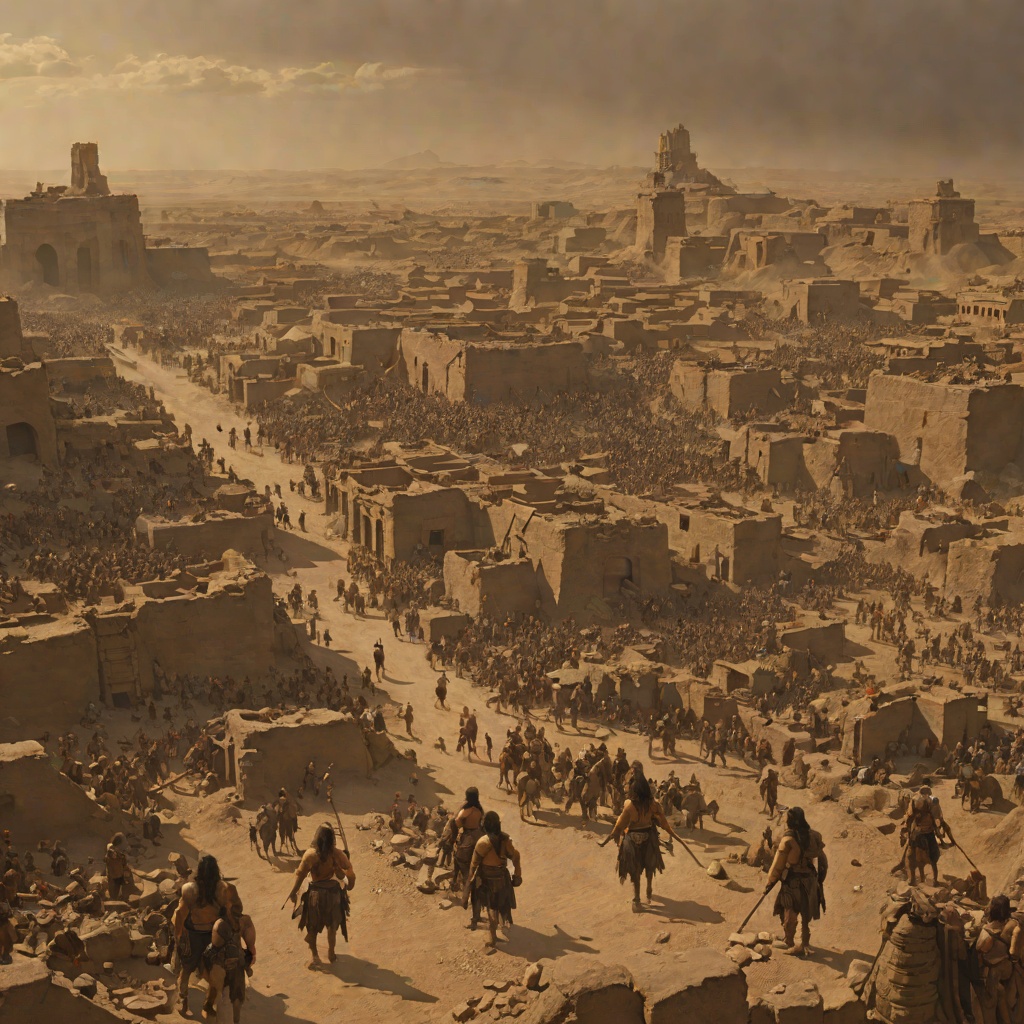
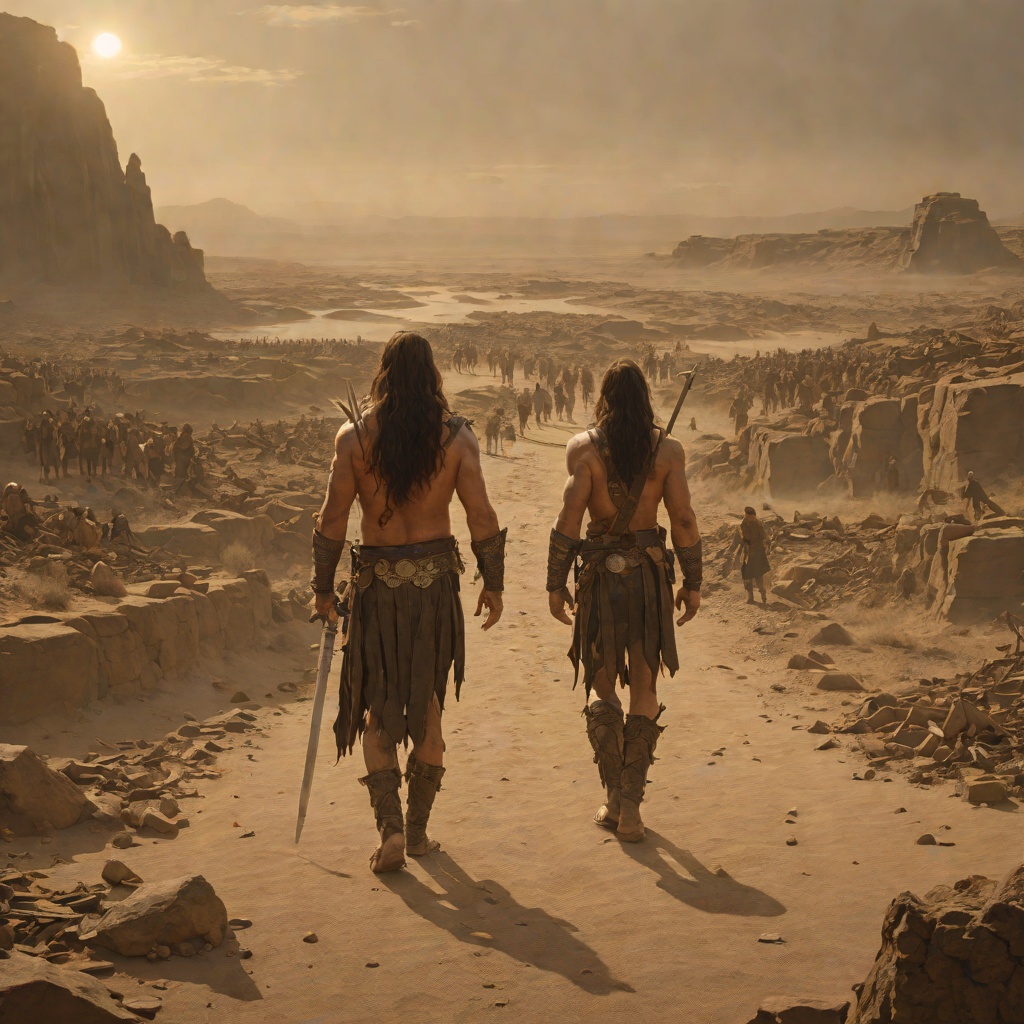
The prayer is born of a moment of profound isolation and imminent doom. Conan, Subotai, and Valeria stand alone against the vast forces of the Cult of Set, having just endured the Herculean labors of a day of preparation. The air is filled with the unearthly melody of Yasimina's chanting, a snake god's hymn designed to lure the innocent to destruction. Conan, depleted and facing almost certain death, looks up into the windswept sky and breathes a supplication. This is not a moment of triumph but of quiet desperation, a last resort for a man who has always relied on his own strength. The prayer is a recognition of his own mortality, a stark contrast to the cult's death-worshipping philosophy that he had encountered in Shadizar, where the servants of Set were said to worship Death itself. In this context, Conan's prayer is an act of defiance, a refusal to accept death without meaning, and a final assertion of his own code in the face of overwhelming odds.
The Answer and the Aftermath
The prayer is answered with terrifying immediacy. In the climactic confrontation at the Mountain of Power, before the frozen faces of the faithful, Thulsa Doom reveals his true nature, his features elongating into the scaly serpent head of the ancient snake-men. In that moment of revelation, Conan's sword "sighed as it swept up in a great arc and clove the swaying snake head from the human body." The severed head rolls down the long flight of stairs to rest beside the fountain pool. The revenge Conan sought is granted. In the aftermath, he speaks his own eulogy for his enemy and his father: "My father was the light of day; Thulsa Doom, my night. Yet in one thing he spoke true. What matters is not the steel within the blade, but the steel within the man." The prayer, and its answer, complete the circle of his life, transforming the boy who was told to learn the riddle of steel into the man who understands that the riddle is not about the weapon, but about the soul that wields it.
The Thematic Significance
The prayer is the narrative's most explicit statement of its core philosophy, a philosophy that echoes the Nietzschean ideal of master morality. It affirms that suffering is the forge of strength, that the heart of a man, like unworked iron, must be hammered by adversity and forged by suffering until it becomes as steel. Conan's prayer is not an act of submission but of self-assertion; he does not beg for salvation but demands a reckoning. It is a rejection of the cult's death-worship and its promise of eternal life in the coils of the Wise Serpent, in favor of a single, meaningful act of vengeance in the mortal world. The prayer elevates the warrior's ethos above all else, making personal valor the only thing that matters to the gods and to the man himself. It is the moment Conan fully comprehends the message his father strove to impart on that lightning-riddled night: out of suffering is born strength, and only through pain and deprivation does a human heart become as strong as steel. The prayer is the final proof that he has mastered the riddle, not of steel, but of his own life.