Conan's vow
Conan the BarbarianConan's vow is the twin oath sworn by the young Cimmerian in the slave pens of Thrudvang, binding himself never to weep again and to make his tormentors die for their cruelty. It is the emotional and moral engine of his entire saga, transforming the grief of enslavement into a lifelong, unbreakable purpose of vengeance and self-mastery.
Origins in the Raid and Enslavement
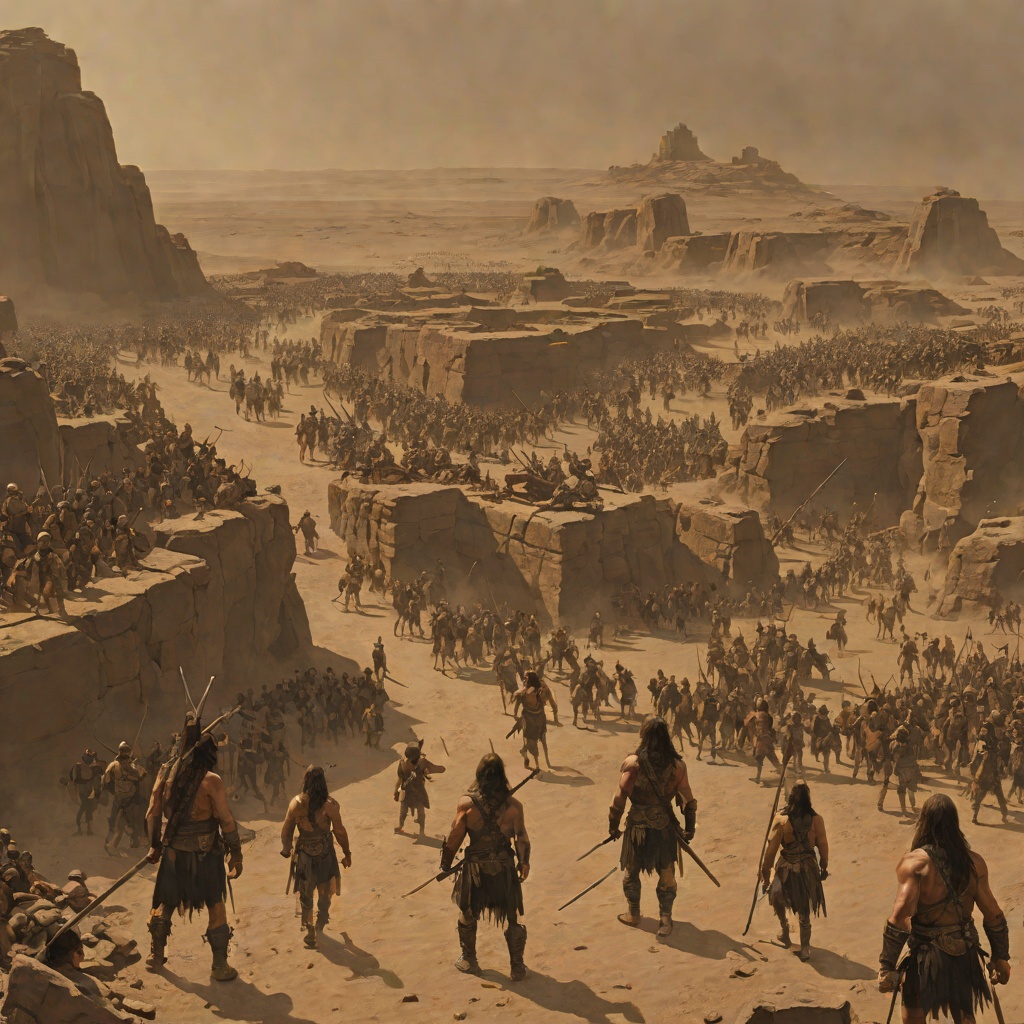
The vow was born from the catastrophe that shattered Conan's childhood. When the Vanir raiders crashed through the bushes on a frozen dawn, their horses shod in iron shattering the thin ice of the stream, they swept down upon the hamlet with axes, spears, and swords. Corin the smith, Conan's father, roared and plunged from his hut swinging his blacksmith's hammer, but the raid overwhelmed the village. The boy was taken captive and herded with other prisoners through the palisaded gateway of a Vanir town called Thrudvang, driven like cattle into a slave pen where he spent the night on hard clay sparsely strewn with dirty straw. At dawn, the stronger captives were chained by rusty manacles to a massive wheel whose spokes were stout logs, polished smooth by the pressure of human hands. This was the Wheel of Pain, grinding grain to powder beneath one enormous millstone upon another. The captive women and girl-children of his village were led away to face a different, perhaps even uglier fate, and Conan never heard of them again.
The Moment of the Oath
At the Wheel, Conan endured the lash of the Master of the Wheel, a burly, swarthy man who seemed an ogre to the labouring children, standing on the incline above the shallow pit wrapped in greasy furs, his sharp eyes watching hawk-like for the laggard. When an exhausted boy fell to his knees, a vicious rawhide whip sang its sibilant song, laying crimson welts on pitiful shoulders until the whimpering wretch staggered to his feet. One such moment broke through Conan's endurance. He shook his unshorn black mane and dashed a tear away. In that instant, a threshold was crossed: hopelessness and resignation could penetrate no further, and a new kind of courage was born within his heart. The emotion that took possession of him was rage, hot and unforgiving rage. His lips drew back from his strong teeth in a savage snarl, and wordlessly he made a vow to his indifferent northern gods: never again should lords or men or devils wring from his eyes a single tear. And he made another vow in the silence of his heart: men shall die for this. Then, with all his strength, he leaned against the spoke of the Wheel of Pain, and the wheel groaned and creaked as it began again its endless circuit.
The Vow as a Forge of Character
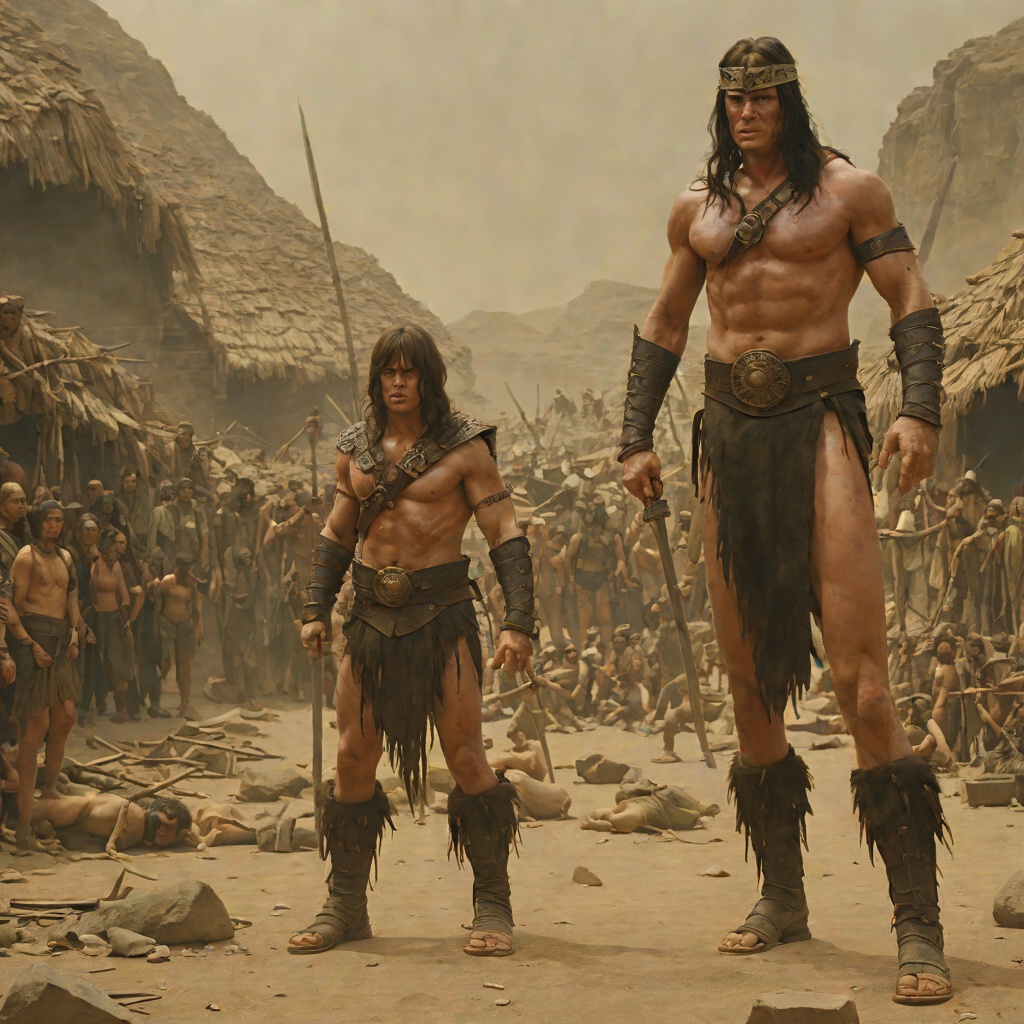
The vow did not merely console Conan; it remade him. Nurtured by the fires of rage, a new-found pride, and the courage to endure, he grew into a man. The years of back-breaking labour toughened his sinews and made his muscles bulge, giving his body the strength and flexibility which soft iron gains when it is heated in the furnace and pounded by the hammer of the smith. Though his days were blurred by a monotony of crushing toil and his body held in chains, Conan found that his mind was free, free to soar like the marsh fowl on wings of hope. The vow became the inner counterpart to the outer forging of his flesh, a promise that his spirit would remain unbroken even as his body was shaped by suffering. This dual forging echoed the lesson his father had imparted on the storm-riddled ridge: the heart of a man is like a piece of unworked iron, hammered by adversity and forged by suffering nigh unto the point of breaking, purged and hardened in the fires of conflict, purified and shaped on the anvil of despair and loss. Only when the heart has become as steel is a man worthy to wield a keen-edged sword in battle.
The Vow in Action: From Pit to Throne
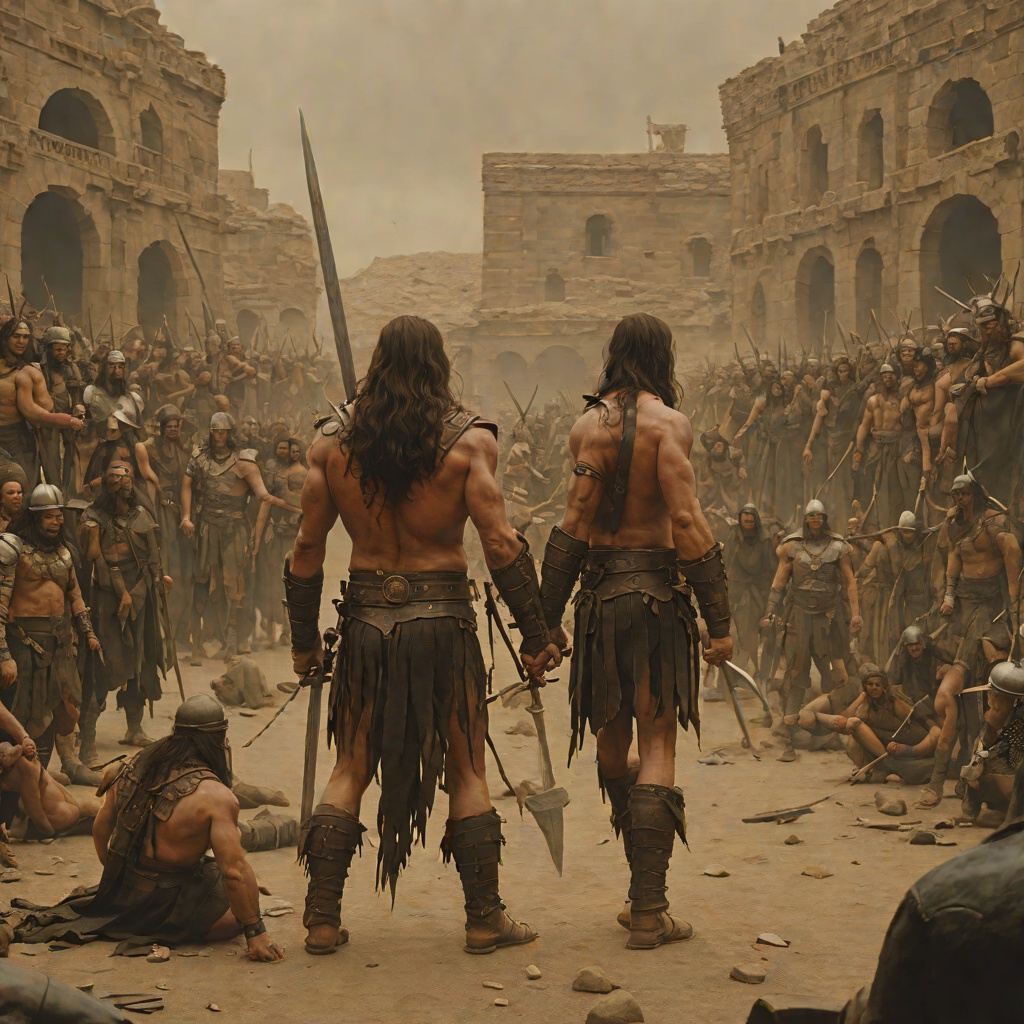
The vow's power was tested and proven in the years that followed. When the Hyrkanian general asked the young barbarian what was the best of life, Conan's mouth twitched in a shadow of a smile as he replied that it was to confront your enemy face to face, to see his hot blood spill upon the earth, and to hear the lamentations of his women. The general warned Toghrul that the Pit had not broken the spirit of his champion, and that the young tiger might some day turn and rend him. The vow also governed Conan's conduct in love and in war. When the witch of the firelight offered him the price of her passion, he gave himself over to the ecstasy of her embrace, but her whispered warning of Shadizar of Zamora, the crossroads of the world, only pointed him toward the path of his vengeance. Even in the climactic confrontation with Thulsa Doom, the vow's logic held. Doom claimed that he had made Conan a champion, a hero, a veritable demigod through pain and suffering, and called Conan's desire for revenge a waste and a pity. But Conan, unimpressed, answered that Doom had never met a real man on equal terms and fought him face to face or hand to hand, and that Doom had slaughtered his people, chained him to the Wheel of Pain under the lash of the Vanir, and doomed him to be a slave fighting in the Pit. The vow was fulfilled when Conan's sword sighed as it swept up in a great arc and clove the swaying snake head from the human body of Thulsa Doom, the severed head rolling slowly down the long flight of stairs to rest beside the fountain pool.
The Vow's Thematic Significance
The vow is the narrative's moral keystone, binding together the themes of suffering, strength, and steel. It transforms the passive grief of a child into the active will of a warrior, and it gives Conan's vengeance a sacred, almost religious character, sworn before his indifferent gods. The promise never to weep again is not merely a personal resolution but a declaration of self-ownership, a refusal to let external powers wring anything from him against his will. The promise that men shall die for this converts his suffering into a debt that must be paid in blood, and it is this debt that drives him across the world, from the Wheel of Pain to the Pit, from the witch's firelight to the Mountain of Power. In the end, the vow is fulfilled not only in the death of Thulsa Doom but in the realization of the riddle his father taught him: what matters is not the steel within the blade, but the steel within the man. The vow was the first forging of that inner steel, the moment when Conan chose rage over despair and made himself the master of his own fate.