Have I solved the riddle of my life
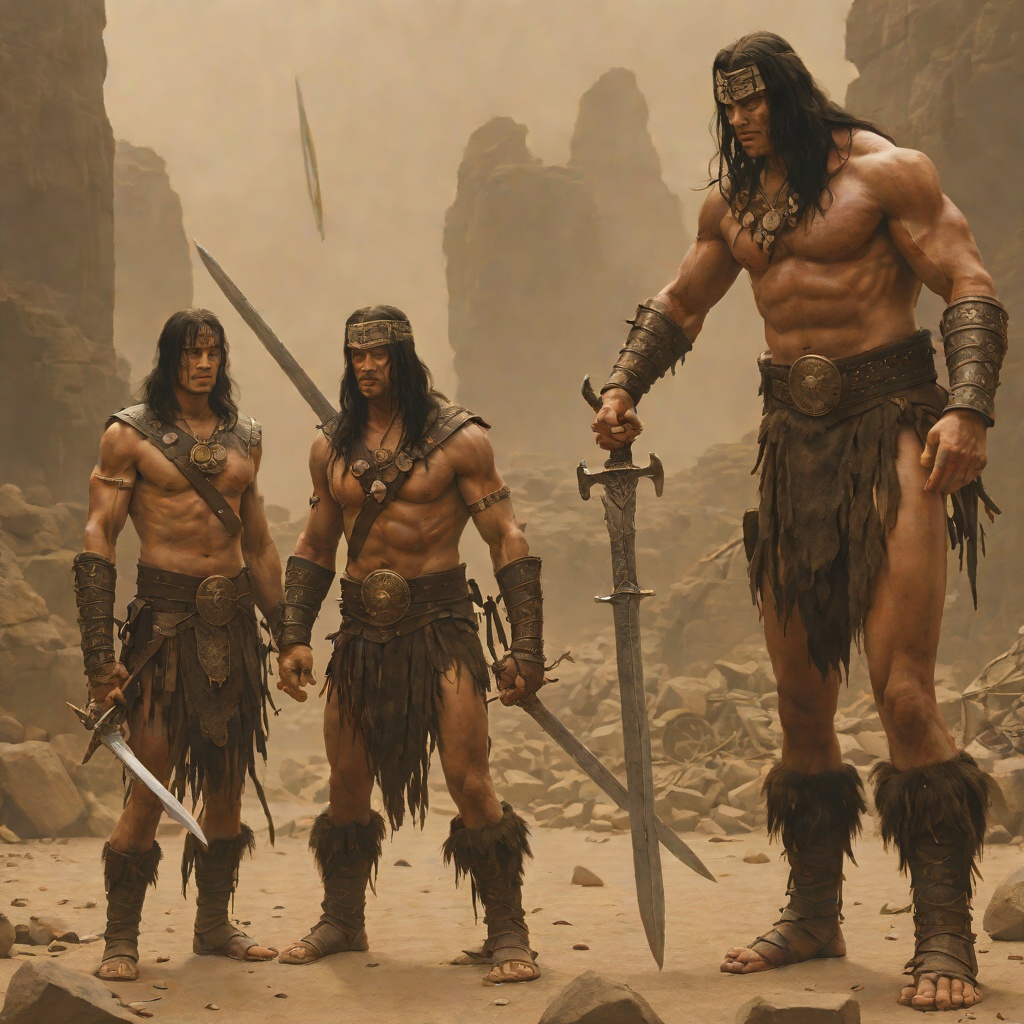
Conan the Barbarian“Have I solved the riddle of my life?” is the central existential expression attached to Conan’s understanding of Crom, mortality, and the making of a warrior. It does not ask for a secret doctrine or a promised reward. It asks whether a man has lived in a way that can withstand judgment when every external protection has fallen away.## Origin in the Secret of Steel The expression grows out of Conan’s childhood lesson in the secret of steel. During a storm, his father presents Crom as the mightiest of the gods, master of earth, heaven, and the restless sea, yet also as a power who keeps the greatest secrets from humanity. The gods once used steel against the giants, but mortals possess only a partial inheritance: they must learn both the material strength of a blade and the inward strength required to wield it.
Conan’s father therefore warns him that no person, beast, spirit, demon, or god can be trusted without reservation. The one dependable object is a blade of well-forged steel. Yet the lesson is not simple faith in weapons. The human heart begins like unworked iron and must be hammered by adversity, suffering, conflict, despair, and loss. Only when the heart becomes like steel can a man become worthy of the sword and make the weapon an extension of his soul. The riddle of life is consequently tied to transformation: suffering is not merely endured but becomes the pressure through which character is formed.## Conan’s Answer to Crom When Subotai asks about the gods of his people, Conan answers that his own people name Crom the father of stars and king of gods and men, but seldom pray to him. Conan himself never prays, because Crom is aloof in the high heavens and indifferent to the needs and prayers of mortals. This indifference separates Crom from gods who intervene, reward, punish, or rescue. Conan does not expect divine assistance to make his life meaningful.
He then explains the imagined judgment after death. When he travels the long road to Crom’s great throne, Crom will ask whether he has solved the riddle of his life. If Conan cannot answer, Crom will drive him forth to wander the empty heavens as a homeless ghost. The standard is therefore neither obedience nor ritual purity. It is an achieved answer, earned through action and endurance. Crom’s hardness and permanence make the question more severe: a mortal cannot appeal to a comforting god, but must arrive before an eternal power with the truth of his own life.## Contrast with Set and Doom The expression also gains force through its opposition to the servants of Set. In Zamora, a merchant warns Conan that Set’s servants are deceivers who worship Death and may even murder their own parents while claiming to relieve them of life’s burden. The warning presents the cult’s religious language as a corruption of human bonds, converting killing into supposed mercy.
Thulsa Doom gives that corruption a mass form. He asks his followers whether they will kill for him, even when the victim is a friend, lover, or loved one, and urges them to spill the blood of those he calls infidels in the name of eternal peace. His catechism promises joy through obedience and identifies death with the embrace of the Dark Master, while the later sermon announces a Great Cleansing in which parents, teachers, judges, and other opponents will be destroyed. Where Conan’s riddle demands that an individual discover the meaning of a life through tested strength, Doom supplies a collective answer in advance: submit, kill, and call submission salvation.
Doom’s garden demonstration makes the contrast physical. After a child leaps from an embankment at his command and lies broken on the tiles, Doom declares that the act proves power stronger than steel and human flesh. He dismisses steel in favor of the hand and the mind that commands it. The claim resembles Conan’s father’s distinction between a blade and the person who wields it, but Doom turns that insight toward domination. The same hierarchy of mind, hand, and steel can either describe disciplined self-mastery or justify absolute control over another person.## The Riddle in Action The expression is not resolved by contemplation alone. Conan is shaped by the raid on his village, the violence that kills members of his community, and his reduction to captivity among the Vanir. Chained to the Wheel of Pain beside other enslaved youths and men, he is forced to push a massive wooden wheel that turns millstones, while a brutal overseer uses a rawhide whip against anyone who collapses. The wheel gives the riddle a material setting: a child’s body is subjected to repetitive labor until suffering either breaks him or forges him.
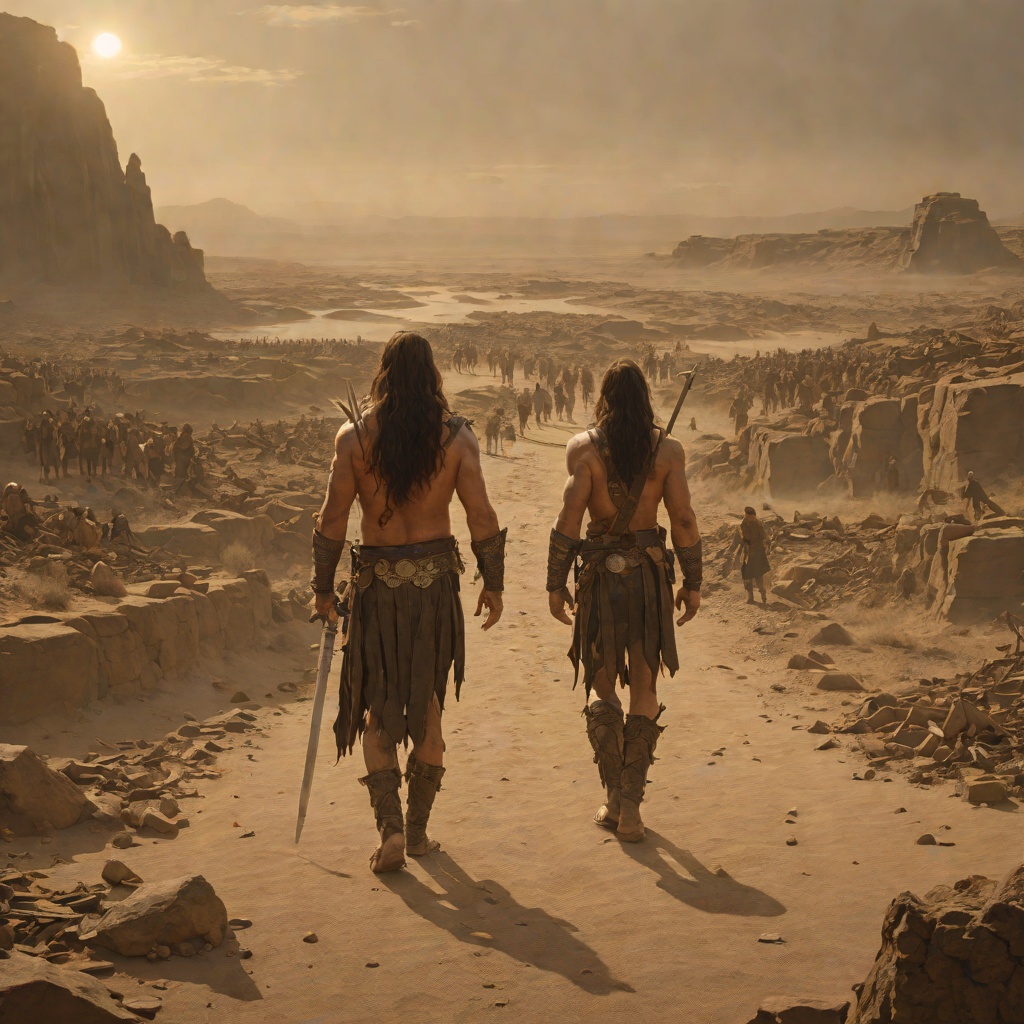
His later life continues the same examination through danger, desire, and death. In Shadizar, a woman’s passion is joined to a warning that Conan will find what he seeks in Shadizar of Zamora but may also find his own death. The scene binds knowledge to temptation and makes the search for an answer inseparable from the risk of destruction. Conan’s path does not offer a safe distinction between wisdom and peril; understanding must be pursued in a world where desire can disclose a destination while simultaneously exposing its cost.
The warrior’s relation to death is expressed with austere finality when the narrative declares that the way of the warrior is ever death. This is not the cult’s ecstatic worship of death. It is the recognition that violence, mortality, and the warrior’s chosen identity cannot be separated. Conan’s question remains open because each ordeal tests whether his actions arise from his own strength or from another person’s imposed doctrine.## Resolution in the Confrontation with Doom The final answer arrives through action rather than a formal explanation. In the great temple, Doom tells the Faithful of Set that the day of doom and purging has come, promising that those who oppose the cult will depart in blood and fire. He presents his followers as the pure water that will cleanse the world and places an eternal light in their hands. His rhetoric transforms murder into purification and makes obedience appear to be the solution to existence.
The revelation of Doom’s own nature destroys the authority of that promise. Before the congregation, his neck lengthens, his jaws become serpent-like, his human features recede, and he assumes the scaly head of the ancient snake-men. Conan then decapitates him with a single sweeping stroke. The severed head rolls down the temple steps, while the body writhes at the top like a trampled serpent. The physical separation of head and body becomes a symbolic exposure: the voice that claimed mastery over death is revealed as monstrous and is finally reduced to a dead object.
Afterward, Conan states that his father was the light of day and Doom his night, but acknowledges that Doom was correct in one respect: what matters is not the steel within the blade, but the steel within the man. This is the expression’s closest thing to a completed answer. Conan does not discover a divine formula explaining the universe. He demonstrates that a life’s riddle is solved through the character forged by suffering, the freedom preserved under coercion, and the courage to act without surrendering judgment to a false god. Doom’s doctrine offers certainty from above; Conan’s answer is embodied, earned, and continually tested.