Shadizar
Conan the BarbarianShadizar, the capital of Zamora, stands as the 'crossroads of the world' in the Hyborian Age—a sprawling, decadent metropolis where the outlaws of the western world find safe haven and where the caravans of distant kingdoms converge with their riches. It is here that Conan, the young Cimmerian, first steps into the heart of civilization, and it is here that he first encounters the shadow of Thulsa Doom, the serpent cult, and the veiled princess Yasimina, setting in motion the chain of events that will lead him from thievery to kingship. The city is both a sanctuary and a trap, a place of splendid sin and sudden death, and its dual nature shapes the barbarian's early adventures and his understanding of the world beyond his frozen homeland.
The Crossroads of the World
Shadizar's reputation as the crossroads of the world is established even before Conan arrives. The witch of the Kolari mountains, in a moment of passion, whispers to him: 'In Shadizar of Zamora, the crossroads of the world, you will find that which you seek. But you would be a fool to go.... Only fools seek their own death....' This cryptic warning frames the city as a place of both destiny and peril, a destination that promises answers but demands a price. The prophecy proves accurate: Conan seeks the meaning of the twisted snakes upholding a black sun, a symbol that will lead him directly into the orbit of Thulsa Doom's cult.
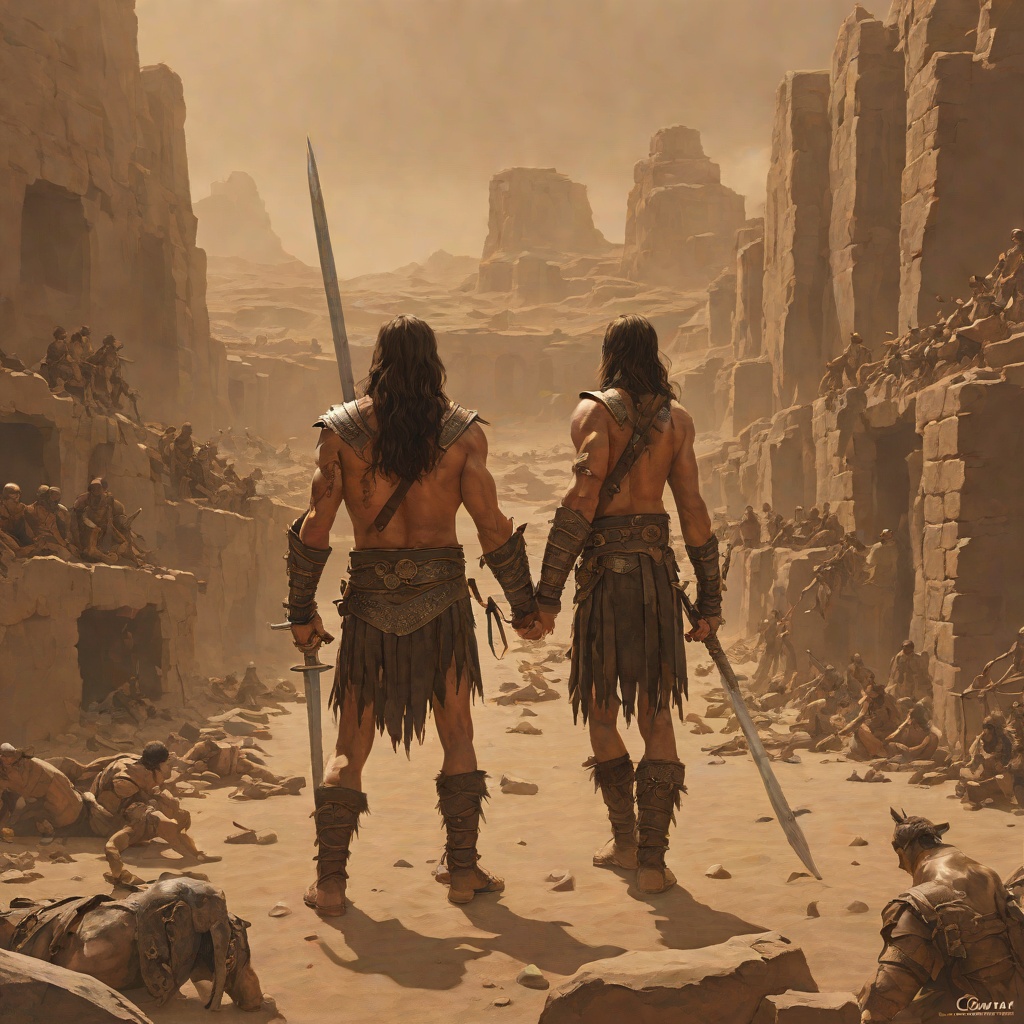
The city's role as a crossroads is further emphasized by Subotai, the Hyrkanian thief who becomes Conan's companion. Subotai, who declares that 'thievery is my business,' sets his sights on Shadizar as the natural destination for a man of his profession. As the two travelers approach the border of Zamora, Subotai paints a vivid picture of the land's wealth: 'In Zamora cross all the caravans of the world, laden with the riches of distant kingdoms: superb carpets from Iranistan, spiced fruits from Turan, the famed pearls of Khosala, gems from the iron hills of Vendhya, and the heady wines of Shem.' This description establishes Shadizar not merely as a city but as a nexus of global trade, where the treasures of the known world flow through its bazaars and into the hands of its thieves.
The City of Thieves and Rogues
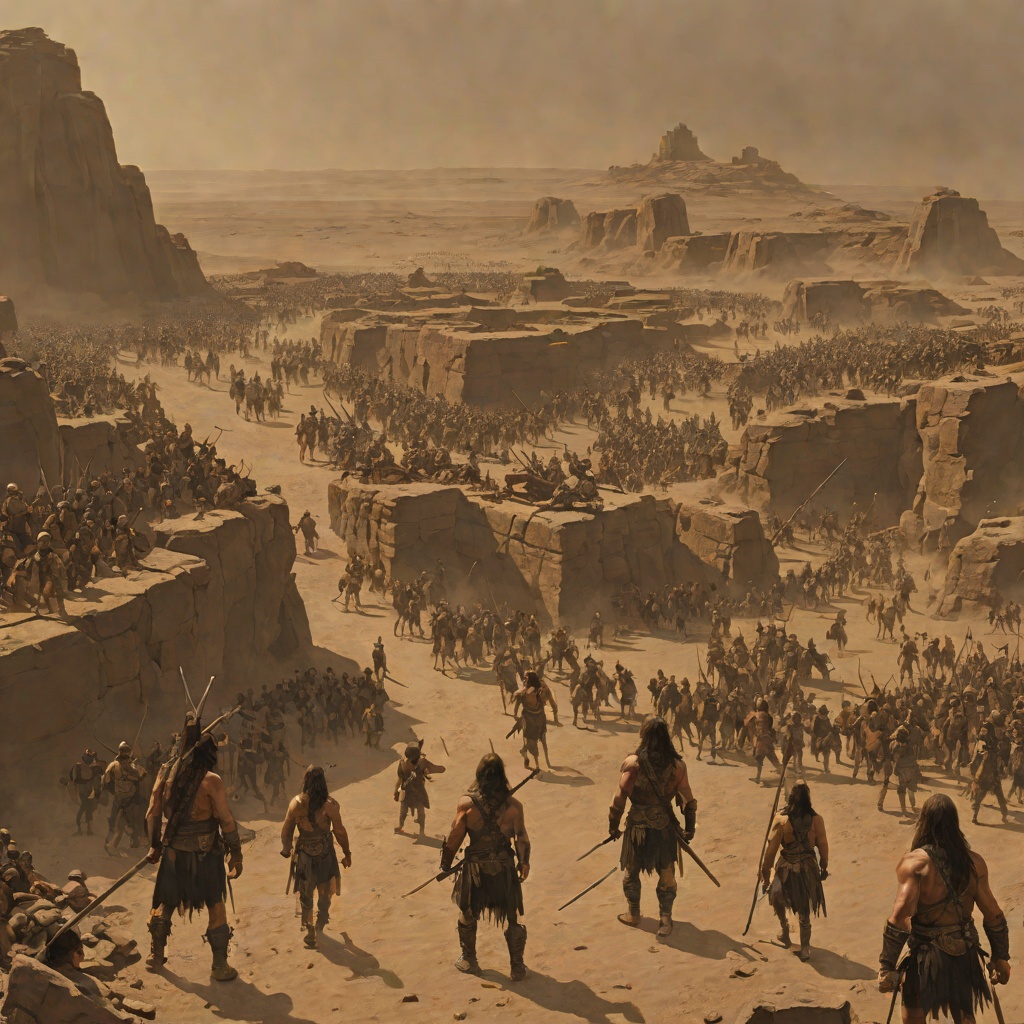
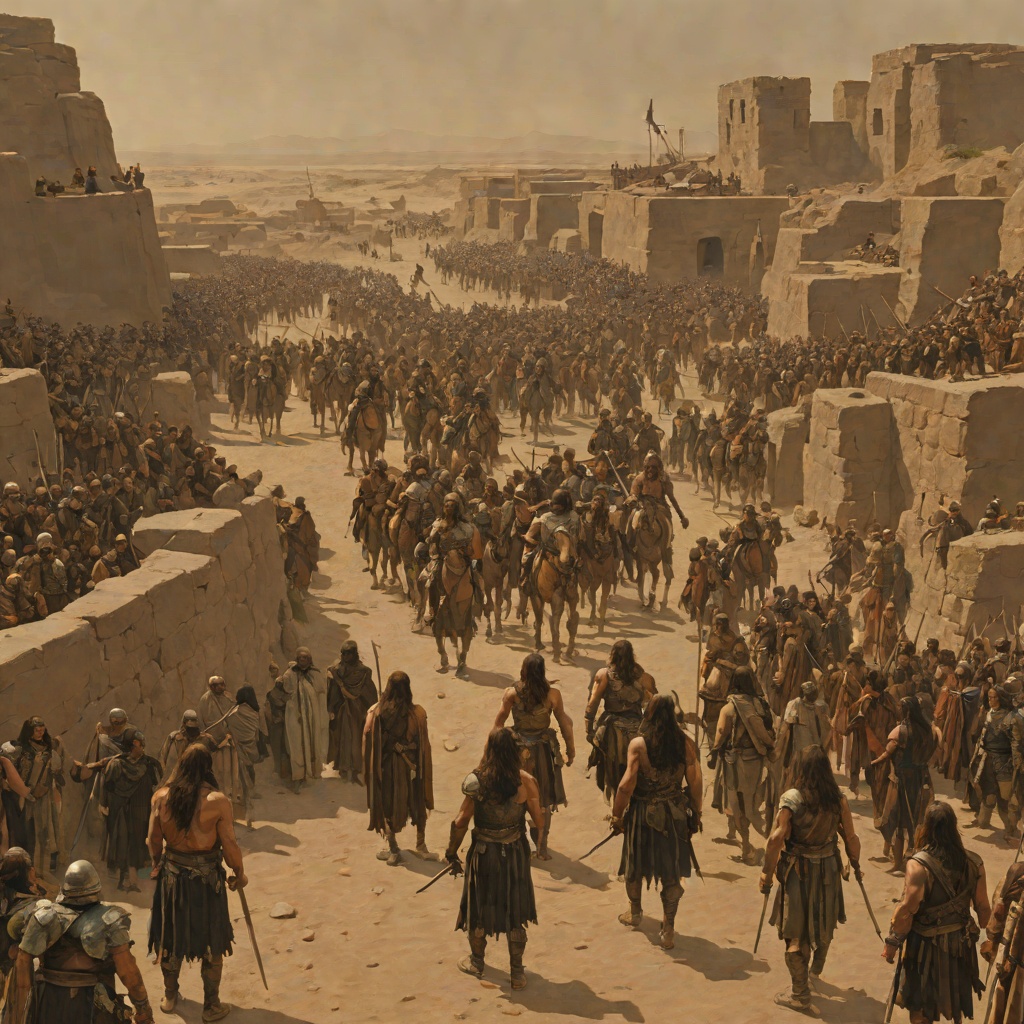
Upon reaching the capital, Conan finds himself in a city that surpasses anything he has ever seen. Shadizar is described as 'the city of thieves, the abode of rogues,' where 'all the outlaws of the western world, even escaped slaves, exiles, and men with a price on their heads' can hide in comparative safety, provided they have the price and know their way around. This makes the city a unique haven, a place where the lawless can thrive and where the traditional order of the outside world is inverted. The city's population is a bewildering array of humanity: merchants in rich robes, artisans hawking trays of brass ornaments, gems, and weapons, bearded farmers guiding wains laden with sacks of wheat and barley, stiff-backed soldiers, mobile-hipped whores, beggars, urchins, and priests. Conan sees squat Shemites with curly beards, lean Zuagirs in head cloths, kilted Brythunians, booted Corinthians, and turbaned Turanians—a sampling of all the diverse peoples of the earth.
The city's beauty is matched only by its squalor. The broad boulevards, pillared temples, domed palaces and mansions, and lush, walled gardens of the great lords and princes contrast sharply with the back streets, where crooked alleys swarm with hags and pimps, with painted children for sale to degenerates, with the poor and the ill. Here, flesh is for sale, or at least for rent, and every pleasure, however decadent, can be had for money. This duality—the splendor of the elite and the degradation of the masses—defines Shadizar's character and serves as a microcosm of the corrupt civilization that Conan must navigate. The danger is ever-present; on one occasion, Conan and Subotai witness a man writhing on the ground, clutching a wound in his belly from which blood streams through his fingers, a stark reminder that violence and sudden death lurk in these narrow ways.
The Serpent's Shadow
Shadizar is also the stronghold of the Cult of Set, the serpent-worshipping religion that has corrupted the kingdom. Subotai reveals to Conan that the cult's temple contains fabulous riches: 'Thither comes the tribute of the believers from every Set cult in the kingdom—gold, drugs, jewels, wine, and women! But in particular come jewels. The Set worshippers prize polished precious stones, deep and unwinking like the eyes of the serpents they adore.' This revelation plants the seed of Conan's first major theft, a raid on the Tower of the Black Serpent, and introduces him to the cult's power and wealth.
The cult's influence extends to the highest levels of the kingdom. King Osric, the ruler of Zamora, laments to Conan, Subotai, and Valeria about the grip Thulsa Doom has on his realm: 'Snakes in my beautiful capital! To the west, to the south, in Brythunia, Corinthia, everywhere snakes! Everywhere these black towers with their black-hearted priests! They steal away our children and turn them into monsters—into reptiles like the snakes they worship.' The king's own daughter, Yasimina, has fallen under Doom's spell, and his own guards dare not stand against the cult. Osric's despair culminates in a moment of explosive anger when he hurls a serpentine dagger to the marble floor, a weapon that had been thrust into his father's heart by his own brother, ensorcelled by the cult's witchcraft. 'Each generation is weaker than the one before,' he cries. 'Today's young wallow in this snake cult—this false religion. They yearn to be slaves and beggars, drugged dreamers. When I was young, boys strove to be heroes, not parasites and destroyers.'
The cult's power is not merely political but also spiritual and psychological. In a scene of chilling indoctrination, Thulsa Doom addresses his followers, asking, 'Who amongst you fears the warm embrace of death? When I, your father, ask it, will you take life for me? Will you strike true to the infidel heart, whether it be the heart of friend, or lover, or loved one in your former life?' The followers, entranced, moan 'Doom! Doom!' in rhythm to his utterances, swaying in ecstasy. This display of charismatic authority, set against the backdrop of Shadizar's decadence, illustrates how the city has become a battleground between the traditional rule of the king and the seductive, terrifying power of the cult. The city's fate is intertwined with this conflict, and it is within its walls that Conan first witnesses the true nature of his enemy.
A City of Contrasts and Consequences
Shadizar's significance extends beyond its role as a setting; it is a crucible that forges Conan's character. The city's wealth and squalor, its beauty and corruption, its freedom and danger all challenge the young Cimmerian's worldview. He marvels that so many can dwell crowded together without turning on one another to rend and slay, like savage beasts, yet he also witnesses the violence that lurks just beneath the surface. The city forces him to adapt, to learn the language of Zamora, and to consider a life of thievery—a profession he had previously despised. His encounter with the cult, the king, and the princess Yasimina in Shadizar sets him on a path that will lead him to the Mountain of Power, the Tree of Woe, and ultimately to his vengeance against Thulsa Doom. The city is thus not just a place he passes through but a defining chapter in his journey, a place where the 'crossroads of the world' become the crossroads of his own fate.