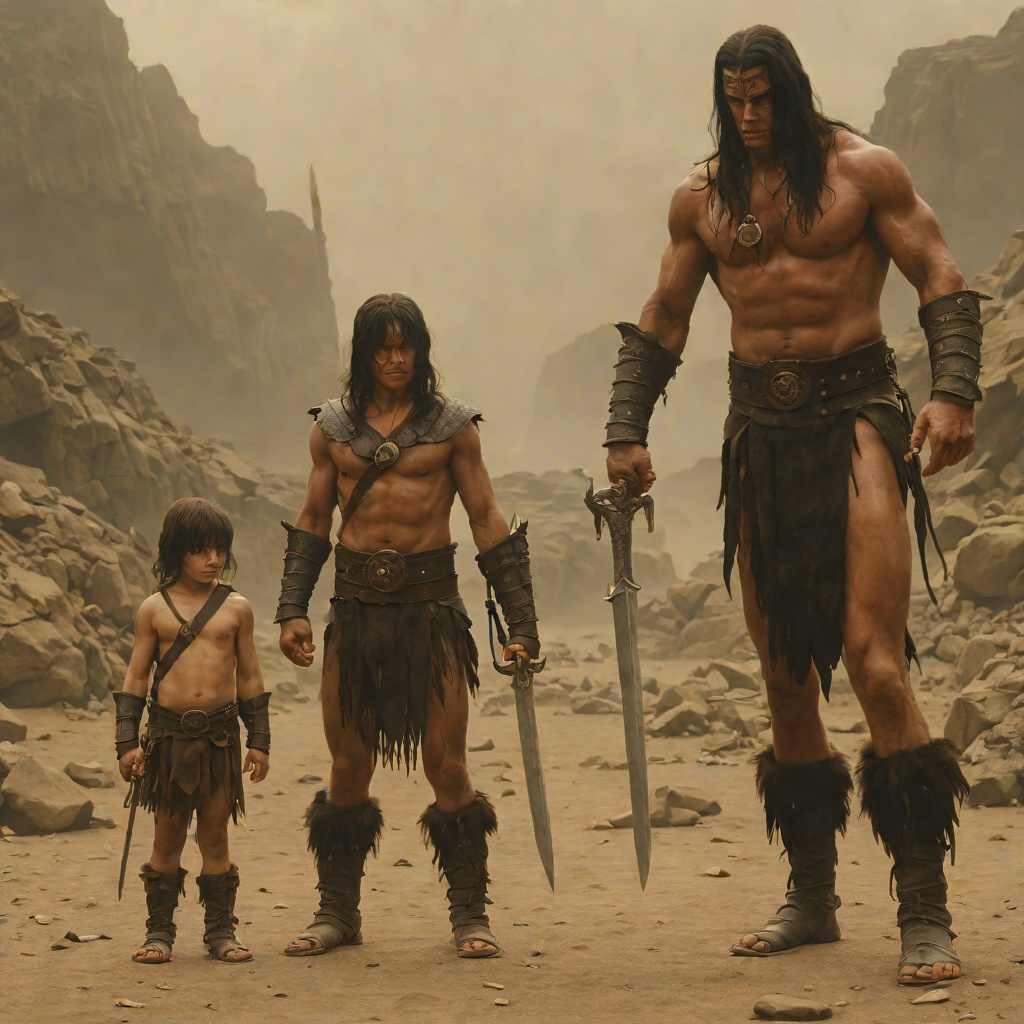
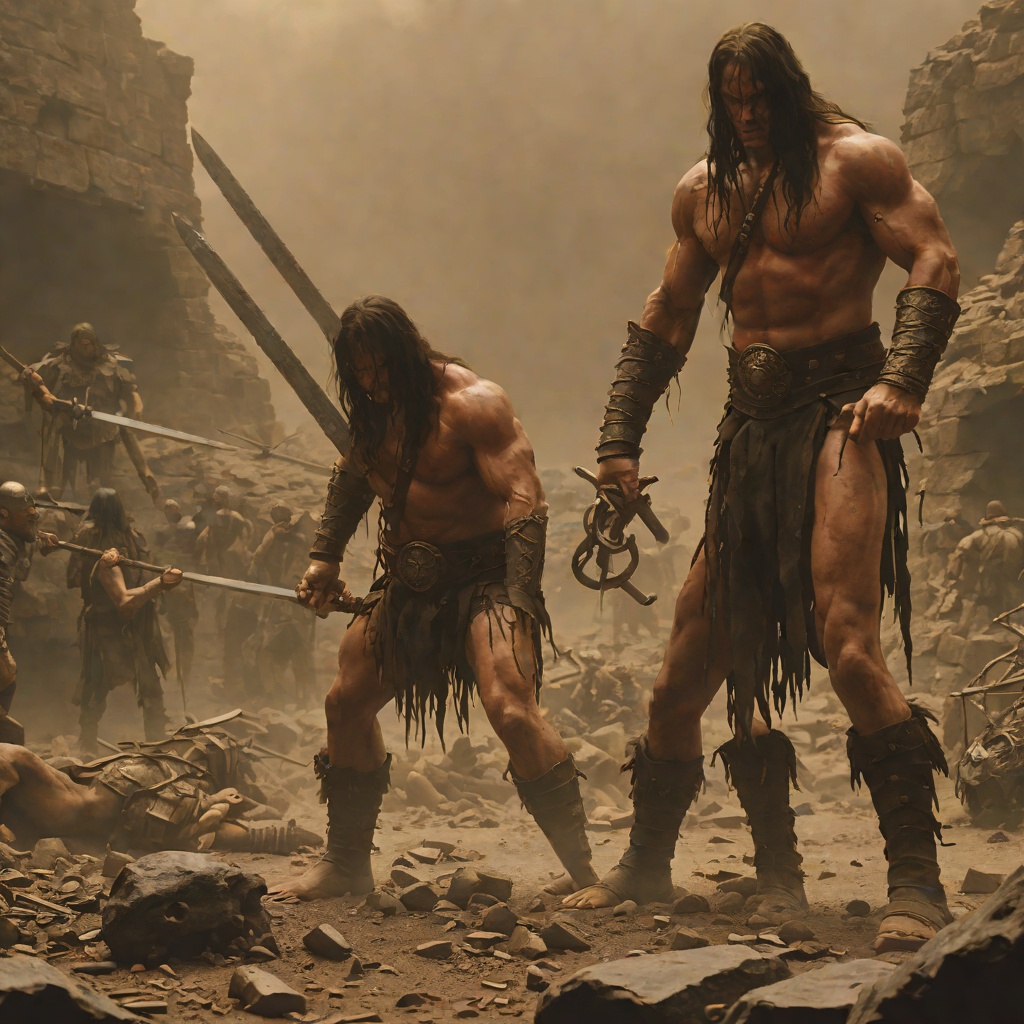
The heart of a man is like unworked iron
Conan the BarbarianThe heart of a man is like unworked iron is the foundational doctrine of the Cimmerian worldview and the philosophical engine of the entire saga. Spoken by Corin the smith to his young son on a lightning-riddled night, the expression is not merely a piece of advice but a complete theory of human development, one that holds that a person's character must be hammered, forged, and purified through suffering before it can become worthy of wielding a blade. It is the secret of steel made into a moral law, and it is the lens through which Conan's entire life—from the destruction of his village to his final victory over Thulsa Doom—must be understood. The phrase is the answer to the Riddle of Steel, and it is the creed that turns a slave into a king.
The Father's Lesson and the Secret of Steel
The expression is first delivered by Corin, the village smith, who is himself something of a godling to his neighbors, having come out of the south lands bearing the arcane art of steel-making, a precious inheritance from the ancient Atlanteans believed lost to the darkling age. On the night of the lesson, the man cups his son's small hands within his own and curls the boy's fingers about the hilt of the great sword he has forged, speaking the words that will shape Conan's soul. He tells the boy that the heart of a man is like a piece of unworked iron: it must be hammered by adversity and forged by suffering and the challenges flung by the thoughtless gods, nigh unto the point of breaking. It must be purged and hardened in the fires of conflict, purified and shaped on the anvil of despair and loss. Only when the heart has become as steel, Corin explains, will a man be worthy to wield a keen-edged sword in battle and win against his enemies, as did the gods when they conquered the dark giants. The lesson is inseparable from the warning that precedes it: in all the world a man can trust no one, neither man nor woman nor beast, neither spirit nor demon nor god, but only a blade of well-forged steel. The father's teaching is thus a double-edged gift—it offers the son a path to strength, but it also condemns him to a life of total isolation, in which the only reliable companion is a weapon.
The Forging of the Barbarian
The doctrine is not abstract philosophy for Conan; it is the literal description of his life. The expression's promise that suffering produces strength is tested and proven through the series of ordeals that constitute his youth. After the Raid on the Cimmerian village, Conan is chained to the Wheel of Pain, where the gruelling torment dehumanizes him under the lash of the Vanir. This is the hammering, the first brutal shaping of the unworked iron. He is then sold to Toghrul and becomes a Pit fighter, a man-slayer battling for his life to feed the blood lust of the Nordheimers. In the Pit, Conan grimly discovers that the life of a fighter is not quite the worst of lives: to face an adversary and kill him is to enjoy, for a fleeting moment, the illusion of freedom, and to be a whole man again. The fierce battles of the Pit restore something of manhood and self-love that the Wheel had destroyed. The doctrine is thus enacted in the most literal way possible—the boy's heart is beaten and broken and then rebuilt, stronger each time, exactly as his father promised. Even the Hyrkanian general who questions Conan in Toghrul's yurt recognizes the success of this forging, warning Toghrul that the Pit has not broken the spirit of his champion, and that he should beware lest this young tiger some day turn and rend him. Conan's answer to the general's question—that the best of life is to confront your enemy face to face, to see his hot blood spill upon the earth, and to hear the lamentations of his women—is the creed of a heart that has been successfully forged into steel.
The Antagonist's Claim to the Forge
The doctrine is also claimed, perversely, by Conan's greatest enemy. In the climactic confrontation within the Mountain of Power, Thulsa Doom attempts to take credit for the forging of Conan's character. He reminds the chained barbarian that he slaughtered his people, chained him to the Wheel of Pain, and doomed him to be a slave fighting in the Pit. But Doom frames these atrocities as gifts, declaring that he has made Conan a champion, a hero, a veritable demigod. He points to the strength of Conan's will, his courage, and his resolve to slay him, and argues that these qualities were bestowed through pain and suffering. This is the doctrine of the unworked iron turned into a justification for tyranny: Doom claims to be the smith who forged the hero, and he calls Conan's desire for revenge a waste of the gift. The irony is profound—the cult leader who worships the power of the mind over steel nevertheless relies on the very metallurgical metaphor of the Cimmerian code to claim ownership of his enemy's soul. Conan's response is to reject the claim outright, telling Doom that he has never met a real man on equal terms and fought him face to face or hand to hand. The exchange establishes the central conflict of the doctrine: is the forging of a man's heart a gift from the one who inflicts the suffering, or is it the man's own achievement in surviving it?
The Reinterpretation at the Moment of Victory
The expression reaches its final, transformed meaning in the aftermath of the beheading of Thulsa Doom. As the severed head rolls down the steps of the temple and comes to rest beside the fountain pool, Conan speaks half to himself, reflecting on his father and his enemy. He acknowledges that his father was the light of day and Thulsa Doom his night, and he concedes that in one thing Doom spoke true. But the truth Conan accepts is not Doom's claim to have forged him; it is a deeper insight into the nature of the doctrine itself. Conan concludes that what matters is not the steel within the blade, but the steel within the man. This is the final resolution of the Riddle of Steel and the ultimate vindication of the father's lesson. The heart of a man is like unworked iron, but the forging is not done by the tyrant who wields the hammer; it is done by the man himself, through his own endurance and his own choices. The blade is merely a tool, but the heart that has been purified and shaped on the anvil of despair and loss is the true weapon. The expression thus completes its arc: from a father's cryptic warning, to a literal description of a slave's ordeal, to a tyrant's justification, and finally to a free man's declaration of self-possession.
The Doctrine and the Cimmerian Code
The expression is the philosophical foundation of the Cimmerian code, the set of beliefs that governs Conan's conduct and his emotional life. It explains why Conan, in the face of the greatest loss, must not weep. When Valeria dies, it is Subotai who weeps for his friend, explaining that Conan is a Cimmerian and must not weep, and so he weeps for him. This stoicism is the direct consequence of the doctrine: a heart that has been forged into steel cannot bend, cannot break, and cannot show weakness. The doctrine also explains the famous maxim that out of suffering is born strength, which Conan only fully comprehends after many long years. The expression is thus not merely a piece of wisdom but a complete ethical system, one that values endurance, self-reliance, and the transformation of pain into power. It is the answer to the question of how a slave becomes a king, and it is the reason why Conan, alone among the characters in the saga, is able to face the supernatural evil of Thulsa Doom and prevail. The heart of a man is like unworked iron—and Conan's heart, forged in the fires of a lifetime of conflict, has become the strongest steel in the Hyborian Age.