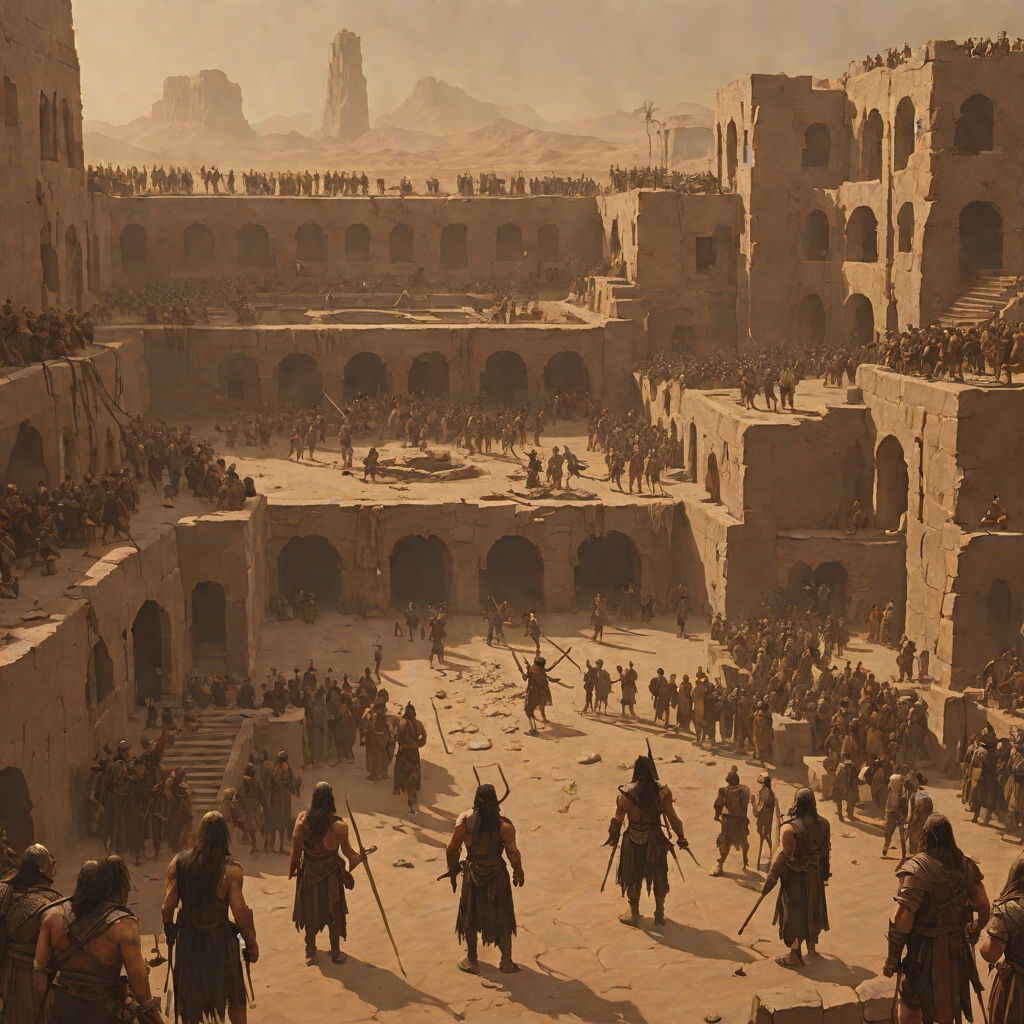
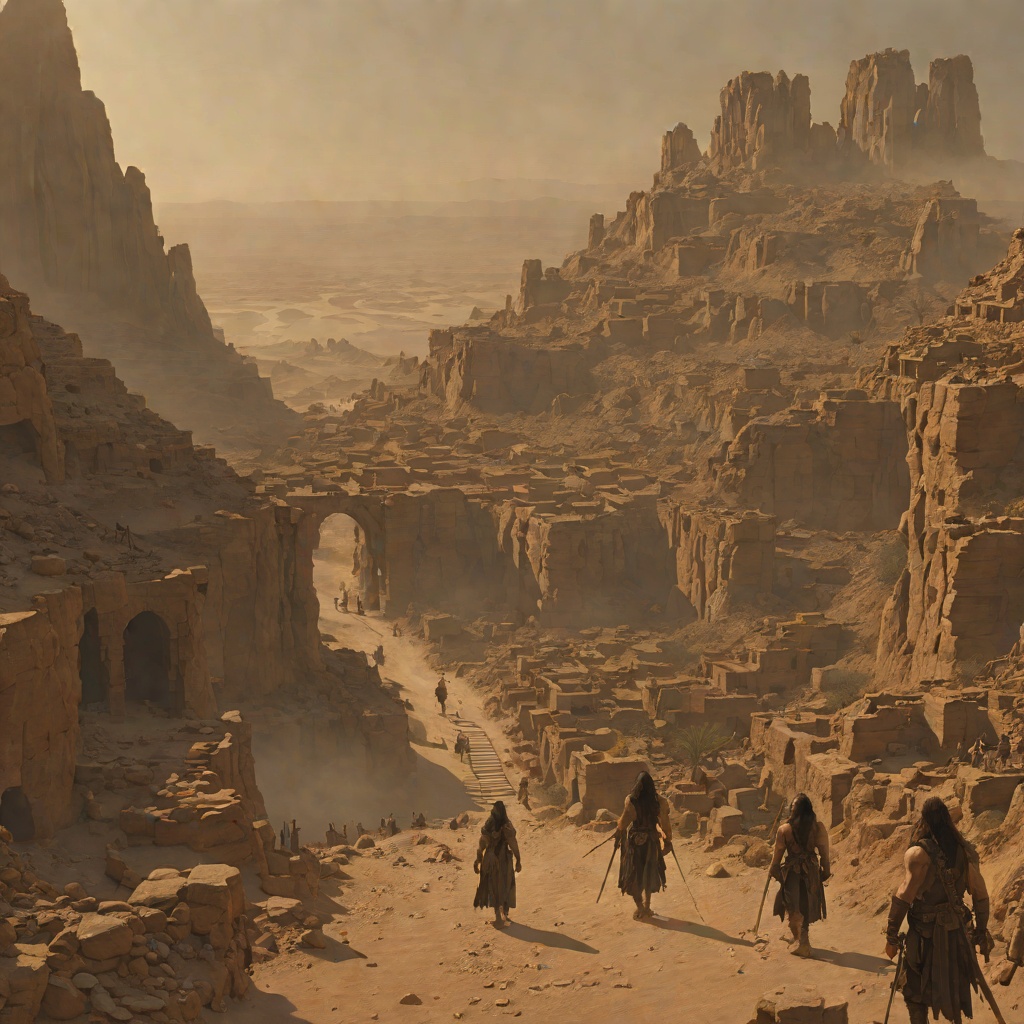
The sunrise of Zamora
Conan the BarbarianThe sunrise of Zamora is the story's governing image of hope, renewal, and the triumph of life over the death-cult that has cast its shadow over the land. It is spoken by Conan to Yasimina, the daughter of the assassinated King Osric, as a charge and a prophecy: she must become the dawn that drives away the terrors of the dark. The phrase gathers into itself the novel's deepest oppositions—light against darkness, the natural against the serpentine, the free man against the tyrant—and it is ultimately fulfilled not by Yasimina alone but by Conan himself, when he beheads Thulsa Doom and declares that his father was the light of day and Doom his night. The sunrise of Zamora is thus both a promise made to a princess and the moral horizon toward which the entire narrative moves.
The Meaning of the Metaphor
Conan's words to Yasimina are precise and deliberate. He tells her that she has seen the sun rise, and that it drives away the terrors of the dark, and that from its light foul things that love the darkness cower and hide. The metaphor is not merely decorative; it names the specific evil that must be overcome. The Cult of Set, which Thulsa Doom leads, is a religion of darkness, its worshippers prizing polished precious stones "deep and unwinking like the eyes of the serpents they adore." The serpent is the creature of shadow and secrecy, and Doom himself, in his final revelation, bears the scaly serpent head of the ancient snake-men, the timeless enemies of all mankind. The sunrise, by contrast, is the force that makes such creatures retreat. When Conan tells Yasimina she must be the sunrise of Zamora, he is asking her to embody the opposite of everything the cult represents: openness instead of concealment, life instead of death, the bright day instead of the creeping night.
The image also carries a personal weight. Conan's own father, Corin the smith, had taught him on a lightning-riddled night that the heart of a man is like a piece of unworked iron, to be hammered by adversity and forged by suffering until it becomes as steel. The sunrise is the reward of that forging—the moment when the long night of suffering breaks and the hardened heart can finally act. Conan's journey from the raided Cimmerian village, through the Wheel of Pain and the Pit, to the citadel of his enemy has been a passage through darkness; the sunrise of Zamora is what he hopes to bring about at its end.
The Darkness It Must Dispel
The darkness that the sunrise must dispel is established early and relentlessly. The story opens with the Vanir raid on Conan's village, when horsemen shod in iron crash through the bushes and shatter the thin ice of the stream, sweeping down upon the hamlet with axes, spears, and swords. A mother is impaled before her child's eyes; the raiders carry off the captives, and Conan is chained to the Wheel of Pain, a massive millstone turned by slaves in an eternal circle under the lash of a burly, swarthy master. The captive women and girl-children are led away to a different, perhaps even uglier fate, and Conan never hears of them again. This is the night that shapes him, and it is the night that Zamora's sunrise must end.
Zamora itself is a land of shadowed secrets, furtive spies, profound philosophers, depraved kings, and sloe-eyed women. Its capital, Shadizar, is the city of thieves, the abode of rogues, where all the outlaws of the western world can hide if they have the price. Conan finds himself in a colorful throng of merchants, artisans, soldiers, whores, beggars, and priests, amazed at the bewildering array of peoples gathered from across the earth. But the city's beauty is only a surface. In the back streets he discovers crooked alleys swarming with hags and pimps, with painted children for sale to degenerates, with the poor and the ill, where flesh is for sale or at least for rent, and every pleasure, however decadent, can be had for money. Here violence and sudden death lurk; once, as Conan and Subotai stride through the crowd, a woman screams and a man writhes at their feet, clutching a wound in his belly from which blood trickles through his fingers. This is the Zamora that needs a sunrise—a city steeped in splendid sin, where the Cult of Set gathers its tribute of gold, drugs, jewels, wine, and women.
The Charge to Yasimina
Yasimina is the one to whom the charge is given. She has been abducted by Thulsa Doom, who intended to marry her and make her a priestess of his cult, and she has been disavowed by her master when her rescue is attempted. Conan tells her she must do it for herself and for Zamora, and when she asks how it can be for her country, he answers with the sunrise metaphor. The princess nods, but tears are in her eyes—she understands the weight of what is being asked of her. Boldly, she rides to the gates of the mountain citadel, and Conan, in the guise of a guardsman, follows her. The sentries, subhuman beings as they are, know nothing of the girl's abduction or their master's disavowal of her, and the gates swing wide. Yasimina's courage is the key that opens the way for Conan's final confrontation with Doom.
The charge is also a transformation. Yasimina, who has been a passive victim, is called to become an active agent of light. The sunrise is not something she merely witnesses; it is something she must be. This is the story's answer to the cult's doctrine of darkness: the light is not a distant god but a human choice, a decision to stand against the night.
The Fulfillment of the Sunrise
The sunrise is fulfilled in the climactic scene at the mountain citadel. Before the frozen faces of the faithful, Thulsa Doom reveals his true nature: his neck lengthens, his jaws elongate, his nose shrinks and disappears, his forehead retreats, his lips thin and vanish, and his dark eyes round into lidless orbs as a purple tongue flicks out to test the air. He bears the scaly serpent head of the ancient snake-men. The congregation gasps; a shudder ripples through the silent throng; the princess, watching from the shadows, utters a half-choked cry as tears of pity, mixed with horror and relief, course down her cheeks. Then Conan's sword sighs as it sweeps up in a great arc and cleaves the swaying snake head from the human body. The body falls backward and lies writhing like a trampled serpent at the top of the wide steps, and the severed head rolls slowly down the long flight of stairs to come to rest beside the fountain pool.
Conan watches the gory object fall into the purple shadows of the dying day, and then he speaks the words that complete the metaphor: "My father was the light of day; Thulsa Doom, my night. Yet in one thing he spoke true. What matters is not the steel within the blade, but the steel within the man." The sunrise of Zamora has come, and it has come through Conan himself. The darkness that began with the raid on his village, that chained him to the Wheel of Pain and drove him through the Pit, that followed him across the world to the citadel of his enemy, is finally ended. The serpent's head lies beside the fountain, and Conan, raising the Eye of Set, dismisses the guards of Doom, telling them to go back to the caves from which he called them and find another source of meat. The light has driven away the terrors of the dark, and the foul things that love the darkness have cowered and hidden.
The sunrise of Zamora is thus the story's central image of redemption—a promise made in darkness and kept at the moment of greatest peril, a metaphor that becomes a reality when the man who was forged by suffering becomes the instrument of the dawn.