Vilayet Sea
Conan the BarbarianThe Vilayet Sea is the vast inland sea of the Hyborian Age, a body of water so immense that from a high vantage point it appears to reach the very horizon, its shimmering blue waters stretching endlessly before the eye. It is the great eastern waterway of the known world, a natural boundary that separates the nomadic peoples of the eastern steppes from the more settled civilizations that have grown up along its shores. The sea is more than a geographical feature; it is the stage upon which the drama of Conan's life unfolds, from his earliest days of slavery to his final triumph over the serpent cult of Set. Its waters witness the rise and fall of empires, the passage of pilgrims, and the mingling of blood and tears, making it a silent, eternal witness to the struggles of mortal men.
Geography and the Eastern Lands
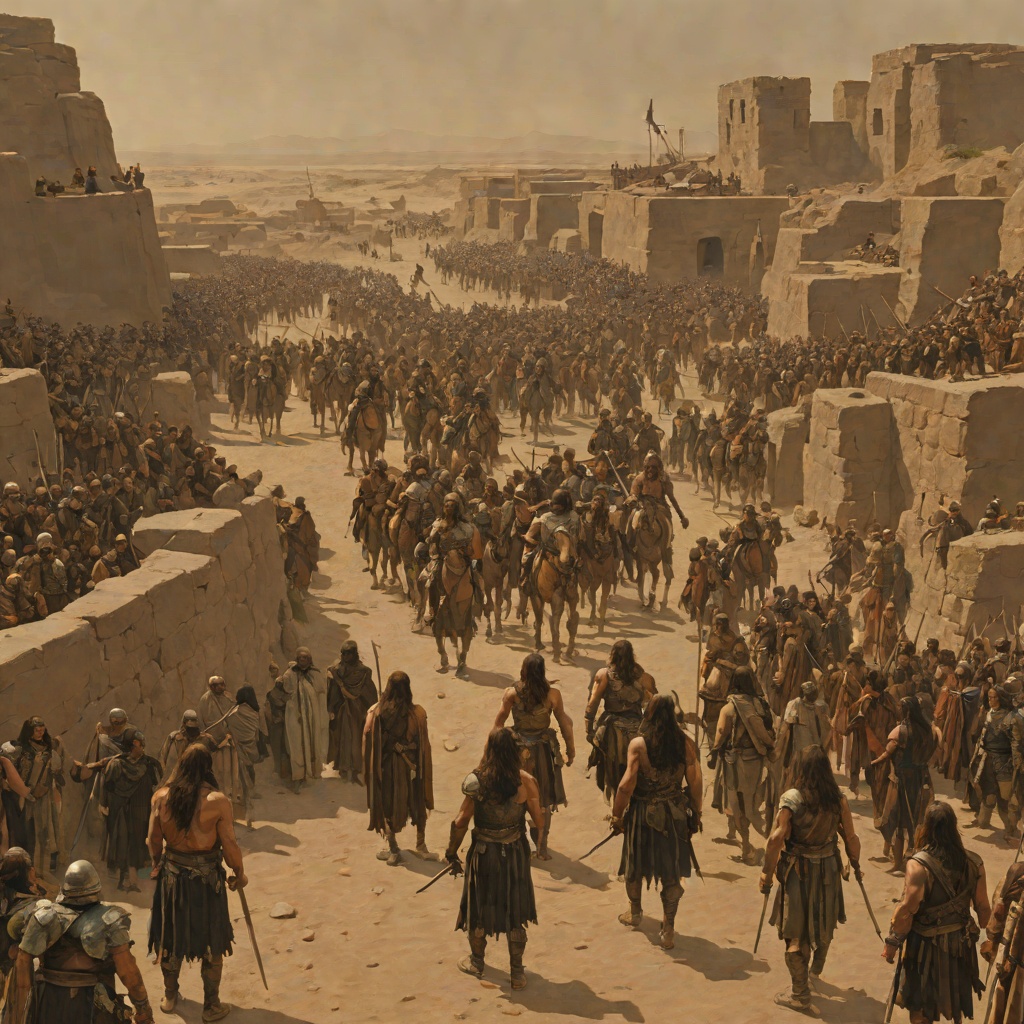
The Vilayet Sea defines the eastern edge of the world that Conan comes to know. On its western shores, the Turanians—men of Hyrkanian stock who had drawn ahead of their nomadic fellows in the arts and sciences of civilization—have reared glittering cities and learned the ways of urban life. These cities, with their sophisticated culture and commerce, stand in stark contrast to the harsh, bleak lands of Conan's northern homeland. The sea itself is a highway for trade and travel, its waters connecting distant kingdoms and cultures. Along its shores, the landscape varies dramatically, from the lush greenery of springtime foliage to the broken, desolate country where ancient burial mounds thrust up from the earth. The sea's presence is felt everywhere in the region, shaping the lives and destinies of those who dwell near it.
The Burial Mounds and the Tree of Woe
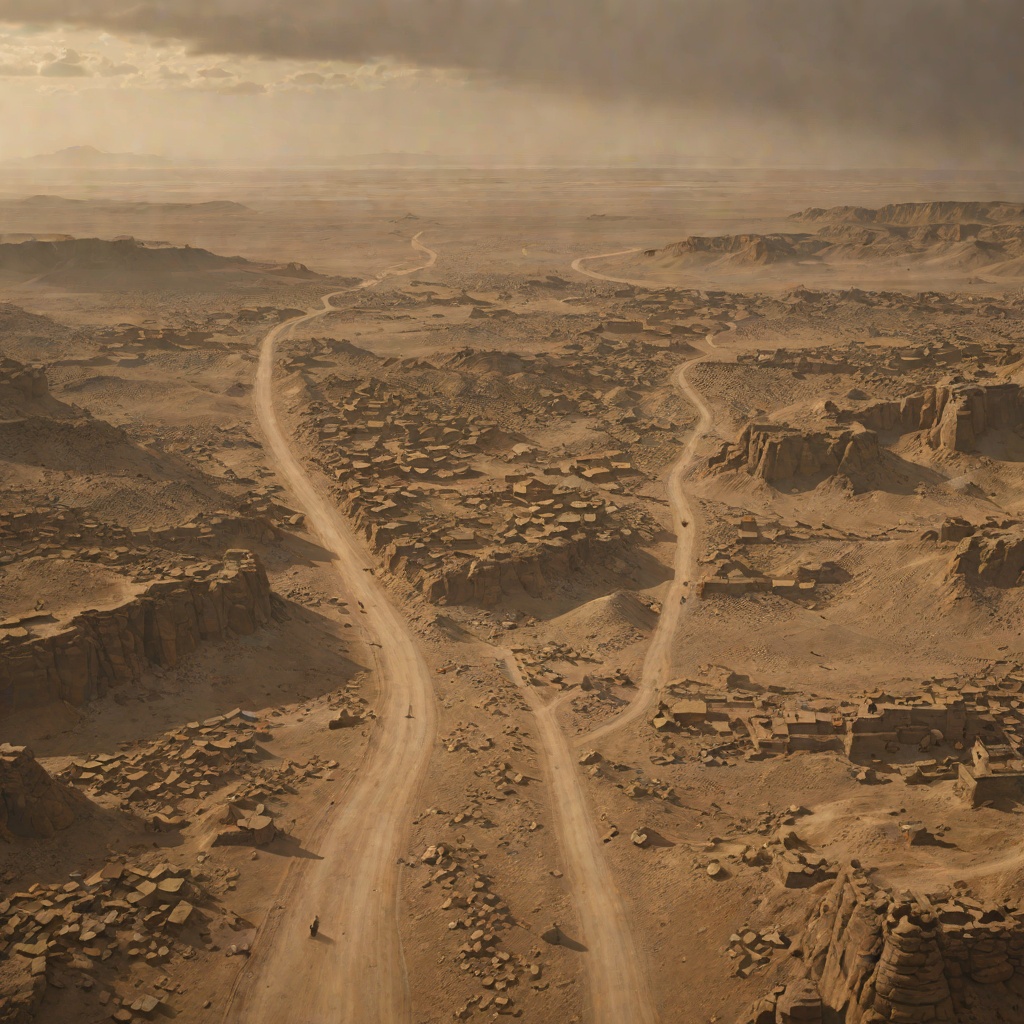
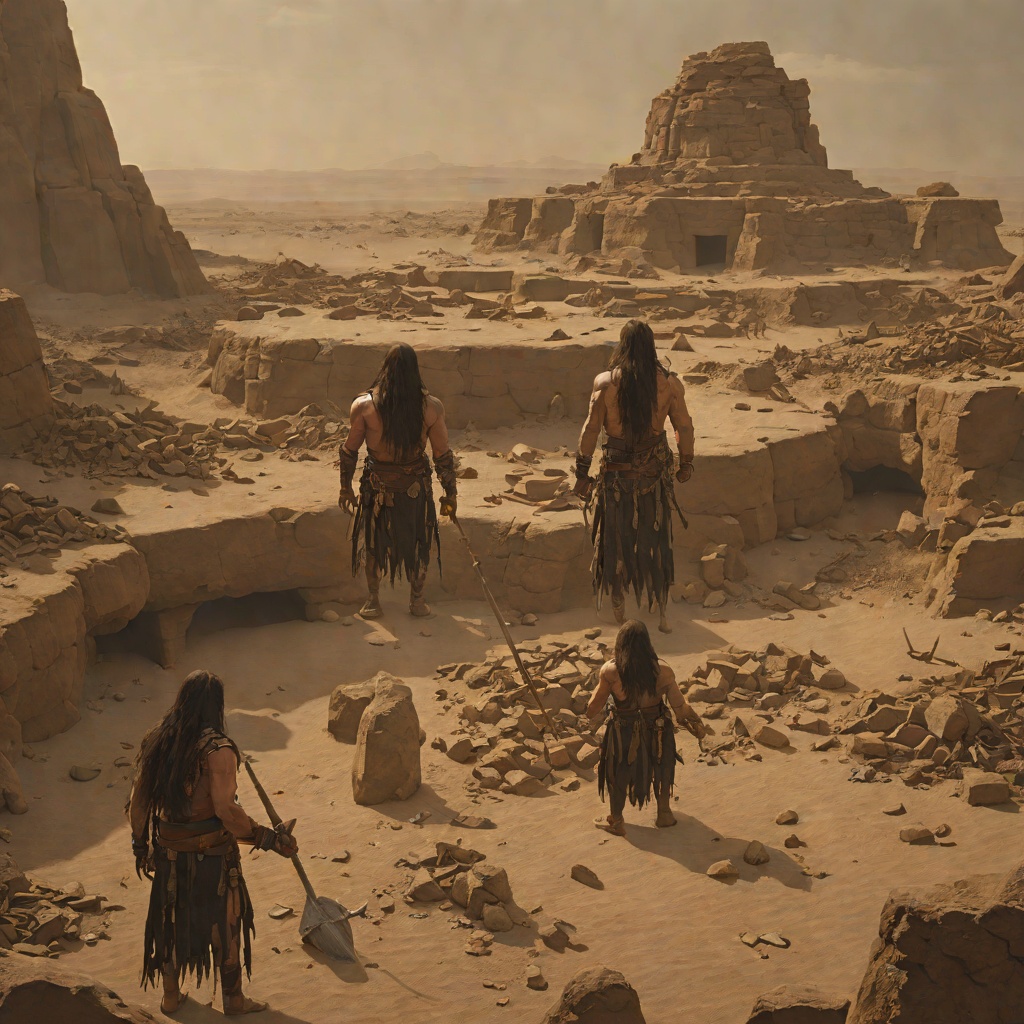
Near the shores of the Vilayet Sea, in a stretch of broken country half a league south of the Mountain of Power, lies a field of ancient tumuli—the burial mounds of primordial kings. One extensive mound dominates the rest, rising to the height of several men and pressing outward to the width of half a bow shot. Around its base are set a row of pointed stakes, each impaled with the remains of a horse and mounted rider, reduced by wind and weather to simple skeletal states decked only in bits of faded cloth and the remains of iron armour. This grim landscape becomes the site of Conan's most profound suffering and his most desperate hope. It is here, among the burial mounds of the dead kings, that Conan awakens after his ordeal on the Tree of Woe, his hands stiff, swollen, and inflamed, his faith in his own strength gone. It is also here that Valeria bends over him, bathing and salving his wounds, her care a fragile counterpoint to the death that surrounds them. The sea's proximity lends a haunting quality to this place, its waters a constant, indifferent presence as Conan hovers between life and death.
The Final Confrontation and Valeria's Death
The Vilayet Sea is the backdrop for the story's most intimate and devastating moment. After the battle at the burial mounds, Conan holds Valeria against his breast as she dies, their wet hair mingling—blonde beneath black—in the golden light of the rising sun. A wind springs up from the Vilayet Sea, as if the great water itself is sighing at the tragedy. Valeria's final words are a plea for warmth, for life, for Conan's breath to fill her body, but the cold of death is already upon her. Her face turns ashen, her long lashes lie like dark smudges on her waxen cheeks, and she slips away despite Conan's fierce, hungry kisses and his desperate rocking of her limp body as a mother rocks an injured child. The sea, vast and eternal, bears witness to this loss, its wind the only sound as Conan's love proves, in the end, not stronger than death. The Vilayet Sea thus becomes a place of both profound connection and profound loss, its waters forever linked to the memory of Valeria.
The Sea as Witness to Doom's Fall
The Vilayet Sea also frames the climactic moment of Conan's vengeance. In the great temple, after Thulsa Doom has revealed his true serpent nature and Conan has cloven the swaying snake head from the human body, the severed head rolls down the long flight of stairs and comes to rest beside a fountain pool. The sea itself is not visible from this interior space, but its presence is felt throughout the narrative as the ultimate eastern boundary, the place where the Mountain of Power rises and where the cult of Set has made its stronghold. The sea's waters, which Conan glimpsed from the uplands as he approached the mountain, are the same waters that will carry the news of Doom's fall. The Vilayet Sea, which had seemed so vast and indifferent, is finally the stage upon which the old order is shattered and Conan's long quest for vengeance reaches its end. It is a fitting conclusion for a journey that began with the destruction of his village and led him across the world to this eastern shore.
The Sea in Conan's Journey
The Vilayet Sea is more than a setting; it is a symbol of the vast, dangerous, and alluring world that Conan must navigate. It represents the boundary between the known and the unknown, between the barbaric north and the decadent east. For Conan, the sea is a constant reminder of the scale of the world and the smallness of any single man within it. Yet it is also a source of opportunity, a place where a slave can become a champion, where a thief can become a king. The sea's waters wash the shores of Shadizar, the city of thieves, and the Mountain of Power, the seat of Doom's cult, connecting the disparate episodes of Conan's life into a single, coherent journey. In the end, the Vilayet Sea is the great constant of the Hyborian world, a silent witness to the rise and fall of heroes and villains alike, its waters forever stained with the blood of those who have dared to cross its shores.