
The Marriage of Sex and Technology
CrashThis flow traces the novel's central thesis that modern machinery does not merely mediate desire but actively generates its forms.
increasing Bearing strength in each event
 decreasing
Bearing strength in each eventdecreasingTechnological Affections

Technological Affections
Marriage
The narrator and Catherine already connect television, aviation, war imagery, and sexual fantasy.
Seed
Their relationship anticipates a sexuality mediated by devices. The accident will intensify a tendency already present.
Crash Mediation

Crash Mediation
Fusion
The narrator reads wounds as records of the car's internal architecture.
Development
The machine becomes an erotic partner rather than a neutral cause. Pain supplies the first physical proof of the theory.
Sexual Machinery
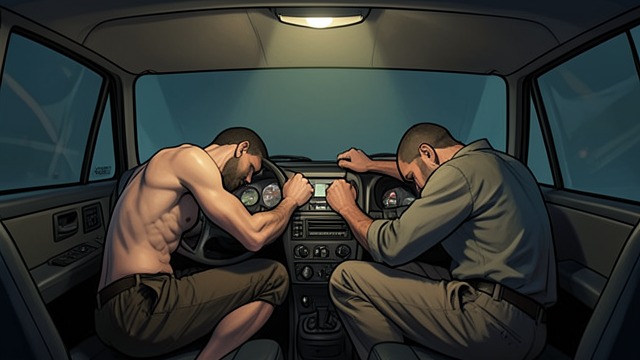
Sexual Machinery
Practice
Bodies are arranged against seats, controls, windows, and dashboard surfaces.
System
Sex is increasingly defined by engineering relations: angles, pressures, trajectories, and impact points replace conventional romantic meanings.
Institutional Confirmation
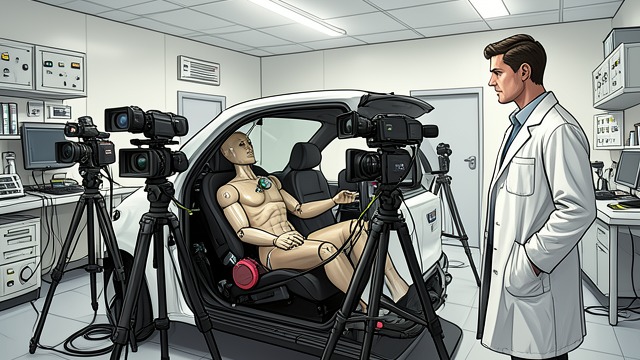
Institutional Confirmation
Demonstration
The laboratory provides cameras, mannequins, sensors, and controlled impacts that resemble Vaughan's private fantasies.
Irony
Official science confirms the sensual power of collision even while claiming to prevent it.
Nightmare Marriage
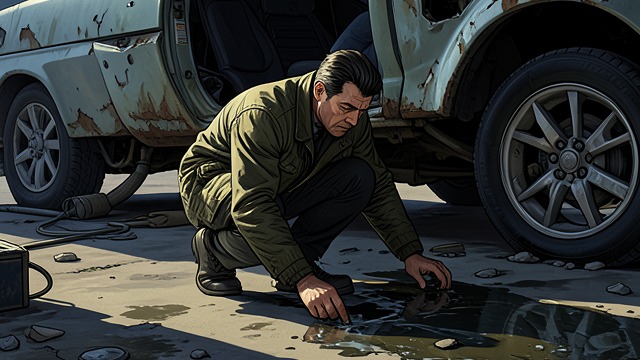
Nightmare Marriage
Union
The narrator inscribes semen on wrecked automotive structures after Vaughan's death.
Conclusion
Sex and technology have become inseparable. The future appears not as liberation but as an intimate, overlit nightmare.
before the accident
during hospital recovery
during the car encounters
during the Road Research Laboratory open day
at the final police pound scene
