
The Road as Psychological Space
CrashThis flow traces how the network around London Airport changes from setting into an externalized map of the narrator's mind.
increasing Bearing strength in each event
 decreasing
Bearing strength in each eventdecreasingOrdinary Infrastructure

Ordinary Infrastructure
Landscape
Motorways, airports, parking decks, and flyovers form the practical environment of the narrator's professional and domestic life.
Baseline
Before the accident, infrastructure remains background. Its geometry is functional rather than metaphysical.
Reoriented Landscape

Reoriented Landscape
Perception
From the hospital and apartment, the narrator sees traffic streams as a continuous machine organism.
Change
Human relationships lose their authority as roads and structures become the strongest markers of identity. The landscape begins to think for him.
Airport Labyrinth
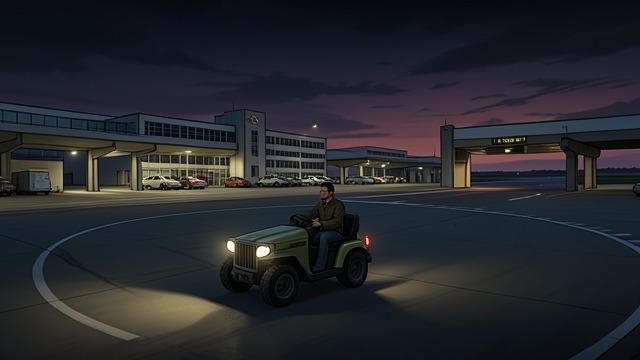
Airport Labyrinth
Movement
The narrator repeatedly circles London Airport, its hotels, car parks, runways, and access roads.
Function
Driving becomes a ritual of memory. Each route revisits the collision while opening another possible accident or sexual encounter.
Autogeddon Vision

Autogeddon Vision
Prophecy
The narrator imagines all vehicles converging in a terminal disaster called autogeddon.
Interpretation
Traffic is no longer transportation but collective destiny. The road network becomes a civilization rehearsing its own destruction.
Electric Highway

Electric Highway
Transformation
The narrator sees vehicles as illuminated creatures ascending toward an invisible paradise.
Conclusion
The road does not resolve his obsession; it sanctifies it. The electric highway becomes both prison and imagined passage to transcendence.
before the collision
during hospital recovery
after the narrator returns to driving
after the first major traffic jams
after Vaughan's death
