Bitterness
Crazy Mama: 9 Steps to a Not-So-Normal LifeBitterness is the book’s name for pain that has hardened into a repeated dwelling on injury, loss, or blame. It can arise from wrongdoing a person regrets or from harm suffered at another’s hands, including losses that seem beyond anyone’s control. The book treats grief as a real response to loss, but warns that carrying it indefinitely can close a person off from future blessing. Its proposed alternative is not to deny the wound, but to forgive, release the past, and make a deliberate movement toward joy and restoration.
Sources and Shape of Bitterness
The book distinguishes guilt from hurt inflicted by someone else. A person may remain burdened after admitting a wrong, receiving forgiveness, and still finding that the memory returns whenever bills are paid, at night, or when money is insufficient. In other cases, the injury is not something the sufferer did: it may be a betrayal, a theft, or a loss that prompts resentment even toward God. The pain can feel inescapable, as if no one else could understand it. The text counters that isolation by insisting that suffering is not unique, while still acknowledging how difficult it can be to heal.
Bitterness also appears against the larger problem of promised blessing and disappointing circumstances. The book presents humanity as intended for fruitful, expansive life, then asks why life can nevertheless feel bad. In a related discussion of faith, Hannah Keeley describes speaking scriptural promises while circumstances remain unchanged; she interprets such delays as tests and training for carrying abundance. These passages do not erase the pain that can arise when expectations and experience diverge. Instead, they place frustration within a framework in which hardship may persist while the sufferer is urged to keep faith.
Terah’s Stay in Haran
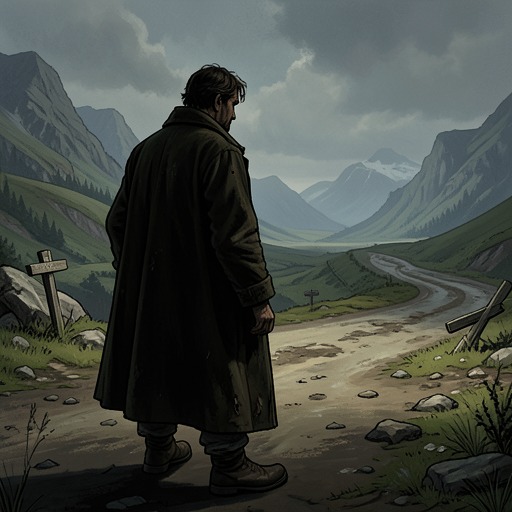
The account of Terah makes bitterness a question of whether grief becomes a stopping place. Before Abraham was called toward the Promised Land, Terah had been given a dream of leaving Ur for Canaan. He gathered his goods and began the journey, but stopped in Haran. The town’s name, the passage emphasizes, continually recalled the death of his son: home, an address, and ordinary steps outside could all bring the loss back to mind.
Terah is presented as having a choice between remaining in Haran with his bitterness and continuing toward the dream set before him. The narrative then sharpens the cost of stopping. Genesis 11:31 says that the travelers settled in Haran; the next verse records that Terah died there. The book reads this sequence as a warning: settling into sorrow can become a rut, and a rut can close around a life. Grief is not condemned as an immediate response to loss, but the text resists turning that response into a permanent destination.
From this story, the book moves to an active alternative: taking off sorrow and putting on joy. It says there is a time for grief, but that grief is meant to last for a season rather than be dragged through the rest of life. Forgiving the person who caused harm—and forgiving God for a loss—are presented as difficult but necessary steps toward freedom. The language of baggage and prison gives bitterness weight and enclosure: what is carried from the past can rob a person of the life still available. The decision to leave that condition is described as gradual, made day by day and moment by moment, because the pull back toward pain continues.
Betrayal and Repetition
A second example makes the mechanism of bitterness concrete. Hannah Keeley recounts a friend who entered a business venture with another person after being persuaded to invest his entire life savings. Within two years the business had failed. The loss included money saved over decades and the fund intended for his children’s college; the friend who had drawn him into the venture then disappeared without apologizing or trying to repair the damage. The injury was financial and relational at once: the friend had lost his savings and felt betrayed.
The resentment returned through an ordinary household problem. His wife’s car door became stuck; after hours of effort, he repaired it with duct tape and a wire coat hanger. The makeshift fix let her get into the car but not out through that door, so she had to slide across and use the passenger side. When he described the repair, he connected this indignity to the failed investment, saying in effect that the loss had left his wife driving a car with a jerry-rigged door. Regret followed him through the day and kept him awake at night. The incident shows how an earlier loss can attach itself to later frustrations, making each fresh reminder serve as another occasion to revisit the injury.
The book frames that return as a damaging repetition rather than a way to heal. It invokes Proverbs 26:11, comparing a fool who returns to folly with a dog returning to its vomit, and argues that repeatedly revisiting painful memories strengthens blame instead of repairing the hurt. Bitterness is described as a heavy, increasingly burdensome load. The call to forgive and move on is therefore tied to the friend’s habit of returning to the loss, not to a claim that the business failure or betrayal did not matter.
Release, Joy, and Restoration
The book’s answer to bitterness combines release with hope of restoration. It urges people to choose joy when bitterness rises and to refuse a return to the old place of pain. Restoration is framed as more than emotional relief: after describing guilt and confession elsewhere, Hannah Keeley says that forgiveness can be followed by restoration, including the recovery of finances and lost time. The broader promise is that the past need not dictate the future, although leaving it behind requires faithfulness and conscious effort.
Joy is presented as a source of strength, while bitterness is said to shut the door on future blessing. The text attributes the continued pressure of old wounds to an adversarial spiritual force and warns that resentment can keep a person trapped in pain. At the same time, it does not say that loss should be ignored: grief has its season, and the work of release may be hard. The decisive distinction is between experiencing sorrow and allowing sorrow to become a permanent identity or refuge.
Bitterness consequently functions as both an emotional state and an obstacle in the book’s account of abundant life. Terah’s death in Haran and the friend’s repeated return to his failed investment present different scales of the same danger: sorrow can become a place where a person settles, while remembered injury can become a lens through which later difficulties are continually interpreted. Forgiveness, joy, and the willingness to move forward are offered as ways to break that pattern and remain open to a future that the past has not already determined.