Haran
Crazy Mama: 9 Steps to a Not-So-Normal LifeHaran is presented as both a real stopping place in Terah’s journey and a charged image of emotional arrest. Terah left Ur carrying a dream of reaching Canaan, but when he arrived at Haran, the town’s name echoed the memory of his dead firstborn son, Haran. The location therefore becomes more than a waypoint: it is the place where an inherited dream encounters unbearable loss, and where grief can either be carried forward or allowed to become a permanent home.
Setting and Origin
Before Terah began the journey toward Canaan, his firstborn son, Haran, died. Haran had been Terah’s pride and joy, and, as the firstborn, he held the expected place of carrying on his father’s name while receiving the inheritance and blessing. His death did not remove only a beloved child; it also seemed to extinguish Terah’s future and the dream attached to that inheritance.
In the middle of this despair, God gave Terah a dream to leave his hometown of Ur and travel toward Canaan. Terah gathered his goods and set out, but the journey stopped at a town called Haran. The coincidence makes the location especially painful: every mention of the town’s name, every address connected with it, and every step outside the home could recall the son whose death had already reshaped Terah’s life.
The Place Where the Journey Stops
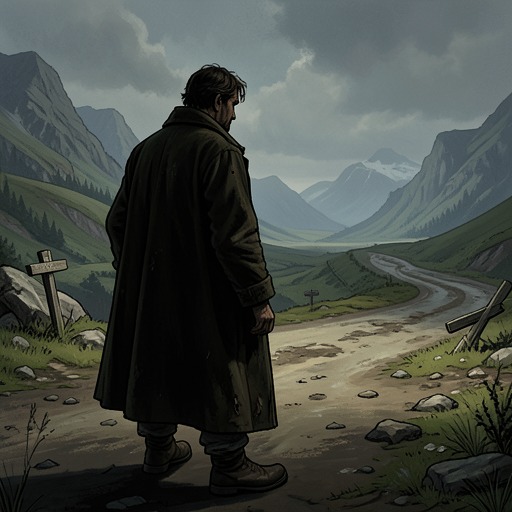
Haran’s narrative function depends on the collision between movement and memory. Terah had physically left Ur, yet the past met him on the road in a form he could not easily escape. The town offered a literal place to settle, but its emotional force made settling there resemble surrendering to the wound itself. The journey toward Canaan thus becomes a test of whether Terah will continue toward the dream or remain surrounded by the reminder of what he lost.
Terah is described as having a choice. He could remain in Haran and dwell in bitterness, or he could gather his belongings and move on toward Canaan, the destination associated with the dream God had placed in his heart. The location becomes a threshold between two ways of living: one organized around pain that has become an identity, and another willing to continue despite pain that has not disappeared.
Genesis 11:31 is used to state that when Terah and his family came to Haran, they settled there. The next verse records that Terah died in Haran. In the book’s interpretation, these two details create a stark progression: stopping becomes settling, settling becomes a rut, and the rut closes in like a grave. Haran is therefore not portrayed merely as an unfortunate interruption; it is the place where an unfinished journey becomes a completed pattern of nonmovement.
Haran as Emotional Symbol
The location expands into a metaphor for any condition in which a person remains trapped by sorrow, guilt, injury, or bitterness. The book distinguishes the pain caused by one’s own wrongdoing from the pain caused by something done to oneself, and it places Haran within the second category. Terah did not cause the death that shattered his future, but the hurt could still determine the direction of his life if he allowed it to become the place where he permanently lived.
This symbolic Haran is described as a place people can inhabit inwardly even when they have not physically stopped moving. The past keeps returning, and the reminder of suffering can make the future appear inaccessible. The danger is not that grief exists; the book acknowledges a proper season for grief and sadness. The danger is dragging that grief indefinitely until sorrow hardens into bitterness and bitterness closes the door to future blessing.
Departure and Theological Meaning
The book presents leaving Haran as a deliberate, repeated decision rather than a single effortless breakthrough. A person who feels trapped in a personal Haran may face resistance from Satan, portrayed as continually trying to pull the sufferer back toward pain. Freedom is nevertheless described as possible when the person chooses, day by day and moment by moment, to shake off the past and step outward again.
That movement is joined to forgiveness. The reader is urged to forgive the person who caused the wound and to release resentment toward God over losses that have been endured, while relying on God for help through the pain. The book calls the accumulated bitterness a rotting burden that steals the life God intends to give. In this framework, Haran represents the point at which loss can become either a prison or a passage: remaining there preserves the wound’s authority, while leaving creates the possibility of restoration and of a future greater than the sufferer could imagine.
Haran’s significance also connects it to the book’s larger explanation of delayed blessing. Elsewhere, overwhelming circumstances and apparent abandonment are interpreted as situations in which God’s purposes exceed human understanding; hardship may function as a test or training that prepares a person to bear abundance. Haran adds another dimension to that argument. Some obstacles are not simply external trials but the inward weight of old pain. The journey cannot continue until that weight is consciously surrendered. As a result, the town stands as a memorable image of the choice between settling in sorrow and moving toward the life, growth, and blessing associated with God’s promise.