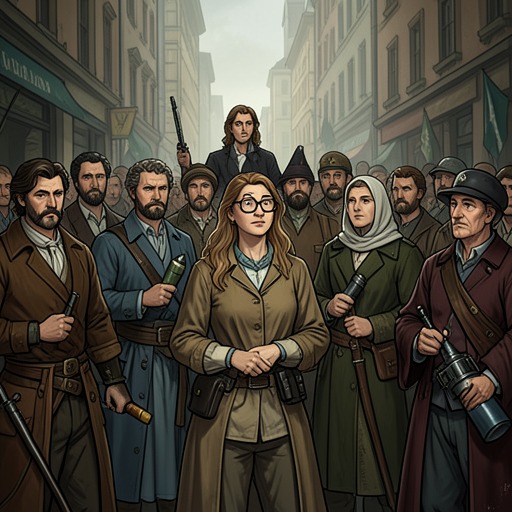
Shi er tanshi kui pian can nan
Crazy Mama: 9 Steps to a Not-So-Normal LifeThe twelve-scout reconnaissance of the Promised Land becomes a defining example of the cost and consequence of resisting the majority. In Hannah Keeley’s retelling, the scouts return from their mission divided over what the people should do: most see the inhabitants as an insurmountable obstacle, while Caleb and Joshua insist that the land can be taken. Their disagreement turns a report about territory into a conflict over vision, courage, and conformity.
Mission and Stakes
At the brink of the Promised Land, Moses sent twelve scouts to examine the territory. Their report mattered because it would shape how the people understood the challenge before them and whether they would attempt to enter. The danger was not presented as imaginary: giants lived in the land. But the account emphasizes that the scouts interpreted this threat differently, so the mission produced not a single shared conclusion but a contest between fear and confidence.
The Divided Report
Ten scouts concluded that the people had no chance of defeating the inhabitants. They described themselves as grasshoppers in comparison, extending their sense of weakness to the way they believed the inhabitants saw them. Caleb, by contrast, quieted the people before Moses and urged them to go up at once, arguing that they were able to conquer the land. Joshua joined him in that opposing assessment. The disagreement was therefore not over whether the obstacles existed, but over whether those obstacles made entry impossible.
Opposition to Caleb and Joshua
The majority did not accept the two scouts’ confidence or follow their proposal. Instead, the people became so angry with Caleb and Joshua that they threatened to kill them. In Keeley’s interpretation, the reaction illustrates the social price of standing apart: the minority’s dissent did not earn immediate welcome, but provoked hostility. She uses that reversal to distinguish conformity from authenticity and to frame the two men’s position as a courageous refusal to adopt the majority’s fearful view.
Outcome and Meaning
The account closes on the difference between the majority’s immediate response and the eventual outcome: of all twelve scouts, only Joshua and Caleb entered the Promised Land. Their survival as the two who reached it gives the episode its force in Keeley’s argument. The story supports her appeal to readers to resist pressure to conform, even when standing apart hurts; in her presentation, the episode’s conclusion confirms that the minority’s confidence, rather than the majority’s fear, was aligned with the future of the journey.