Promised Land
Crazy Mama: 9 Steps to a Not-So-Normal LifeThe Promised Land is the destination of divine promise and the book’s central image for a life beyond limitation. Also called Canaan in the account of Terah’s journey, it is presented not merely as territory but as the visible fulfillment of a dream first placed in the heart by God. The narrative repeatedly turns the location into a test of vision: those who measure the future by present circumstances remain outside it, while those who believe, speak, and act according to God’s promise move toward possession.
Definition and Promise
The Promised Land appears as the place toward which Terah was directed after the death of his son Haran. Before God called Abraham to go there, the dream of leaving Ur and heading toward Canaan had already been placed in Terah’s heart. This makes the location more than a destination on a map. It is tied to inheritance, blessing, family continuity, and the possibility that a broken dream may still become the beginning of another person’s calling.
The book broadens this biblical setting into a spiritual pattern. God’s promises are described as an inheritance already bearing the believer’s name, waiting to be claimed by anyone willing to study God’s Word and believe its provisions. In this framework, the Promised Land is the place where covenant blessing becomes lived experience: abundance replaces lack, and a person moves from merely surviving toward the expansive life the text associates with God’s intention.
Terah’s Journey and the Geography of Grief
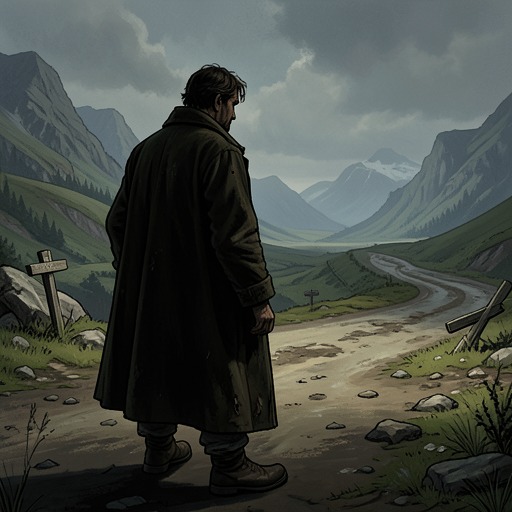
Terah’s movement toward the Promised Land begins in profound loss. Haran, his firstborn son and the bearer of the family name, inheritance, and blessing, dies. The death does not only remove a beloved child; it appears to kill Terah’s dream of inheritance as well. Yet in the middle of that despair, Terah gathers his goods and sets out from Ur toward Canaan.
The journey becomes painfully ironic when Terah stops in a town called Haran, the same name as his dead son. The place turns the past into a permanent geography. Every mention of the town, every written address, and every step outside the home can function as a reminder of the loss he cannot escape. The Promised Land therefore stands in contrast to a location where grief has become immovable: one place points toward God’s future, while the other continually returns Terah to his wound.
Terah faces a decisive choice after settling in Haran. He can remain there and dwell in bitterness, or gather his belongings and continue toward Canaan and the dream God placed within him. Genesis 11:31 is presented as recording that Terah settled in Haran, followed by the statement that he died there. In the book’s interpretation, stopping is not neutral. Sorrow can become a rut, and the rut can close around a person like a grave. The Promised Land thus marks the road not taken by Terah: the future remained possible, but he did not complete the movement toward it.
The Twelve Scouts and the Politics of Perspective
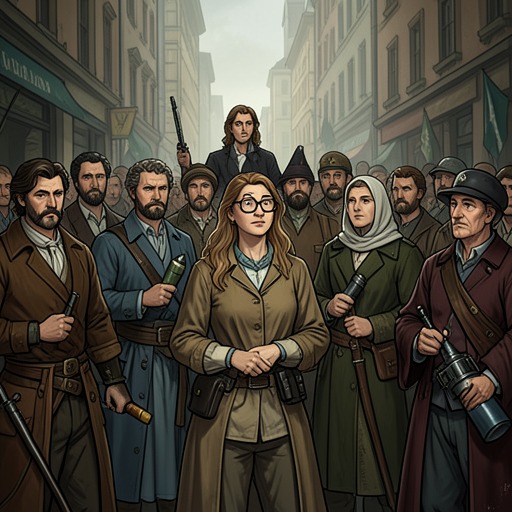
The Promised Land becomes a communal test when Moses sends twelve scouts to examine the territory at the Israelites’ approach. Ten return convinced that the giants living there cannot be defeated. Their report defines the people in relation to the threat, saying that in their own eyes they were like grasshoppers and that they appeared the same way to their enemies.
Joshua and Caleb offer the opposing interpretation. Caleb calls for immediate advance, insisting that the people are well able to conquer the land. Their position is not treated as the majority view; it is precisely the minority’s willingness to reject the crowd’s fear that distinguishes them. The majority responds with hostility and threatens the two nonconformists with death, showing that the path toward the Promised Land may require enduring rejection from one’s own community.
Only Joshua and Caleb among the twelve scouts are said to enter the Promised Land. The contrast gives the location its strongest narrative logic: the same territory is seen by all twelve, but it does not produce the same conclusion in each observer. Ten interpret its giants as proof of defeat; two interpret the challenge through faith in God. Entry is therefore connected not simply with proximity or information, but with the perspective that governs action.
A Symbol of Faith and Perseverance
The book repeatedly addresses readers as standing on the brink of their own Promised Land, on the edge of a miracle. This language transforms the biblical location into a present spiritual threshold. The promise is described as rising within the reader, while the text itself becomes an instrument through which confirmation and expectation meet. The invitation is to become the person God designed, release conformity, and step into the promise rather than remain among the masses.
The journey is not presented as equally timed for everyone. Some may require forty days, others forty years, and some may never see the promise become reality—not because God lacks power, but because they lack the faith to believe that He can fulfill it. The forty-year wandering of the Israelites functions as a warning against retreat: taking one step forward in faith and then two steps backward when circumstances resist can prolong the journey indefinitely.
The Promised Land is also linked to the book’s teaching about speech. Since the visible world is said to begin in the invisible realm, believers are urged to call the desired end from the beginning. The weak should say they are strong, the poor that they are rich, and the sick that they are well. In this logic, speaking God’s promises before circumstances visibly change is not treated as denial but as participation in the spiritual reality that precedes manifestation. The Promised Land is reached through a combination of vision, faith, “fightin’ words,” and persistent movement.
Theological and Narrative Significance
The location concentrates the book’s larger theology of blessing. Through Jesus Christ, the curse is described as broken and believers are said to be restored to the original covenant blessing. God’s grace is presented as undeserved favor, and the promised inheritance as something far greater than a small financial recovery or temporary improvement. The Promised Land becomes the narrative shorthand for that restored abundance, even as the book connects the promise to health, prosperity, joy, purpose, and service to others.
Its meaning is therefore both personal and outward-facing. The book rejects a “just enough” existence because blessing is meant to overflow into a broken and hungry world. To enter the Promised Land is not merely to secure comfort for oneself; it is to receive enough abundance to extend God’s glory and meet the needs of others. This emphasis distinguishes the promised future from private accumulation, even though the text frequently describes it in material terms.
The location also exposes the book’s central tension between divine promise and human responsibility. God is portrayed as willing to bless, while readers are instructed to obey, resist distraction, reject conformity, remain faithful under testing, and align their words with God’s Word. The Promised Land is close enough to be announced and imagined, yet difficult enough to require courage. By the book’s conclusion, those who stand out, stand firm, and live according to God’s wisdom are declared blessed like crazy. The Promised Land endures as the image of that arrival: a promised inheritance made real through faith that refuses to let present obstacles define the future.