Righteousness
Crazy Mama: 9 Steps to a Not-So-Normal LifeRighteousness in Crazy Blessed Life means both right standing with God and a life that refuses to compromise with what the book understands as God’s commands. The concept holds together a gift and a discipline: standing before God is attributed to faith and grace, while righteous living requires obedience, perseverance, and trust when circumstances appear to contradict God’s promises.
Right Standing Through Faith
The book first places righteousness within a vision of divine revelation and human direction. Proverbs 29:18 is invoked to connect the absence of vision with ruin, while associating keeping God’s law with blessing. Righteousness therefore belongs to a framework in which a person learns to see life according to God’s purposes rather than allowing immediate limitations to set the horizon.
Abraham’s encounter with God makes that connection personal. The book portrays him in his tent, growing older and fearing that he will leave life without children or an heir. God brings him outside to look at the stars and promises that his descendants will be beyond counting. Abraham trusts God, and that faith is counted as righteousness. The scene gives the concept a decisive shape: righteousness is not presented as something Abraham earns by already possessing the promised future. It begins with trusting God’s word when the visible evidence offers little reassurance.
That pattern is extended through the book’s account of grace. Ephesians 2 is used to describe people as made alive with Christ and raised with him, despite their shortcomings and trespasses. The author presents Jesus’ death as the means by which people return to covenant blessing: his suffering is associated with their life, healing, and abundance, and his position with God with their status as heirs. In this account, righteousness is not a claim to personal deserving. It is received through God’s undeserved favor, and the book identifies the riches of that grace as part of the reason for the gift.
A Gift That Must Grow
The book does not equate received righteousness with immediate moral perfection. It describes qualities associated with a Spirit-filled life—peace, patience, kindness, and goodness—as seeds already present but not yet mature. Prayer and the Word of God water and feed these qualities; development takes practice, just as the capacity to run a marathon requires training even when the necessary muscles are already present.
The same distinction appears in the author’s reading of Gideon. God sees in him a mighty man of valor before Gideon recognizes that strength in himself. The book uses the episode to argue that human limitations do not cancel the greatness God has placed within a person. It connects this claim to the mind of Christ and to the righteousness of God becoming the believer’s righteousness when Jesus is made Lord. Yet growth remains necessary: the qualities are present as potential, and a willing learner becomes more like Jesus over time.
This emphasis on development also informs the book’s account of hardship. Blessing carries weight, the author argues, so the capacity to manage it must be built. Managing a hundred dollars is contrasted with managing a million; handling a thousand-square-foot home with managing a five-thousand-square-foot one. Abundance, in this reasoning, magnifies what is already present. A period of trial can therefore function as training in the habits needed to bear greater responsibility, while anxiety, resentment, or greed can grow if they are the habits being practiced.
Uncompromising Conduct
Righteousness also has a practical, ethical meaning: refusing to take the easy path when it requires abandoning one’s principles. The book reads the narrow way in Matthew 7 as the difficult road that leads to life, in contrast to the broad, comfortable way that leads to destruction. Its image of childbirth gives pressure a double meaning: the pain is real, but so is the promise. Living without compromise means accepting difficult choices now in expectation of what the book calls God’s promise later.
The description of the righteous person in Psalm 1 supplies a daily pattern for that choice. The person avoids the counsel and company of the ungodly, delights in God’s law, and meditates on it day and night. The resulting image is a tree planted beside streams of water, bearing fruit in season and not withering. Prosperity in this passage is linked not to luck but to sustained attention, discipline, and life within the boundaries the book attributes to God.
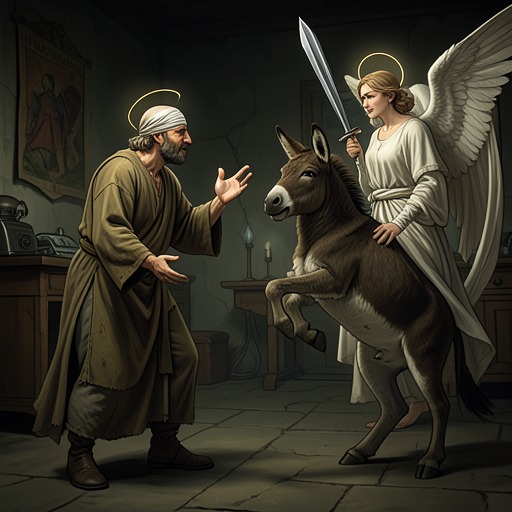
The account of Balaam’s donkey turns the argument into an example of obedience under pressure. The donkey sees the angel of the Lord and turns aside three times; Balaam, unable to see what she sees, strikes her. The angel then explains that the donkey’s actions have protected Balaam from death and speaks in her defense. The book draws from this episode the claim that God can honor and protect even an imperfect creature that acts rightly. It applies the lesson to ordinary responsibilities—parenting, marriage, home, and work—where continuing to act with integrity may be difficult but may also affect the people who depend on the person doing so.
Faith Under Contradiction
The book’s account of righteousness is tested most sharply when suffering or lack seems to challenge the promise of blessing. It acknowledges both guilt over wrong actions and pain caused by wrongs suffered from others, including bitterness over a loss that seems beyond one’s control. Abraham’s fear and Habakkuk’s distress offer biblical parallels: Habakkuk cries out over violence and the apparent absence of help, but God answers that a work is underway which would astonish him. The response does not make the distress unreal; it redirects expectation toward a divine plan that cannot be inferred from present appearances.
The book applies a similar logic to confession. It contrasts statements aligned with God’s promises with speech that it interprets as agreement with Satan’s plans of defeat, despair, sickness, and lack. Proverbs 12:17 is used to link speaking truth with righteousness, and the author distinguishes this truth from what can be seen or touched in immediate circumstances. David’s confrontation with Goliath supplies the dramatic example: David faces a giant more than ten feet tall, armed with a sword, spear, and heavy armor, while carrying only a sling. He declares confidence in God’s deliverance, defeats Goliath with the sling, and uses Goliath’s own sword to cut off his head. The story models the book’s insistence that faith should answer intimidating appearances rather than take them as the final truth.
That insistence does not mean that every difficulty disappears at once. The author explicitly addresses the experience of stepping out in faith and seeing nothing change, describing such intervals as tests and training. The book’s resolution is a call to combine trust with obedience: righteousness is a standing received by grace, but also a practiced allegiance expressed in conduct, speech, and persistence. Its promised blessing is therefore presented as both a divine gift and a life whose habits must be formed to carry it.