
Compassion Against Indifference
Crime and PunishmentRaskolnikov alternates between spontaneous compassion and a theory that treats suffering as impersonal, exposing the instability of his moral outlook.
increasing Bearing strength in each event
 decreasing
Bearing strength in each eventdecreasingCoins for a Broken Household
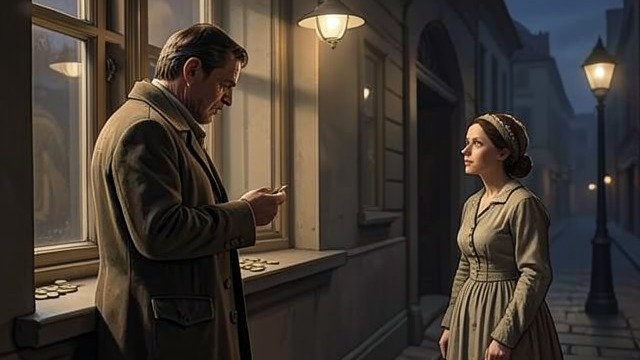
Coins for a Broken Household
Unplanned Assistance
After witnessing Katerina Ivanovna’s despair and the frightened children, Raskolnikov leaves his remaining tavern money on the window. The gesture is immediate and nearly hidden.
Once outside, he mocks the idea that the family can be rescued by so small a sum. His unease shows that compassion and contempt coexist in him rather than cancel one another.
The Drunk Girl
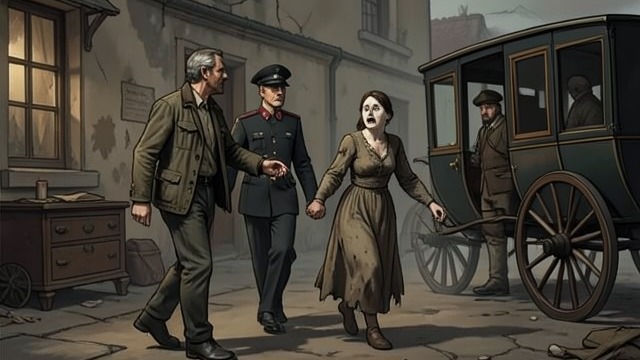
The Drunk Girl
An Attempt to Protect
Raskolnikov finds a young intoxicated girl on a public seat and sees a well-dressed man waiting to take advantage of her. He calls a constable and gives him money to arrange her return home.
He insists that she has likely been deceived and pushed into danger. For a moment, he acts as though another person’s vulnerability creates a responsibility he cannot ignore.
Compassion Withdrawn
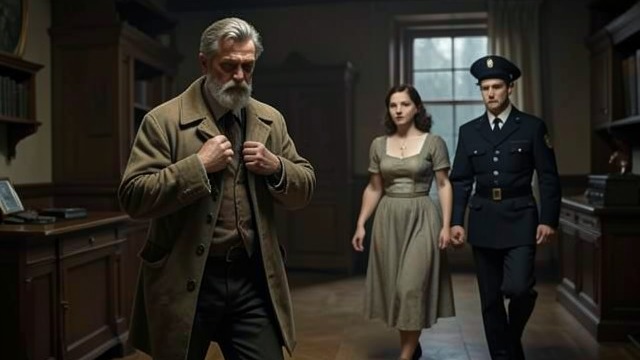
Compassion Withdrawn
A Sudden Reversal
As the constable follows the girl and her pursuer, Raskolnikov calls after him to let them go. He resents the twenty copecks he gave and questions whether he has any right to interfere.
His reversal is not a considered moral conclusion; it is a sharp recoil from the burden of caring. The scene anticipates the way he repeatedly suppresses fellow feeling when it complicates his private logic.
A Memory of the Mare
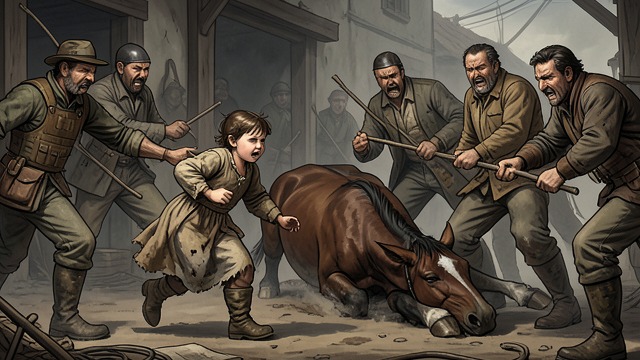
A Memory of the Mare
The Child’s Horror
Raskolnikov dreams that, as a child, he watches Mikolka and a drunken crowd beat a frail mare to death. The child runs toward the animal, cries, and embraces its dead head.
The dream gives suffering a physical immediacy that abstract arguments cannot contain. The remembered tenderness of the child stands in violent contrast to the murder he has been contemplating.
The Final Renunciation

The Final Renunciation
A Moment of Relief
Raskolnikov wakes shaken and declares that he cannot carry out the murder. He recalls how loathsome the plan felt during his earlier visit and prays to be shown another path.
The relief seems complete as he crosses the bridge and watches the evening sky. Yet the chance news at Hay Market soon changes the conditions around him, showing how fragile this resolution will be.
The first evening, as Raskolnikov leaves the Marmeladov rooms
The day after he reads the letter, around two o'clock
Minutes after the encounter with the girl
That night, while asleep on Petrovsky Island
Just after waking from the dream
