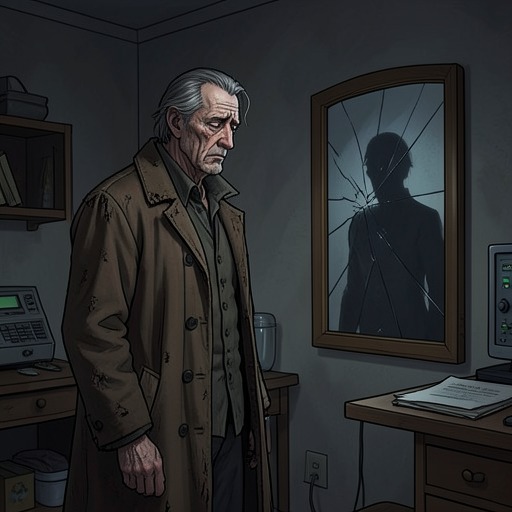
“I ought to be crucified—but pity me!”
Crime and PunishmentThe expression “I ought to be crucified—but pity me!” distills Semyon Zaharovitch Marmeladov’s appeal into a contradiction: he declares himself deserving of punishment while asking not to be abandoned to it. Spoken in a tavern after a bystander challenges why he should be pitied, the plea grows into a public confession and a vision of mercy wide enough to include those whom respectable judgment would exclude.
The Challenge and the Plea
Marmeladov responds to the tavern-keeper’s question by standing with one arm outstretched, as if he had been waiting for the opportunity to answer. His opening reverses the challenge: “I ought to be crucified, crucified on a cross, not pitied!” He does not claim innocence or ask the listeners to overlook his conduct. Instead, he intensifies his self-condemnation, then makes the plea that gives the expression its force: “Crucify me, oh judge, crucify me but pity me!” Punishment and compassion are not alternatives in his appeal; he asks to be judged and pitied at once.
The setting makes the speech an answer to public ridicule as well as to the tavern-keeper. Laughter and oaths have come both from people listening and from people who know nothing of the exchange but are looking at the discharged government clerk. Marmeladov speaks into that noisy, contemptuous audience, addressing the men who sell and drink the tavern’s pint. He rejects the idea that drinking has given him pleasure: “it's not merry-making I seek but tears and tribulation!” His account recasts the drink as part of suffering rather than escape from it, though it does not erase his responsibility for his degradation.
From Self-Condemnation to Mercy
The speech shifts from Marmeladov’s own abasement to a future scene of divine judgment. He imagines the judge asking where the daughter is who sacrificed herself for her family: his consumptive stepmother and the little children of another, as well as her “filthy drunkard” of an earthly father. The imagined question places Sofya Semyonovna Marmeladova’s pity for him at the center of his hope. Her compassion does not make him worthy by conventional standards; it becomes the reason he believes she will be recognized and forgiven.
Marmeladov repeats that forgiveness is already promised to her, invoking the words, “Thy sins which are many are forgiven thee for thou hast loved much.” He says he felt this certainty in his heart when he was with her just then. From this personal assurance, his vision widens: the judge will summon not only the good and wise but also drunkards, the weak, and the children of shame. Even those described as marked by the Beast are invited to come forth. The repeated summons overturns the social distinction between the deserving and the disgraced without pretending that the disgrace itself has vanished.
The Speech’s Ending and Effect
The expression’s central tension persists to the end: Marmeladov accepts the language of condemnation, but refuses to believe condemnation is the last word. In his imagined scene, the wise object to the admission of such people; the answer is that they are received because none believed himself worthy of it. Mercy rests not on a claim to moral superiority but on the absence of that claim. Marmeladov’s appeal thus transforms his own degradation into an argument for compassion toward everyone whom judgment would cast out.
When the speech ends, he sinks back onto the bench exhausted and helpless, looking at no one and apparently absorbed in thought. The listeners fall silent for a moment, but laughter and oaths soon return. That brief pause gives way to the dismissive “That's his notion!” The crowd’s response does not confirm the forgiveness he imagines; instead, it sets his vision of universal acceptance against the tavern’s immediate return to mockery. The expression remains both a plea for Marmeladov himself and the emotional core of his larger hope that the pitied and condemned will not be excluded from mercy.