Alyona Ivanovna
Crime and PunishmentAlyona Ivanovna is an elderly pawnbroker whose small flat becomes the setting for Rodion Romanovitch Raskolnikov’s first direct encounter with her and, later, her killing. She is presented both through the terms of her lending business and through Raskolnikov’s wary attention to her person and rooms. Her role in the plot turns an ordinary pawn transaction into a fatal confrontation: she receives his watch as a pledge, then is killed by him during a later visit.
Identity and Setting
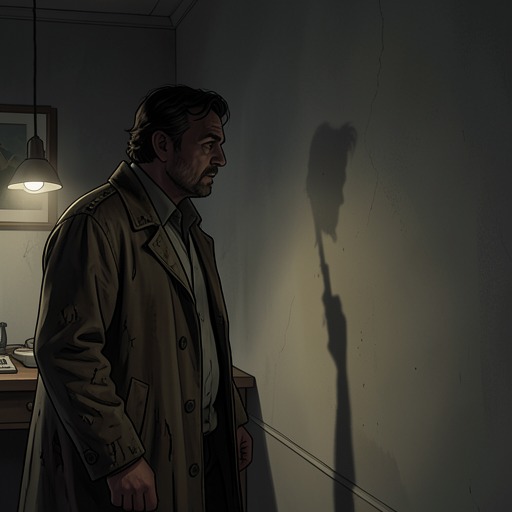
Alyona lives alone in a small flat on the fourth floor of a Saint Petersburg tenement. Raskolnikov knows that another apartment on the floor is being vacated by a German civil-service clerk and his family; once they leave, he expects Alyona to be the only occupant there. The near-empty landing gives his approach an element of isolation, while the familiar bell brings back the memory of an earlier visit and unsettles his already strained nerves.
When she first opens the door, Alyona allows it only a crack and watches her visitor with distrust. Seeing several people on the landing, she grows bolder and opens it wider. Her caution governs the first moments of their meeting: she faces Raskolnikov in silence before asking what he wants. The flat itself consists of two small rooms, one containing her bed and chest of drawers behind a cotton curtain. Raskolnikov notices its cleanliness, a detail that sits in contrast with his contemptuous private judgment of its owner.
Her appearance is described as diminutive and elderly, with oil-smeared, grizzled hair and a fur cape worn despite the heat. These details are given through a scene closely focused on Raskolnikov’s perceptions. The description establishes the physical impression she makes on him, but the encounter also shows her acting with watchfulness and authority in her own home: she scrutinizes him, controls the exchange, and demands payment according to her terms.
Pawnbroker and Household
Alyona lends money against personal possessions. During Raskolnikov’s visit, he offers an old-fashioned silver watch engraved with a globe and attached to a steel chain. She reminds him that the term on his previous pledge expired two days earlier. He asks her to wait while he brings another month’s interest, and the exchange presents the practical routine of borrowing and repayment on which their relationship depends.
A student later describes Alyona to an officer as wealthy and willing to lend sums as large as five thousand roubles, while also accepting a pledge worth only a rouble. According to the student, she gives only a fraction of an article’s value and charges five or even seven percent a month. He says that missing the interest deadline by a single day can mean losing the pledge. These claims come from an overheard conversation, not from Alyona explaining her own methods, but they supply a broader account of the severity and financial reach attributed to her business.
The student also reports that Alyona has a sister, Lizaveta Ivanovna, whom she beats and keeps in a condition of bondage, despite Lizaveta’s considerable height. This is likewise information conveyed by the student. It gives Alyona a relationship beyond the pawn transactions and frames her household authority as a source of harm, while leaving the account mediated by another character’s speech rather than by a scene between the sisters.
Raskolnikov’s Encounters with Her
Raskolnikov approaches Alyona as a customer, first bringing her the watch and negotiating over the overdue pledge. The transaction gives him a concrete reason to enter the flat and places him under the scrutiny of a lender who expects repayment. On a later visit, she handles the pledge while he waits. When she turns away to deal with it, he draws an axe from beneath his coat and kills her. The abrupt transition from a familiar exchange to murder makes the pawnshop visit the point at which his ordinary dealings with Alyona become irreversible.
The killing is carried out with the blunt side of the axe. Afterward, Raskolnikov retrieves the keys from her pocket and goes into the bedroom to search the chest of drawers. The narrative records both his renewed hesitation and his resumption of the search: for an instant he considers abandoning what he is doing, then returns to it. When he fears she might still be alive, he checks and confirms that she is dead. The sequence emphasizes the divided course of his actions without supplying an independent account of Alyona’s thoughts or intentions in these final moments.
Death and Narrative Significance
After killing Alyona, Raskolnikov searches her clothing and discovers a purse hanging on a string, along with crosses and a small religious image. He puts the purse in his pocket without inspecting its contents and leaves the crosses on her body. Her possessions therefore become part of the immediate aftermath, but the scene does not present the search as a calm or orderly transaction: he handles the keys, enters the bedroom, hesitates, and then continues. Alyona’s death shifts the focus from the terms she imposes as a lender to the consequences of Raskolnikov’s violence and his attempt to take valuables from her home.
Alyona’s characterization is necessarily limited in these episodes. She is seen in her flat, conducting business, and through reports made by others; the evidence does not give her an account of her own motives or an extended perspective on her life. That limitation is significant to the way she functions in the scenes. To Raskolnikov she is first the creditor who controls the pledged objects and the repayment deadline, while the student’s description casts her as a harsh and wealthy exploiter. The contrast between her ordinary role in a small domestic transaction and the fatal outcome gives the encounter its force without making the reported accusations a complete portrait of her.