Alyona Ivanovna's apartment
Crime and PunishmentAlyona Ivanovna's apartment is the home and workplace of a pawnbroker, but its decisive narrative importance lies in how Rodion Romanovitch Raskolnikov turns a familiar interior into the destination of a planned crime. The apartment first appears through his anxious inspection and a modest pawn transaction; on his return, the same doorway and rooms become the site of two murders. Its domestic scale and carefully remembered arrangement make the shift from rehearsal to irreversible action especially stark.
Setting and Approach
The apartment occupies part of a large, crowded house that faces a canal on one side and a street on the other. Working people of many kinds live there, and people continually pass through its two gates and courtyards. Several doorkeepers serve the building. Raskolnikov is relieved not to meet them when he enters, using a back staircase that is dark, narrow, and already familiar to him. The bustle of the larger house offers a contrast: he moves through a shared residence in which many people come and go, while seeking the relative concealment of one small flat.
At the fourth storey, porters are moving furniture from a flat formerly occupied by a German civil-service clerk and his family. Raskolnikov notes that the apartment will then be the only occupied one on that part of the staircase. He has counted the distance from his lodging house as exactly seven hundred and thirty steps. A month earlier, he had treated the idea of a crime as a disturbing fantasy; now he is approaching the apartment for what he regards as a rehearsal, and his excitement grows as he walks. The measured route and the changing occupancy of the floor give this approach practical precision, even as his state of mind remains unstable.
Interior and First Use
The apartment is small: a dark entry is partitioned from a tiny kitchen, and two rooms make up the whole flat. When Raskolnikov first enters the main room, the setting sun lights yellow wallpaper, geraniums, and muslin curtains. He scans the arrangement with deliberate attention, trying to notice and remember it. The room contains old yellow-wood furniture: a sofa with a large curved back, an oval table, a dressing table with a mirror between the windows, chairs along the walls, and a few inexpensive prints. A cotton curtain covers the entrance to the second room, where the old woman’s bed and chest of drawers stand. The apartment is described as clean, and Raskolnikov looks curiously toward the room he has not yet seen.
His visit has a practical pretext. He brings an old-fashioned silver watch, engraved with a globe and attached to a steel chain, to pawn. Alyona Ivanovna tells him that the time allowed for his previous pledge expired two days earlier. He offers to pay another month’s interest. The exchange establishes that he has visited before and that the apartment is a place where objects are assessed, pledged, and held. The watch is both a small possession he can surrender for money and the means by which he approaches a place whose layout he is already learning.
Return and Breach of the Threshold
When Raskolnikov returns, Alyona Ivanovna does not answer his first rings. He listens at the door and hears what seems to be someone cautiously listening from inside as well. He rings again, deliberately trying to sound composed, and hears the latch released. Concerned that she may shut the door and leave him alone with her in the passage, he holds it toward himself. She keeps her hand on the handle and blocks his way; he advances, and she steps back in alarm. He says that he has brought something and suggests they go into the light, then passes into the room without waiting for an invitation.
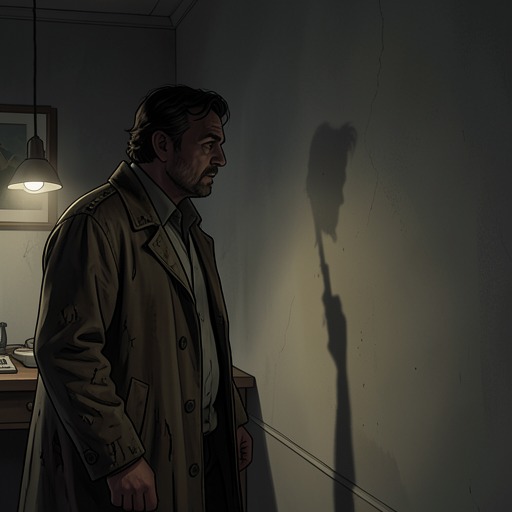
The domestic transaction is again used as cover. While Alyona Ivanovna turns toward the light to handle the item he has brought, Raskolnikov frees an axe concealed beneath his coat. He then kills her. The narrative’s attention to the short delay before the attack, the weakness and numbness he feels, and the sudden recovery of strength marks the moment when the plan ceases to be a rehearsal. Afterward, he takes the keys from her pocket and goes into the bedroom, where he searches among her stored belongings for valuables. Gold items are wrapped or placed in cases; he puts some into his clothing without examining them closely, and does not have time to take many.
A Second Murder and the Apartment’s Significance
The apartment’s enclosed rooms also bring an unplanned witness into the scene. Lizaveta enters carrying a large bundle and sees her murdered sister. She is unable to call out or defend herself, and Raskolnikov kills her too. Her arrival changes the crime from an attack on the intended victim into a second, unexpected murder. He drops the bundle and runs toward the entry, increasingly governed by fear. The narrative also records a growing sense of loathing: after Lizaveta’s death, he no longer wants to return to the box or even go back into the room.
The apartment’s significance comes from the collision of ordinary domestic details with the crime committed inside them. A mirror, curtains, furniture, a hidden bedroom, a bunch of keys, and pledged possessions are not merely background; they are details Raskolnikov observes, recalls, or handles as he moves through the flat. The first visit lets him study the rooms and conduct a transaction; the return turns that knowledge into an attempted advantage. Yet the apartment does not remain under his control. Its door can be listened through, its rooms can admit an unexpected arrival, and the second murder brings consequences that his original plan did not contain. What began as a measured route to a familiar pawnbroker’s home ends in flight from a place made permanently inseparable from his actions.