Marmeladov’s alcoholism
Crime and PunishmentMarmeladov’s alcoholism is not merely a private vice in the account he gives: it becomes a cycle of lost work, stolen household money, shame, and renewed drinking that harms the family he says he loves. His tavern confession makes the contradiction central. He recognizes the damage and names his own weakness, yet repeatedly turns toward drink, even when the money comes from his wife and daughter.
Pattern and Self-Description
Marmeladov distinguishes poverty from beggary and drunkenness from virtue, presenting his drinking as one element in a wider collapse of dignity. In his account, poverty may leave a person some inward nobility, but beggary strips that away; he says that he is ready to humiliate himself first. The distinction does not excuse his behavior. It shows that he understands his drinking as bound up with the degradation he describes, while continuing to choose it.
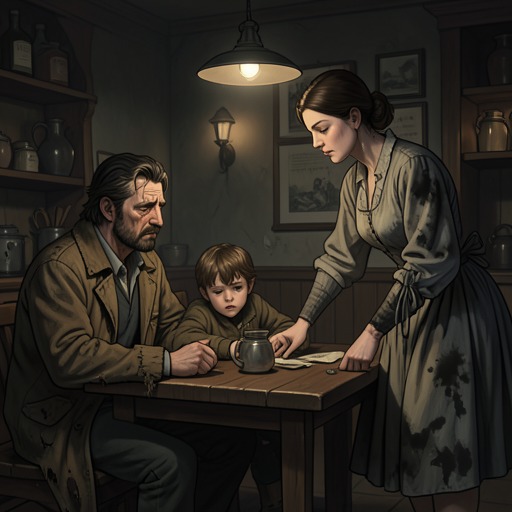
He speaks fluently in the tavern, though drink sometimes makes him lose his thread or draw out his words. His manner shifts between solemn confession and abrupt self-mockery. He admits that he has sold his wife’s stockings and her mohair shawl for alcohol, including a shawl that had been given to her. The specificity of these losses turns dependence into a record of household possessions converted into drink. He calls himself a beast by nature and treats his fate as something that has overtaken him, but his own account also identifies decisions through which the pattern continues.
Employment and Relapse
Marmeladov recalls a period of roughly a year in which he performed his duties conscientiously and did not drink. He says that he nevertheless failed to please his wife, and that he later lost an earlier position because of changes in the office rather than any fault of his own. After that loss, he began drinking again. His story therefore distinguishes an external setback from the later loss of employment that he attributes to his own weakness.
About a year and a half before the tavern confession, he and his family arrived in Saint Petersburg after wandering and enduring numerous calamities. He obtained a position there and then lost it through his own fault, once his weakness had become apparent. At the time he speaks, the family occupies part of a room in Amalia Fyodorovna Lippevechsel’s crowded lodging. He cannot say how they manage their living costs or rent. His alcoholism is set within this precarious situation, but the account does not reduce every hardship to drinking: it also records displacement, insecure work, and cramped living conditions.
The Household Cost
The effects of Marmeladov’s drinking fall on a household already under strain. He says that his wife, Katerina Ivanovna, works from morning to night, cleaning, washing, and caring for their three young children. She was raised to value cleanliness and, in his telling, continues that labor despite a weak chest and a tendency toward consumption. The family’s cold room and her illness sharpen the contrast between his awareness of their needs and his continued spending on alcohol.
His account of the stockings and shawl is not an isolated confession. He says he has taken money from the family before, and describes the household’s circumstances as a source of pain that drinking does not relieve. Instead, he says he drinks to suffer more intensely. This explanation casts alcohol as both escape and punishment: he seeks feeling in drink while claiming that it magnifies his distress. The contradiction is part of the pattern, not a resolution of it.
The Fifth Day Away
Marmeladov describes a recent relapse with particular precision. After imagining how he might use his earnings to clothe the children, give Katerina Ivanovna rest, and bring his daughter back into the family, he acted against those plans. Five days before speaking in the tavern, he secretly took the key to his wife’s box, removed what remained of his earnings, and left home. He says he has not returned; his employment is finished, and he exchanged his uniform for the clothes he is wearing. The sequence makes the gap between hopeful intention and action unmistakable.
That morning, he visited Sofya Semyonovna Marmeladova and asked her for money for a drink. She gave him thirty kopecks, which he says was all she had. The quart in the tavern was bought with that money and is empty by the end of his account. He dwells on the clothing and personal presentation for which he says his daughter must spend money, then recognizes that he has taken her last coins for himself. His appeal to Raskolnikov for pity follows this admission, but the disclosure gives the appeal its force: the money has already been consumed, and the family’s need remains.
Confession and Narrative Significance
Marmeladov tells this history to Rodion Romanovitch Raskolnikov, whom he singles out as a listener who may understand trouble of mind. He says he is not speaking to amuse the tavern’s other patrons, who already know his circumstances, but to find someone capable of feeling and understanding. The audience matters: his confession is at once an account of conduct and a plea to be recognized as more than a spectacle. The other drinkers’ laughter, and the innkeeper’s indifferent response, underscore the public humiliation he associates with beggary.
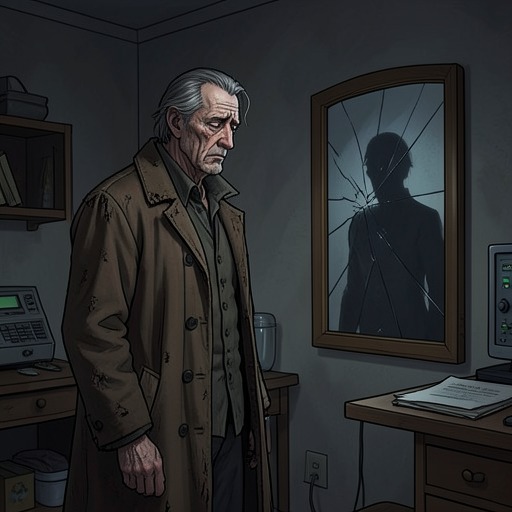
His repeated acknowledgment of wrongdoing does not halt the cycle. He can name the money he has taken, the possessions he has sold, the position he has lost, and the needs he has failed to meet; nevertheless, the tavern scene ends with the drink gone and his appeal still directed outward for sympathy. Alcoholism thus connects his self-knowledge to continuing harm rather than redemption. The tenderness he expresses toward his family remains present, but it does not prevent his choices from deepening their poverty and his own isolation.