Pyotr Petrovitch Luzhin
Crime and PunishmentPyotr Petrovitch Luzhin is a well-to-do counsellor whose proposed marriage to Avdotya Romanovna Raskolnikova turns private affection, economic security, and family obligation into a single contested question. In the account preserved in Rodion Romanovitch Raskolnikov’s mother’s letter, he is a respectable and capable professional offering a future in Saint Petersburg; in Rodion’s reading of the same account, his preference for a wife formed by poverty suggests a desire for gratitude and dependence. The gap between those views makes Luzhin significant before he has even appeared in person: his proposal exposes how easily material help can carry a claim upon another person’s freedom.
Identity and Position
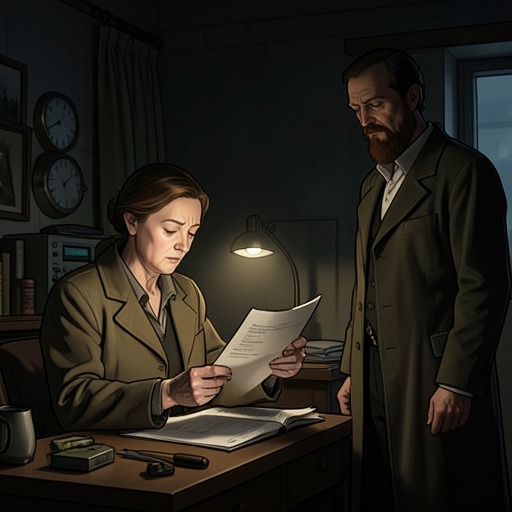
Luzhin is forty-five and already holds the rank of counsellor. He is described by Rodion’s mother as well-to-do, dependable, and a man who has made his fortune; he holds two government posts and is considered respectable and presentable. She finds him somewhat morose and conceited at first, but allows that these may be first impressions rather than settled defects. Her description presents a man whose standing and resources make him an attractive practical prospect for a family living with limited means.
His professional life is part of that appeal. Luzhin has spent many years conducting civil and commercial litigation and has recently won an important case. He is going to Saint Petersburg on business, including a significant case before the Senate, and wants to open a legal bureau. These plans establish him as an active professional with ambitions and connections, not merely as a suitor. They also make his arrival in the city seem capable of altering the family’s circumstances beyond the marriage itself.
Proposal and Its Terms
Luzhin first expresses a wish to make the family’s acquaintance through Marfa Petrovna, to whom he is distantly related. He is received over coffee and sends a courteous proposal the following day, asking for a prompt and decisive answer because he is busy and in a hurry to leave for Saint Petersburg. The speed of the process surprises Avdotya Romanovna and her mother, who spend the day discussing it before agreeing. Avdotya Romanovna consents, though the haste and the absence of strong love between the pair leave the decision morally and emotionally unsettled.
The most revealing account of Luzhin’s expectations comes from a remark he makes after receiving her consent. He says that he had resolved to marry a woman of good reputation, without a dowry, and, above all, one who had experienced poverty, because he believed a wife should regard her husband as her benefactor rather than consider him indebted to her. Rodion’s mother recalls that he said this less politely than she now recounts it, and that he later tried to qualify or smooth over the statement. She nevertheless found it rude. The remark sets a condition beneath the courteous proposal: poverty is not only a hardship the marriage might relieve, but a quality Luzhin appears to value because of the gratitude and unequal standing he expects it to produce.
Avdotya Romanovna does not dismiss the proposal after hearing this. She answers that words are not deeds and says she is prepared to endure a great deal if the relationship can remain honourable and straightforward. Her mother interprets Luzhin’s prudence as a reason to expect that he will care for his wife’s happiness, while also acknowledging that the match was arranged in haste and that there is no great love on either side. The letter thus records competing readings of the same evidence: a potentially useful, respectable marriage and a troubling expectation of marital indebtedness.
Family Prospects and Rodion’s Response
Luzhin’s prospective move to Saint Petersburg gives the engagement a broader practical promise. Rodion’s mother and sister hope he might employ Rodion as a secretary, since Luzhin says he will need one. He considers it preferable to pay a relative rather than a stranger, provided that the relative is qualified, but raises a doubt about whether university studies would leave Rodion enough time. The family then imagines that Rodion might eventually become an associate or even a partner in Luzhin’s business. This remains their hope, not a settled offer: Luzhin is cautious, has not yet met Rodion, and has not committed himself to the career they envision.
Rodion’s response to the letter is sharply different from his mother’s. He recalls that his sister can endure hardship but refuses to believe that endurance makes this match harmless. In his view, the remark about a poor wife who owes everything to her husband reveals a theory of superiority, not an accidental lapse. He considers the possibility that Luzhin meant to make that theory clear from the beginning, and fears that his sister will have to live under its consequences. His assessment is shaped by his belief in Avdotya Romanovna’s moral independence: he imagines that she would endure poverty rather than surrender her dignity for comfort, and concludes that her consent must be a sacrifice made for her brother and mother.
The letter does not establish that Rodion’s interpretation is correct, nor does it resolve what Luzhin would do within the marriage. It does show how the prospect of his money and professional influence enters the family’s hopes, while his reported words give Rodion grounds to suspect that assistance may come with an expectation of submission. Luzhin’s importance in these passages lies partly in that uncertainty. He is at once the proposed provider, a possible employer, and the centre of an argument over whether family security can be purchased without a cost to the person who bears it.
Narrative Role and Characterization
Luzhin is characterized indirectly, through the accounts and judgments of others, rather than through an extended direct encounter in these passages. Rodion’s mother emphasizes his status, business, courtesy, and possible usefulness to the family; she also records the remark that complicates her hopeful portrait. Rodion, reading her account in private, treats that remark as decisive evidence of a self-serving view of marriage. The contrast does not simply distinguish optimism from suspicion: each response is tied to a different stake. His mother hopes for security and opportunity, while Rodion fears that his sister’s sacrifice will be mistaken for consent to dependence.
The proposed marriage therefore links social position to intimate power. Luzhin’s professional success and wealth make him capable of offering genuine material advantages, but his stated preference for a wife without a dowry who has known poverty gives those advantages an unequal shape. The engagement’s significance in the available account rests not on a confirmed outcome, but on the conflict it brings into focus: Avdotya Romanovna’s willingness to endure hardship, her family’s hope of advancement, and Rodion’s insistence that relief purchased at the cost of moral freedom may be no true relief at all.