Raskolnikov learns Lizaveta will be away
Crime and PunishmentRaskolnikov learns Lizaveta will be away when he overhears a conversation at the Hay Market and discovers that Alyona Ivanovna will be home alone at a time that suits his contemplated plan. The encounter turns an everyday arrangement for selling household goods into a decisive opening: its accidental precision seems to close off his freedom even as it supplies the opportunity he had wanted. Looking back, Raskolnikov treats the meeting as both a chance occurrence and a turning point that appeared almost deliberately placed in his path.
A detour through the Hay Market
At about nine in the evening, Raskolnikov crosses the Hay Market while its traders are closing their stalls, clearing their wares, and heading home. The market’s tables, barrows, booths, and shops are being packed away; rag pickers and costermongers gather near the taverns in its dirty courtyards. The setting is not a special destination for him so much as a familiar place to wander. He likes the market and its neighboring alleys because his rags attract less contempt there and he can walk without drawing attention to his appearance.
That routine detour is important precisely because it seems unnecessary. Raskolnikov is tired, and the direct way home would have been more convenient. He often walks without noticing which streets he takes, but later he repeatedly wonders why this particular return took him through the market. The narrative gives the chance meeting a double character: it happens amid the ordinary closing of a market, yet acquires, in his later recollection, the force of a fateful appointment. The everyday scene does not announce its importance; its significance emerges from what he happens to hear.
The invitation and Lizaveta’s position
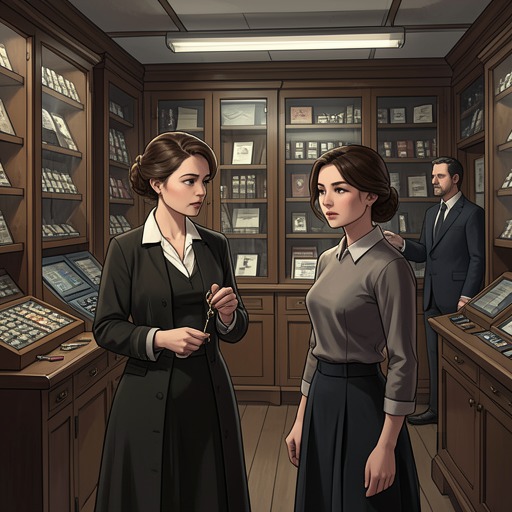
At a corner, a huckster and his wife are lingering beside two tables of small goods, including tapes, thread, and cotton handkerchiefs. They have finished trading for the day but have stopped to speak with Lizaveta, the younger sister of the pawnbroker Alyona Ivanovna. Raskolnikov has visited Alyona the previous day to pawn his watch and make his experiment, so the conversation concerns people already bound up with the plan forming in his mind. He knows Lizaveta, and she knows him a little.
Lizaveta is about thirty-five, tall, clumsy, timid, submissive, and described as almost idiotic. She lives in fear of Alyona, who makes her work day and night and beats her. At the market she carries a bundle and listens uncertainly while the huckster urges her to come to his home the next evening, where other people will be present and she can decide for herself. His wife joins the invitation and offers tea. Lizaveta hesitates, asks whether she is expected to come, and finally agrees, still pondering as she slowly leaves. Her uncertainty and fear make the agreement seem modest and reluctant; she is not setting out to arrange a criminal opportunity, but responding to an ordinary invitation connected with her work.
The information that changes the scene
Raskolnikov has already passed the group when he catches the essential detail: Lizaveta is to come the next day at seven. He moves quietly and tries not to miss a word. The information changes the meaning of the conversation at once. Lizaveta is Alyona’s sister and only companion, and her absence means that Alyona will be alone in the apartment at that exact hour. What the huckster presents as a practical appointment becomes, to Raskolnikov, the unusually certain opening his contemplated attack requires.
The discovery does not come from surveillance or a risky inquiry. He learns the time and the household circumstance simply by overhearing the invitation while passing. He recognizes that it would be difficult to establish in advance, with greater precision and less danger, that Alyona will be home and entirely alone. The opportunity’s usefulness lies in its specificity: not merely that Lizaveta will go out, but that she will be absent at a stated hour on the following day, leaving her sister without company.
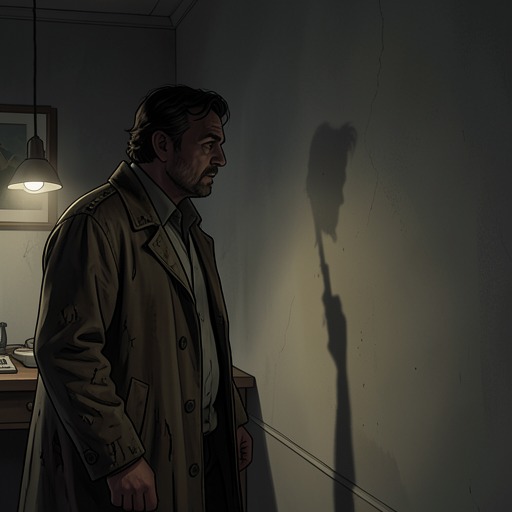
The effect on Raskolnikov is immediate and involuntary in its presentation. Only a few steps from his lodging, he enters as if condemned. He cannot think through what he has heard; instead, he feels that he has lost freedom of thought and will, and that everything has been decided irrevocably. The apparent gain in practical certainty is accompanied by a sense of inward surrender. The moment advances his plan, but it is also narrated as a moment in which his capacity to choose seems to contract.
Ordinary cause, fateful meaning
Raskolnikov later learns why the huckster and his wife invited Lizaveta. A family newly arrived in the town and reduced to poverty was selling its household belongings and women’s clothing. Because the goods would fetch little at the market, the family needed a dealer, and Lizaveta regularly took such work. She was trusted because she was honest, set a fair price, and adhered to it. The reason for the meeting is therefore prosaic and independent of Raskolnikov’s design. Nothing in the invitation was arranged for his benefit; its importance arises from the timing he happens to overhear.
That ordinary explanation sharpens, rather than removes, the contrast between chance and purpose. In later recollection, Raskolnikov is superstitiously struck by the fact that he took an unnecessary route and encountered Lizaveta at the very time when the information could most decisively affect his fate. He imagines the meeting as if it had been lying in wait for him, while the circumstances themselves offer no extraordinary cause. The event thus holds two explanations in tension: a routine errand brings Lizaveta to the market, and an unplanned detour places Raskolnikov within earshot.
His susceptibility to this sense of coincidence has a history. The previous winter, a student acquaintance named Pokorev, before leaving for Harkov, had given him Alyona’s address in case he needed to pawn something. Raskolnikov did not go at once; only six weeks earlier had he recalled the address and decided to pawn a small gold ring given to him by his sister. He had visited Alyona the day before the market encounter. In retrospect, this chain of contingent steps helps explain why he reads the new information as a strange influence or premonition, though it does not establish that the opportunity was anything other than accidental.
The discovery is consequently both a practical turning point and a crisis of interpretation. It gives Raskolnikov unusually exact knowledge about Alyona’s solitude, while his response recasts that knowledge as a decision already made beyond his control. The invitation to tea and the sale of impoverished strangers’ belongings remain ordinary events; for him, they become the hinge between a contemplated crime and an opportunity to carry it out.