Raskolnikov's relationship with his mother
Crime and PunishmentRaskolnikov’s relationship with his mother combines deep affection with financial dependence and a painful imbalance of sacrifice. In her long letter, she presents him as the family’s hope and support, while he reads the news of her and his sister’s hardships as proof that their devotion has placed an intolerable burden on them for his sake. The letter renews their closeness, but it also sharpens his distress at being treated as the person for whom the others must give things up.
Identity and Background
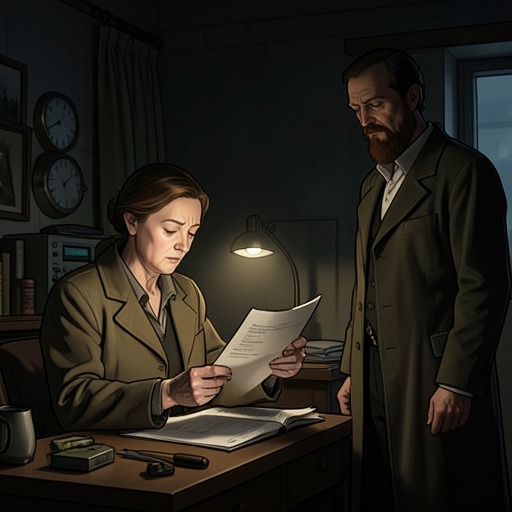
The relationship is revealed chiefly through a letter from Raskolnikov’s mother, who writes from the province of R. She says that two months have passed since her last letter and that the silence has worried her and kept her awake. Her explanation is practical as well as affectionate: she had borrowed fifteen roubles against her pension to send him money, and the lender’s claim on that pension prevented her from sending more until the debt was repaid. She makes clear that she has not forgotten him; limited means have constrained what she can do for him.
The letter also establishes how closely she identifies her own hopes with his future. She tells him that he and Avdotya Romanovna Raskolnikova are all she has to look to, and recalls her grief at learning that he had left the university because he could not afford to continue. Her devotion is not expressed only as sentiment: it has taken the form of borrowing, withholding distressing information, and trying to find further money for him even while preparing for her own journey.
Communication and Material Dependence
The arrival of the letter makes the bond visible before Raskolnikov reads a word. He pays the three copecks owed to Nastasya and urges her to leave him alone with it. He studies the small, sloping handwriting, recognizes it as the familiar hand of the mother who taught him to read and write, kisses the letter, and hesitates before opening it. The heavy envelope contains two large sheets covered in very small writing. Its physical intimacy contrasts with the distance the letter has to cross and with the long interval since he last received one.
Her account of money reveals how his needs have drawn the family into financial arrangements he did not fully understand. Avdotya Romanovna had taken a hundred roubles in advance on entering the Svidrigailovs’ household as a governess, with deductions to be made from her salary. His mother explains that Avdotya Romanovna used much of that advance to send him sixty roubles the previous year; the family had represented the money as coming from her savings. The mother now corrects that account, disclosing the concealment while explaining why her daughter could not simply leave her position without repaying the advance.
The proposed marriage to Pyotr Petrovitch Luzhin offers the mother a new, if precarious, source of credit. Because the marriage is known, she believes a lender may advance as much as seventy-five roubles against her pension, allowing her to send Raskolnikov twenty-five or perhaps thirty roubles. She also describes the limits around that hope: the family must reserve money for travel and for their first days in Saint Petersburg, although Luzhin has undertaken to arrange the conveyance of their bags and trunk. Her care for Raskolnikov therefore arrives entangled with debts, calculations, and the expenses of bringing the family together.
Affection, Protection, and Sacrifice
The mother’s letter repeatedly casts Raskolnikov as the family’s central hope. She calls herself and Avdotya Romanovna dependent on his future, sends her blessing, and asks her son to love his sister as she loves him. Her closing appeal reaches back to childhood: she remembers him lisping prayers at her knee while his father was alive and recalls the happiness of those days. The memory makes their bond both maternal and religious, linking present anxiety to an earlier image of family closeness.
Her protectiveness also governs what she has chosen not to tell him. She says that when he asked about Avdotya Romanovna’s troubles in the Svidrigailovs’ household, she feared that the full truth would make him abandon everything and come to defend his sister, even on foot. She admits that she did not yet know the whole story herself, but her account still shows how she anticipates his response and tries to manage what reaches him. The silence is meant to spare him or prevent an impulsive journey; once the circumstances change, she tells him what had been concealed.
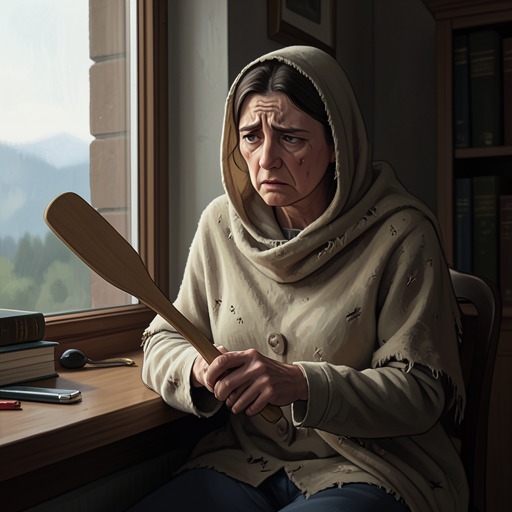
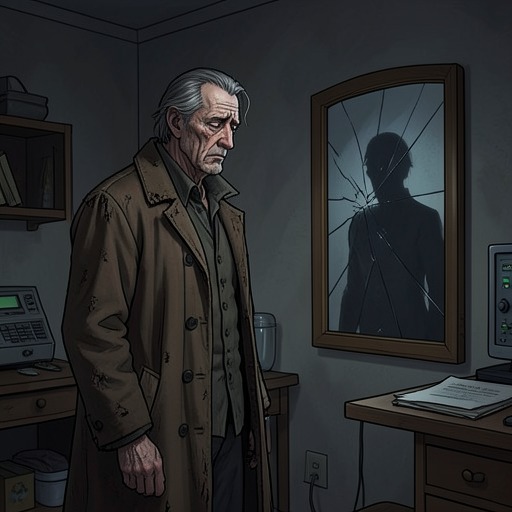
Raskolnikov receives these disclosures with tears, then a pale, distorted face and a bitter, wrathful smile. His mother’s tenderness does not calm him: it makes the sacrifices behind the family’s plans harder to bear. As he paces away from his cramped room, he interprets the marriage as a bargain made for his benefit and imagines Avdotya Romanovna surrendering her freedom so that he can continue his education and secure a future. He sees his mother’s partial love as part of the same exchange, though that judgment belongs to his distressed reading of the letter rather than to a stated intention by his mother.
Meaning in the Narrative
The letter changes Raskolnikov’s understanding of his family’s support. Money he had received as help from Avdotya Romanovna’s savings was borrowed from an advance she had taken, while his mother’s own limited pension has also been pledged to obtain funds. What might have appeared to him as separate acts of assistance becomes a connected pattern of family members absorbing hardship on his behalf. The disclosure makes affection feel inseparable from obligation.
The relationship is therefore marked by a painful contrast: his mother writes in the language of blessing, shared hope, and reunion, while he responds by resisting the sacrifices that her account seems to reveal. Her letter preserves their intimacy through handwriting, childhood memory, prayer, and direct maternal concern, yet its news turns that intimacy into a source of agitation. For Raskolnikov, being loved means being made the center of plans and losses he has not chosen; for his mother, caring for him means continuing to borrow, conceal, explain, and hope for his happiness.