Raskolnikov’s psychological crisis and isolation
Crime and PunishmentRaskolnikov’s psychological crisis and isolation take shape as a conflict between deliberate self-command and a deteriorating ability to engage with ordinary life. He withdraws from people, neglects practical needs, and turns recurring anxieties into a demand for immediate action. As his thoughts concentrate on his family’s hardship and a criminal design, his belief that reason will remain intact becomes increasingly difficult to reconcile with the weakness and confusion he experiences.
Condition and Daily Signs
The crisis is first registered in ordinary encounters. Raskolnikov owes his landlady for the garret, meals, and attendance she provides, and must pass her open kitchen whenever he leaves. He dreads being stopped for payment, complaints, or conversation, and tries to slip out unseen rather than face an exchange that might require excuses or lies. The narrative distinguishes this avoidance from simple cowardice: he has been in an overstrained, irritable condition, approaching hypochondria. His fear of the encounter matters less as a practical danger than as evidence that even routine contact has become intolerable.
That dread has spread beyond the landlady. Raskolnikov has become absorbed in himself and isolated from other people, to the point that he fears meeting anyone. Poverty remains severe, but the anxieties attached to his position have, paradoxically, ceased to move him toward practical action. He has stopped attending to important matters and lost the desire to do so. His withdrawal is therefore not merely a response to debt: it includes a broader failure of engagement, in which problems remain present while the will to address them recedes.
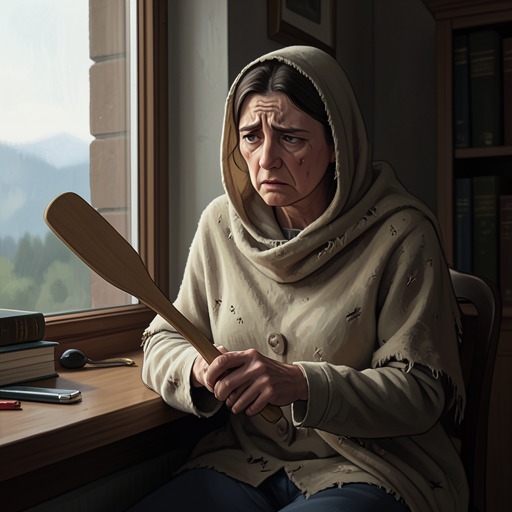
His outward movement through the city does not restore attention or connection. He walks without noticing his surroundings and often does not care to notice them; at times he mutters to himself. When he becomes aware of his thinking, he finds his ideas tangled and his strength diminished. He has scarcely eaten for two days, and his ragged clothes mark the material pressure under which this mental state develops. These details give the crisis bodily and social circumstances without reducing it to poverty alone: deprivation accompanies a more pervasive inward absorption.
Isolation and Avoidance
The open kitchen and the stairs make his isolation visible as a repeated pattern. Leaving his room entails passing the person to whom he is indebted, so a small domestic threshold becomes a point of anticipated confrontation. Raskolnikov imagines not only demands for money but the need to answer, explain, and possibly deceive. He avoids that burden by moving quietly and out of sight. The gesture is practical, yet it also condenses his larger retreat: he would rather evade the possibility of conversation than enter a relation in which another person can question him.
His social withdrawal also differs from indifference in a simple sense. He is acutely apprehensive about being met, but at the same time he has ceased to care about many practical consequences of his position. The combination is unstable: small encounters provoke shame and fear, while larger obligations no longer sustain purposeful effort. The text presents these tendencies together rather than as a settled explanation of one another. Isolation intensifies his private rumination, while his neglect of ordinary affairs leaves the conditions of isolation in place.
Family Pressure and the Demand to Act
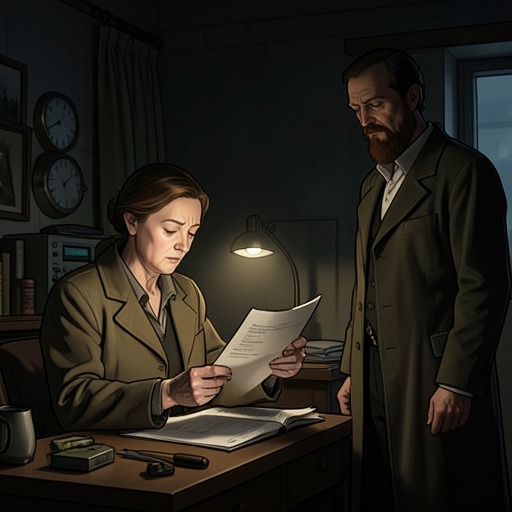
The letter from his mother gives an older anguish a sudden new force. Raskolnikov turns over the possible future of his mother and sister: his mother’s dependence on a limited pension and borrowing, and the danger that his sister may face further hardship. He recognizes that these questions are not newly formed. They have been familiar sources of pain for a long time, gradually gathering force until they have become a single urgent question that seems to require an answer.
The change is in his sense of timing. After the letter, he tells himself that passive worry is no longer enough: he must decide and act quickly. The alternative he imagines is to accept his lot by suppressing any claim to activity, life, and love, or to abandon life altogether. The remembered question of Semyon Zaharovitch Marmeladov—whether a person has anywhere to turn—joins the family crisis to Raskolnikov’s own sense of having no viable refuge. His thoughts thus move between concern for those close to him and a constricted, increasingly desperate view of his own choices; the passage does not present that pressure as a settled justification for what he contemplates.
From Recurring Thought to Design
A thought that had returned the day before comes back with a changed character. Raskolnikov has expected its return, and recognizes that it is older than a single day: a month earlier, and even yesterday, it seemed only a dream. Now it feels menacing and unfamiliar, accompanied by a hammering head and darkness before his eyes. The progression is important. The idea does not arrive as a fully formed decision; repetition and anticipation alter its force until he experiences it as something more immediate and difficult to dismiss.
His own account of criminal behavior exposes a further contradiction. He has long wondered why crimes are often badly concealed and so easily detected. He attributes this not chiefly to practical obstacles but to a failure of will and reasoning: in his theory, a kind of illness produces heedlessness when caution matters most, reaches its height before and during the crime, and may persist afterward. He remains unsure whether this condition causes crime or accompanies it. The uncertainty keeps his explanation from becoming a settled law, even as he applies it to the design occupying his mind.
Reason, Self-Confidence, and Narrative Tension
Raskolnikov assumes that he will be exempt from the impairment he has described. Because he does not regard his design as a crime, he expects his reason and will to remain unimpaired; he also believes that, once he has mastered the practical details, these can be overcome by deliberate effort. Yet the preparation has not begun, and the narrative emphasizes that he trusts his final decisions least. His theory offers the appearance of control while the account of his own hesitation, exhaustion, and inward disarray undermines that assurance.
This tension gives the crisis its particular shape. Raskolnikov can analyze failure in other criminals with apparent precision, but his framework depends on separating his own intention from the category he has studied. The story has already shown that his thought returns compulsively, changes under pressure, and sits alongside diminished attention to ordinary life. It also states that, when the hour comes, events unfold differently from what he expects, apparently by accident and unexpectedly. The available account therefore establishes neither a successful mastery of the plan nor a completed resolution of his isolation. Instead, it makes the gap between intellectual confidence and actual control central to his psychological state.