Rodion Romanovitch Raskolnikov
Crime and PunishmentRodion Romanovitch Raskolnikov is a student whose return to Alyona Ivanovna’s apartment and later murders of Alyona and Lizaveta mark a decisive turn in his story. Across these scenes, he appears as a man pulled between unease, concern for others, and violence that he carries out with startling mechanical force.
Identity and Introduction
When Raskolnikov visits Alyona Ivanovna again, he identifies himself as a student and recalls that he came to her a month earlier. His brief, half-bowing introduction suggests an effort to observe ordinary politeness, but the exchange is uneasy: Alyona remembers him distinctly and watches him with suspicion, while he is disconcerted by her mistrust and wonders whether he simply failed to notice it on his first visit. The return is therefore both a practical errand and a strained repetition of an earlier encounter, with recognition sharpening the tension between visitor and pawnbroker.
Raskolnikov also names himself as a student when addressing a policeman in the street, introducing himself directly and drawing the man toward an intoxicated young woman he believes may have been deceived and abandoned. His appearance is described as ragged, and he presses the policeman to examine the woman’s torn, improperly arranged dress and the attention of a stranger following her. Rather than leave the situation as a private suspicion, he tries to make the policeman see the danger and intervene.
The Letter and the Family Marriage
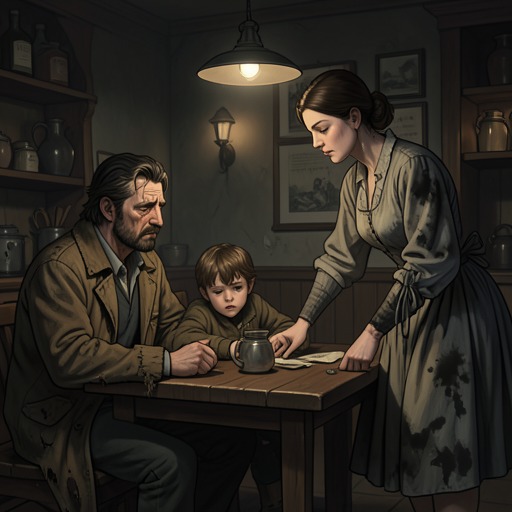
The letter from his mother places family devotion beside a decision that Raskolnikov experiences as an exclusion. She explains that she and Avdotya Romanovna Raskolnikova may be able to travel third class and hopes to send him thirty roubles rather than twenty-five. She calls Avdotya an angel and tells him that he is their one hope and consolation, while urging him to love his sister as she loves him. Her affectionate account also turns to faith: she asks whether he still prays and remembers how, as a child, he lisped prayers at her knee while his father was alive. The warmth of the appeal makes the news it carries more difficult for him to accept.
As he reads, tears wet his face; when he finishes, his expression has become pale and distorted, and a bitter, angry smile replaces the tears. Alone in his small yellow room, he lies on his dirty, threadbare pillow, his heart beating violently and his thoughts in turmoil. The room begins to feel suffocating, so he goes outside, no longer afraid of meeting anyone, and walks without attending to his route, muttering aloud until passers-by take him for drunk.
His thoughts turn to the marriage arrangement with Pyotr Petrovitch Luzhin. Raskolnikov rejects the idea that his mother and sister have settled the matter without regard for him; he reads their account of Luzhin’s haste to marry as evidence that the decision is meant to be irreversible. He dwells on the practical attractions the letter attributes to Luzhin—his fortune, two government posts, and supposed kindness—and fixes on Avdotya’s qualification that he only seems kind. The contrast between the family’s affectionate assurances and Raskolnikov’s suspicion gives the letter a double force: it confirms their attachment while intensifying his conviction that their sacrifice and plans demand his intervention.
The Murders and Their Immediate Consequences
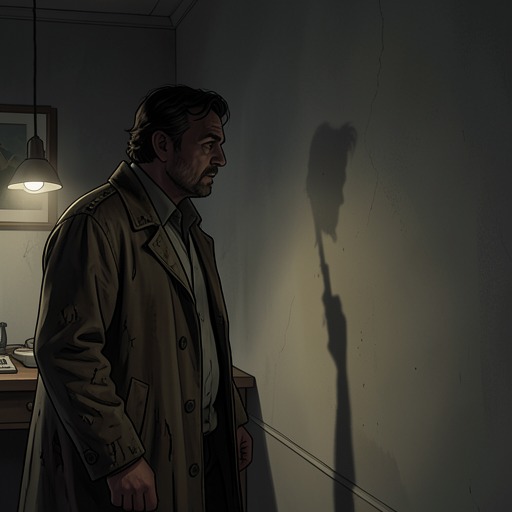
With Alyona Ivanovna turned away from him at the window, Raskolnikov frees the axe from beneath his coat but keeps it in his right hand. His hands feel weak and numb, and a sudden giddiness comes over him. When she moves toward him, vexed by the way the pledge has been tied, he has no more time to lose. He swings the axe with both arms and strikes her with its blunt side, almost mechanically and scarcely conscious of himself. Once the blow lands, his strength returns.
Alyona is bareheaded, her thin, greased hair streaked with grey and fastened at the nape by a broken horn comb. Because she is short, the blow falls on the top of her skull. She cries faintly, sinks to the floor with her hands raised to her head, and still holds the pledge in one hand. Raskolnikov strikes her again in the same place; when she falls back, he bends over her and sees that she is dead. The scene’s practical detail is inseparable from its horror: he lays down the axe, reaches into the familiar pocket where she had kept her keys, and tries to avoid the blood.
In the bedroom, Raskolnikov takes the keys from their steel ring and begins trying them on a chest of drawers. A sound from the room makes him stop and wait. Then he hears a faint, broken moan. When he runs out with the axe, Lizaveta Ivanovna is standing there with a large bundle in her arms, staring at her murdered sister. She trembles and backs toward a corner but cannot cry out. As he rushes at her, she raises an empty hand—not to shield her face, but to hold it out before her as if to keep him away. The axe’s sharp edge strikes her skull, killing her with one blow.
The second murder is unexpected, and Raskolnikov loses his composure. He snatches up Lizaveta’s bundle, drops it, and runs into the entry. Fear and revulsion rise together; the narration suggests that, had he been able to grasp the full horror and difficulty of what he had done, he might have abandoned the attempt to escape and surrendered, not from fear but from loathing. Instead, his attention grows blank and dreamlike, wandering to immediate tasks. He washes his sticky hands and the axe in a kitchen bucket, using soap from a broken saucer, then wipes and examines the weapon by the window.
Narrative Significance
Across these episodes, Raskolnikov’s self-presentation repeatedly fails to settle what his actions mean. He names himself as a student—to the pawnbroker, then to the policeman—as if the fact can establish a recognizable place in ordinary social life. Yet the same figure who asks the policeman to attend to a vulnerable stranger later kills two women, one murder unforeseen even by himself. The contrast does not resolve into a simple opposition between compassion and cruelty: the scenes instead show ethical attention and lethal violence coexisting, with no stable explanation offered by his stated identity.
The narrative also places intimate claims on him beside acts that narrow his awareness. His family’s letter makes love, obligation, and his sister’s marriage pressing concerns; afterward, during the murders’ immediate aftermath, his attention contracts to keys, blood, soap, and the axe. That movement from anguished interpretation to mechanical action and then to small practical tasks gives the scenes their unsettling force. His crisis is registered not only in what he does, but in the sharp changes of scale through which he perceives it.