Semyon Zaharovitch Marmeladov
Crime and PunishmentSemyon Zaharovitch Marmeladov is a former clerk and self-described titular counsellor whose account of his family’s poverty gives personal form to the novel’s concern with destitution, shame, and the limits of compassion. In a tavern, he addresses Rodion Romanovitch Raskolnikov as an educated stranger and turns a chance conversation into a confession: he recognizes the damage he causes, yet repeatedly returns to drink and abandons the family he longs to rescue. His story is defined by that painful contradiction between feeling and action.
Identity and Introduction
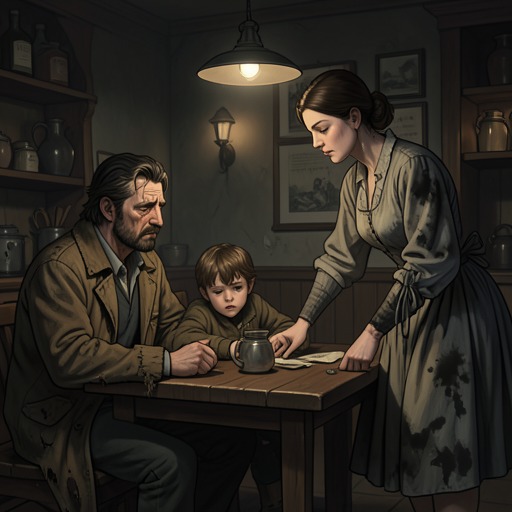
Marmeladov introduces himself by name and rank, saying that he is a titular counsellor. His manner retains something of official respectability, and he approaches Raskolnikov with elaborate politeness, assuming from the young man’s appearance that he is educated and not accustomed to drinking. Raskolnikov replies that he is studying. The exchange establishes Marmeladov’s particular mixture of social aspiration and degradation: he claims a formal position, but his stained clothing, long-unshaven appearance, and distressed posture show how far his present condition has fallen from the dignity he invokes.
He is restless at the table, ruffling his hair and dropping his head into his hands before addressing Raskolnikov. Although he says that he wants a listener with feeling and education, he also knows that his domestic troubles are familiar entertainment to the tavern’s other patrons. Their laughter and the innkeeper’s reactions make his confession a public performance as well as a plea. Marmeladov speaks at length, but beneath the grand style is a specific need: he has nowhere else to turn.
Poverty, Drinking, and Family
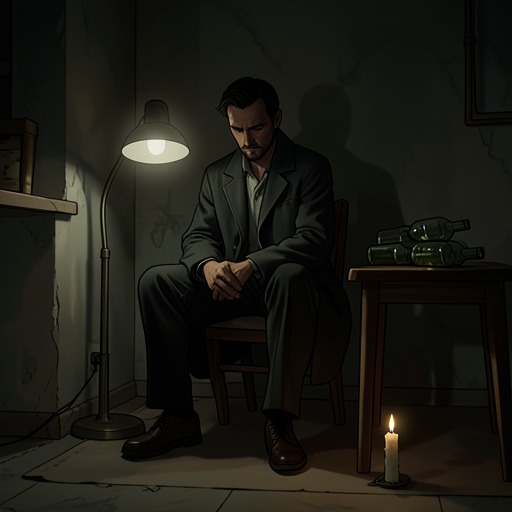
Marmeladov describes the tavern as the destination of a man reduced to beggary, a condition he associates with humiliation and exclusion. He says that he has spent five nights on a hay barge beside the Neva River. His account of drink is not detached: he presents it as an escape that also intensifies his awareness of the suffering at home. He says he drinks in search of sympathy and feeling, and that drinking makes him suffer more. This explanation does not undo the consequences of his behavior; it shows that he understands, at least in part, how his escape perpetuates the family’s hardship.
His wife, Katerina Ivanovna, works from morning until night, scrubbing, cleaning, and caring for their three young children. Marmeladov says that she has a weak chest and is prone to consumption, and that she has begun coughing blood. He also recounts that Mr. Lebeziatnikov beat her a month earlier. The household is thus exposed both to illness and to humiliation beyond its own rooms, while Katerina Ivanovna continues to labor despite her frailty.
Marmeladov describes the family’s dependence on Sofya Semyonovna Marmeladova, his daughter, after she takes a yellow ticket. He recalls her leaving at six in the morning and returning around nine with thirty roubles, which she silently places on the table before Katerina Ivanovna. Sofya Semyonovna then covers her head and face with the household’s large green shawl and lies facing the wall, her body shaking. Marmeladov says that Katerina Ivanovna later kneels beside her, kisses her feet, and remains there until they fall asleep together. He presents the scene as an expression of gratitude and grief; his own part in it is starkly different, as he lies drunk.
Relapse and Abandoned Hopes
Marmeladov describes a brief period of hope after Sofya Semyonovna’s return with money. He imagined buying clothes for the children, giving Katerina Ivanovna rest, and bringing his daughter back into the family. These plans make his next action more consequential: five days before speaking to Raskolnikov, he stole the key to Katerina Ivanovna’s box and took the remaining money from his earnings. He says that he has forgotten how much he took. He left home, and his employment ended; his uniform was left at a tavern on the Egyptian Bridge, exchanged for the clothes he is wearing.
The sequence reveals more than a single lapse. Marmeladov can picture concrete forms of repair, but his relapse turns those hopes into another burden for his family. Even after leaving home, he goes to see Sofya Semyonovna and asks her for money for drink. His theatrical self-accusation does not lead to a demonstrated change in conduct. Instead, remorse and renewed dependence coexist, and his confession keeps returning to the gulf between what he wants to do for his family and what he actually does.
Return Home and Narrative Significance
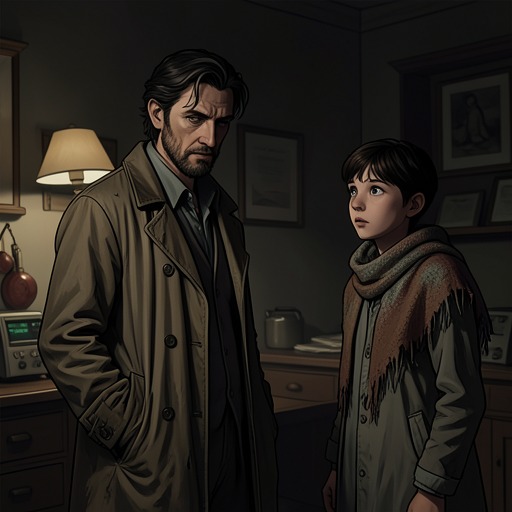
Marmeladov eventually asks Raskolnikov to accompany him to the family’s lodging in Kozel’s house. Raskolnikov has already wanted to go and intended to help him. As they walk, Marmeladov becomes increasingly anxious about facing Katerina Ivanovna. He says that he fears seeing her eyes, noticing the color in her cheeks and her breathing, and hearing the children cry if Sofya Semyonovna has not brought them food. He claims not to fear being struck and says that such blows can relieve her heart. His dread is directed less toward punishment than toward the evidence of the suffering he has helped create.
Marmeladov’s encounter with Raskolnikov therefore links private destitution to the question of whether a disgraced person can still be met with compassion. He insists that a person must have somewhere to go, even when the person offering help is unlikely to give money and repayment is improbable. That claim sits beside his own conduct: he seeks refuge and understanding while having taken the household’s remaining earnings and returned to drink. His character is not presented as simply ignorant of the harm. He recognizes Katerina Ivanovna’s illness, Sofya Semyonovna’s sacrifice, and the children’s need, yet recognition does not prevent repetition. The walk home ends with his fear of confronting those consequences, leaving the conflict between confession, dependence, and responsibility unresolved.