The Beaten Mare
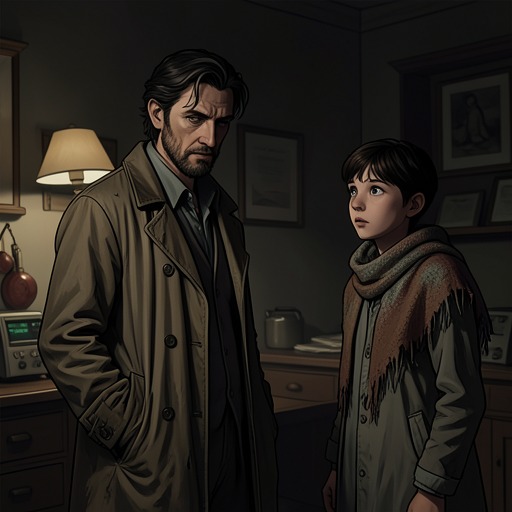
Crime and PunishmentThe Beaten Mare is the central image in a dream that returns Rodion Romanovitch Raskolnikov to childhood and confronts him with cruelty he cannot accept as entertainment. A frail animal is made to pull a cart crowded with revelers; the crowd’s laughter accompanies the violence rather than interrupting it. The child’s helpless horror, and his attempt to protect the mare, give the dream its emotional center. When he wakes, the scene connects that memory of violence to the axe murder he has been considering.
The dream’s remembered setting
The dream comes after Rodion Romanovitch Raskolnikov has drunk vodka at a tavern and fallen asleep among the bushes on Petrovsky Island. The narration introduces the dream as unusually vivid and coherent, the kind that can remain powerfully in the memory. Its setting is his childhood town, which appears not as a vague recollection but as a landscape reconstructed with striking precision: a level, bare expanse, a road leading past a tavern, and a church in the graveyard beyond it.
The child walks with his father toward the graveyard. The church is associated with family observance: he had visited it with his parents for services in memory of his grandmother, and he remembers the rice pudding they brought. Near her grave is the grave of his infant brother, whom he never knew but reverently honored. These details place the dream’s violence beside memories of family, religious practice, and death. The child’s dread of the tavern is also established before the mare appears: it is a place of drunken crowds, shouting, and fighting, from which he would cling to his father.
The mare and the crowd
Outside the tavern stands a large cart of the kind normally drawn by powerful horses and used for heavy loads. The mismatch is immediate: its shafts are occupied by a small, thin sorrel mare, an animal like those the child remembers seeing struggle beneath loads of wood or hay. His childhood sympathy for such animals is already part of the dream’s history; when he had seen them mistreated, he had felt close to tears, and his mother had taken him away from the window.
Mikolka, a drunken peasant, insists that the mare can pull the cart and invites the crowd to climb aboard. His claim is contradicted by the animal’s age and frailty, which the onlookers themselves recognize. Yet their awareness does not stop the spectacle. Six men get into the cart, with room for more, and a woman joins them, laughing as she cracks nuts. Two young men prepare whips to help Mikolka. The overloaded cart, the mare’s inability to move at a gallop, and the crowd’s jokes make the scene’s governing contradiction plain: the animal is expected to satisfy a demand that the people imposing it know is unreasonable.
The child’s response and the dream’s ending
As the mare struggles, the crowd’s laughter grows rather than gives way to concern. Mikolka’s anger escalates, and others participate or encourage him. The child cries out to his father about what is being done, but his father calls the men drunken and foolish and tries to lead him away. The child breaks free and runs toward the mare. Even after a bystander attempts to take him from the scene, he returns. His response is physical and immediate: he weeps, tries to reach the animal, and cannot be diverted by the people around him.
Mikolka eventually kills the mare, and the crowd’s response remains divided between condemnation and the continuation of the spectacle. The child approaches the dead animal, grieves over it, and then rushes at Mikolka with his fists. His father catches him and carries him away. The sequence gives the child no power to prevent the killing, but it does distinguish his response from the crowd’s: where the adults turn suffering into a public amusement, he recognizes the mare as a victim deserving protection and grief.
The dream’s force in the present
On waking, Rodion Romanovitch Raskolnikov is shaken and initially relieved that what he has witnessed was only a dream. He then imagines the axe, the murder he has contemplated, and the efforts that would follow it. The connection is not a simple explanation of his actions; rather, the dream makes his contemplated violence emotionally immediate at the moment he is trying to persuade himself that he could carry it out. The child who recoils from the mare’s suffering stands in stark contrast to the adult imagining himself as the agent of a killing.
The scene also turns on a clash between intention and consequence. Mikolka treats the mare as his property and demands that it perform beyond its strength; the crowd’s laughter and participation help sustain that demand. The child, by contrast, cannot accept the justification that the men are merely playing. The dream thus places the language of ownership, power, and spectacle beside an unmediated response of compassion. Its return to childhood does not remove the present crisis; it brings the crisis into sharper focus, ending with Rodion Romanovitch Raskolnikov’s recognition of how repellent the contemplated murder is to him.