
Care, Vulnerability, and Chosen Kinship
Crimson LakeThis thread traces how injured animals and damaged people become sources of responsibility and connection, while showing that caring for someone does not mean possessing or fully understanding them.
increasing Bearing strength in each event
 decreasing
Bearing strength in each eventdecreasingA Goose at the Fence
An interruption to despair
A strange arrival
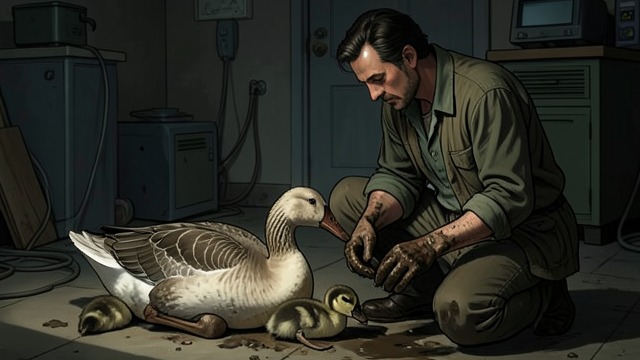
Ted finds an injured domestic goose with several goslings near the fence of his rented house. He is drunk, isolated, and considering the gun beside him when the bird’s distress draws him away from his thoughts and toward the crocodile-prone wetlands.
An unplanned responsibility
Ted opens the gate, gathers the bird and her young, and takes them to a veterinarian. When he learns that treatment will cost money, he pays for it despite his poverty. His choice is not a grand recovery, but a concrete act of care made at a moment when he had nearly given up on himself.
A different kind of company
The goose becomes Woman, and Ted becomes responsible for a family he never expected to own. Their presence begins to interrupt his isolation and gives him a reason to attend to something outside his own fear.
The Guard Goose

Learning to notice
A warning ignored
Woman repeatedly cries and flaps on the porch while Ted remains inside. At first he treats her alarm as another nuisance. When he finally investigates, he finds a python on a roof beam and discovers that the goslings are still safe in their box.
Protection in both directions
Ted sees that Woman has been warning him about danger, just as he has taken responsibility for her injured foot and her young. Her alertness does not make the property secure, but it gives him another reason to pay attention to the vulnerable lives sharing it.
A small return of confidence
Ted carries the snake away and feels a rare pride in his ability to respond. The episode changes his view of himself from helpless object of danger to someone capable of protecting others, however briefly and imperfectly.
An Animal’s Ordinary Needs

Care without a grand explanation
Daily attention
Ted feeds the goslings, gives them space to swim, and watches them follow him through the house. Their small needs impose a rhythm on his days, while their attachment grows through repeated contact rather than through any plan he made.
A reminder of Lillian
The goslings’ dependence brings Ted’s thoughts to his infant daughter, Lillian Conkaffey, whom he cannot visit. Caring for the birds cannot replace his relationship with his child, but it lets him experience tenderness and responsibility instead of only imagining what he has lost.
Limits of substitution
Ted understands that the birds are not his daughter. Still, their presence gives him a manageable form of care when the larger relationship is beyond his control. The novel treats this as a temporary support, not a cure for separation or grief.
A Vulnerability Beneath the Tattoos
The person behind the performance
A boundary made visible
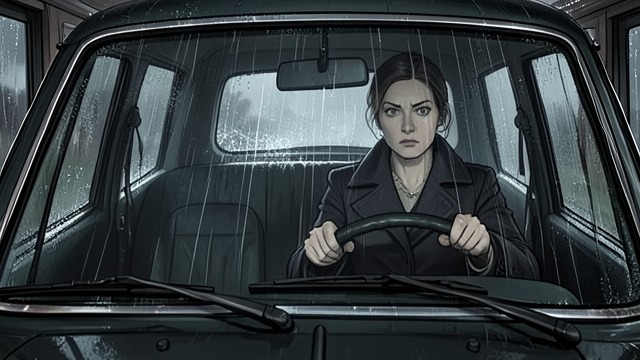
Amanda’s panic in the car reveals a depth of fear that her jokes and restless confidence usually conceal. Ted learns that her rule against cars is tied to an experience she cannot simply dismiss, and that physical contact during the episode can intensify her distress.
Care without possession
After the pier confrontation, Ted searches for Amanda and finds her badly injured. He carries her through the storm and stays with her, but their partnership does not erase her boundaries or make her easy to understand. Care here requires attention to her needs rather than a claim over her.
A truth spoken at last
Amanda tells Ted she stayed silent about the abuse because prison had felt like a place where she belonged. The explanation recasts her apparent ease with confinement as a response to isolation and harm, and allows Ted to understand her without reducing her to either victim or murderer.
A Home Among Outsiders

Belonging without perfection
The people she recognizes
Amanda remembers arriving in prison and recognizing its inmates as broken dolls, outsiders who seemed more familiar to her than the people she had met outside. Later, she recognizes a similar sense of alienation in Ted when he first enters the Shark Bar.
A shared working life
The investigations give Ted and Amanda a reason to remain in contact beyond their separate histories. Their office takes a shared name, and Ted’s geese continue to mark the ordinary life growing around his house. Neither becomes conventional, but they build a partnership out of continued presence and work.
Trust still required
Amanda brings Ted evidence concerning the white dog but has not yet decided what to do with it. In the final moment she chooses to approach him, aware that trust may cost her the companionship she has found. The ending presents belonging as a risk taken with another person, not a guarantee of permanent safety.
The night Ted first discovers Woman beside his Crimson Lake house
After the python enters Ted’s porch and before the first major press attack
During Ted’s first days of caring for the goslings
After Amanda’s panic in Ted’s car and during her recovery in hospital
In the epilogue, after Amanda visits Ted’s house following her hospital stay
