
Public Judgment and Unfinished Innocence
Crimson LakeThis thread traces how public certainty turns an unresolved accusation into punishment, and how small acts of scrutiny begin to make room for doubt without granting Ted Conkaffey a clean legal or social release.
increasing Bearing strength in each event
 decreasing
Bearing strength in each eventdecreasingThe Six-Minute Accusation
A life fixed by minutes
The witnessed interval
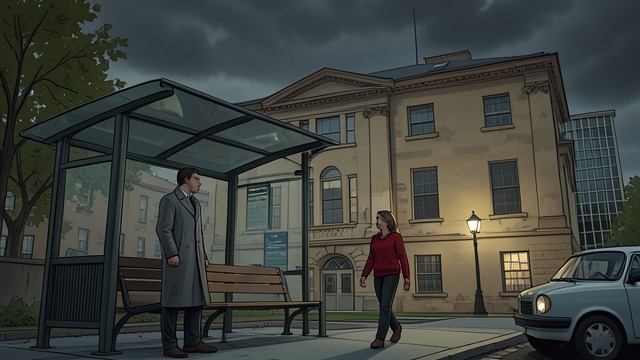
Ted Conkaffey remembers stopping near Claire Bingley at the Mount Annan bus stop, adjusting a fishing rod, and speaking briefly before driving away. The passing motorists later supply a precise sequence of times and impressions. Their testimony makes the interval seem measurable, yet it cannot establish what Ted did after he left or who approached the girl next.
Certainty from fragments
The public story forms quickly from the girl’s disappearance, the witnesses’ observations, and the image of Ted’s car near the stop. Ordinary ambiguity becomes incriminating detail: an open door, a gesture whose meaning witnesses dispute, and a conversation whose significance cannot be recovered with confidence.
The cost of a narrative
The title’s six minutes become more than a measure of time. They mark how a brief, uncertain encounter can be made to carry the full weight of an assault Ted denies committing, while the actual attacker remains unseen.
The Unfinished Legal Verdict
Release without acquittal
A case suspended
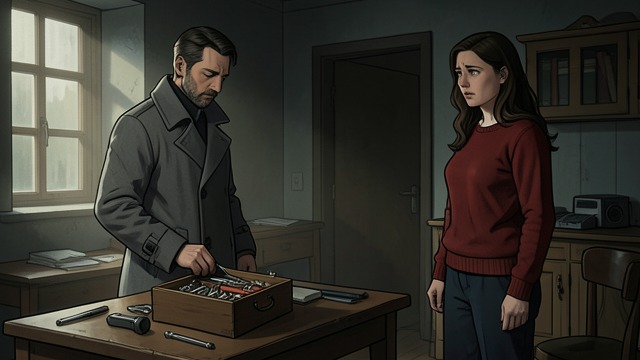
Ted spends 241 days in custody after his arrest, then faces a trial that the prosecution abandons when it judges the evidence insufficient to prove guilt beyond reasonable doubt. The charges are withdrawn, but the outcome does not amount to an acquittal. His legal status remains exposed to the possibility of renewed proceedings.
Freedom with a condition
The state releases Ted without restoring his former life. He has no police career, no settled home, and no dependable access to his daughter. He understands that another investigation could bring him back to prison, so ordinary decisions carry the pressure of a future arrest that may or may not come.
A continuing sentence
The absence of a conviction cannot undo the public verdict already formed. Ted’s story shows how procedural release and social vindication are different things: he leaves custody, but continues to live under suspicion, surveillance, and the threat of being judged again.
The Crowd’s Verdict
A private account becomes public
The recording
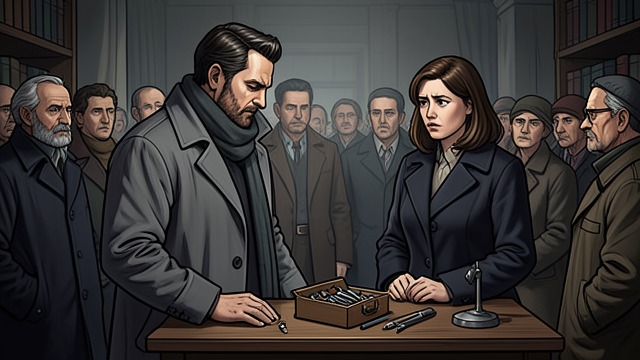
Fabiana Grisham secretly records Ted discussing the possibility that another man was near the bus stop. What Ted believed to be a private conversation becomes a public appearance, and the published account frames his words as a revelation about an unheard witness. His vulnerability is converted into material for an audience.
The comments become a sentence
Online readers respond with demands for punishment and calls to expose Ted’s location. The comments do not wait for new evidence or a completed investigation; they treat accusation as proof and public anger as a substitute for judgment. Ted sees how quickly a face and a headline can overtake the complicated facts of a case.
The limits of sympathy
The recording also prompts some people to question what they believed, and a support group begins to organize. But even that shift does not erase the danger of being recognized. The public can move from condemnation to interest without restoring Ted’s privacy, security, or control over his own story.
The Unheard Witness
A possibility at the edge of proof
The account of the petrol station
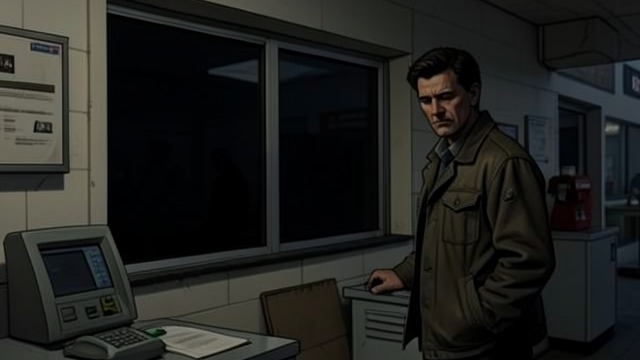
Ted explains that he bought bait after leaving the bus stop, but the purchase is absent from the records and the station’s cameras did not capture him. He says a homeless man, Trevor Fuller, saw him there. Fuller’s potential testimony was never heard at trial, leaving Ted with a witness who might help but whose credibility would be attacked.
A different reading of time
Fabiana considers whether the witnesses’ clocks could have been wrong and whether the attacker might have been nearby before Ted arrived. This is not proof of an alternative suspect. It is a change in the question: the short interval between Ted’s departure and the girl’s disappearance may leave room for someone else to have been present.
Hope without resolution
For Ted, the witness represents a chance to be understood; scrutiny of the account also threatens that hope. The exchange captures the fragile character of exonerating evidence: it can unsettle a confident accusation while remaining too incomplete to settle the case.
A Clue Kept in Reserve

The possibility of another answer
Three references to a dog
Amanda studies Claire’s interviews and counts three mentions of a white dog. She follows the detail beyond the recorded statements, finding an old notice for a dog given away before the abduction and records suggesting that a man later abandoned an injured animal.
A vehicle in the frame
A security image from Camden Park appears to show a dark blue ute with two pale points at a window. Amanda thinks they may be the ears of a white dog, but the image is indistinct. Her interpretation offers a plausible lead rather than a demonstrated identification of Claire’s attacker.
The truth still withheld
Amanda has not yet shown Ted the materials. She fears that helping him clear his name may end their shared work and the companionship she has come to value. The novel ends this strand in uncertainty: a possible route toward the truth exists, but it has not yet become public evidence or a resolved case.
At the Mount Annan bus stop on the day Claire Bingley disappears
After 241 days of remand and the withdrawal of charges during Ted’s trial
After Fabiana Grisham publishes Ted’s recorded account online
During Fabiana and Ted’s late-night discussion at Ted’s house
In the epilogue, after Amanda returns from the hospital
