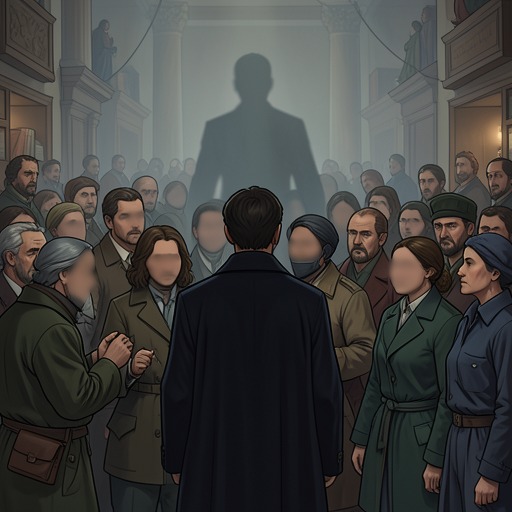
Cairns Books CCTV footage
Crimson LakeThe Cairns Books CCTV footage is a soundless, multi-camera record of the events surrounding an assault at a book signing by Jake Scully in Cairns. Reviewed by Ted Conkaffey and Amanda Pharrell, it gives their investigation a timed visual sequence: Jake arrives to meet a large queue of fans; an agitated man lingers among the books, damages merchandise, and leaves; then, outside, he attacks Patricia Dorrell. The recordings are valuable because they preserve movement and sequence, but their limits matter just as much: they cannot supply spoken words, explain motive, or independently resolve every detail of the encounter.
Origin and Review
Amanda brings Ted a police report about the assault at the bookstore on McLeod Street and says that the police have also emailed her CCTV. The two review four video files together on the porch, with the geese gathered around their feet. Their viewing is not a simple replay of a complete, continuous recording: the first clip is a roof-mounted view, while the second combines images from four cameras inside the store, each recording for ten seconds before the display switches to another camera.
That format shapes what the investigators can know. The footage is silent, and the interior sequence is pieced together from changing camera views rather than heard or watched from one uninterrupted vantage. Ted and Amanda compare what they see with the police report, using the written record to orient themselves and the images to inspect the movements described. The footage therefore functions as evidence to be interpreted alongside other accounts, not as a self-explanatory answer.
Arrival at the Book Signing
The roof-mounted view follows Jake from a taxi to the bookstore’s front doors. Outside, about fifty people wait in a queue, carrying books and watching as he arrives in a white cab. The scale of the crowd makes the signing look less like an ordinary shop appearance than a public event organized around Jake’s presence. Ted remarks on the attention gathered around him; Amanda points out a young fan who reaches for Jake’s hand as he enters. After he has gone inside, another man speaks quietly to her.
The interior recording shows bookstore staff preparing Jake’s table: they bring him water and arrange books beside him while the waiting crowd remains visible through the windows. Jake appears to take the attention in his stride. These early images establish the setting in which the later disturbance occurs: a busy store, a concentrated group of fans, and Jake at the center of the event. They also show why an incident among the bookshelves might initially escape notice, as staff attend to the signing and fans stay focused on meeting the author.
The Man Among the Shelves
In the second recording, Amanda notices a man in a baseball cap near the edge of the crowd. He is not in the queue but is loitering among the bookshelves, handling books and occasionally glancing toward Jake. The image offers only a limited view of him: he appears short and lean and wears a black jacket with its collar turned up. The police report adds details the silent footage cannot provide. Store staff later identified a young male suspect, and two witnesses described him as talking or mumbling to himself; one thought his tone was aggressive. The exact words were not heard.
At 14:24:13, according to the report, the suspect is recorded damaging bookstore property. On screen, he sweeps a row of books from the shelves with his hand, knocking roughly a dozen down, and repeats the action on the other side. A small group of books remains standing in the middle. Amanda observes that the books associated with Jake’s series appear to have been swept onto the floor while the Chronicles remain on the shelf. That is an interpretation of the arrangement, not a motive established by the camera: the recording shows the books falling, but does not tell the viewers why he singled them out.
The man then crouches and appears to grip his head briefly. Neither the store staff nor the crowd immediately intervenes; a few people in the queue watch, but the footage does not show them leaving their places to report him. The moment draws attention to the difference between seeing an action and understanding it. The images preserve the man’s behavior, but without sound or further context they cannot disclose what he is saying, thinking, or experiencing.
Exit and Assault
The third video shows the man walking quickly out of the store. The police report records his departure at 14:32:02. In the fourth recording, he leaves by turning left, away from the queue, apparently moving away from the event. At the edge of the camera’s view, he stops in front of another person. The two remain still for a moment; then the man shifts position, and a struggle follows. The images show a woman falling and the man striking her twice before getting up and running out of frame. The crowd breaks apart and gathers around her.
The report gives the incident a recorded time of 14:32:59 and identifies Patricia Dorrell as the person assaulted. Her statement, which Ted and Amanda read after watching the footage, supplies the exchange that the recording cannot capture: she said she stopped the man and asked about the bookstore event, and he identified it as a Jake Scully signing. She then described being grabbed, thrown down, and struck until she lost consciousness. Her account makes the encounter more legible, while the silent images preserve its visible sequence. Neither source should be mistaken for the other: the statement supplies reported words and experience; the CCTV supplies a partial visual record.
Evidentiary Limits and Significance
The footage’s evidentiary force comes from its concrete particulars: the queue, the changing camera views, the books knocked from shelves, the departure time, and the assault outside. Yet it leaves important gaps. Its silence prevents viewers from hearing the conversations in the store or the exchange Patricia described; its angles do not reveal what the man intended; and the report’s witness descriptions remain testimony rather than details audible on the recordings. Even Amanda’s observation about Jake’s books is an inference drawn from what remains on the shelf.
The scene also places the recordings within a wider pattern in which evidence is mediated before it becomes public understanding. Ted’s own account of the earlier case involving Claire Bingley is described as a composite assembled from memory, trial material, press coverage, and things he heard while on remand. During that trial, he watched recordings of Claire’s interviews, and images of him crying while viewing them later appeared on the cover of the Herald under the headline “Crocodile Tears.” That history does not change what the bookstore cameras show, but it sharpens the distinction between a recording and the conclusions people attach to it. Here, too, recorded images can establish a sequence without settling the meaning of every gesture. The CCTV moves the investigation forward while leaving interpretation—and the need to test it against other evidence—open.