Harrison Scully
Crimson LakeHarrison Scully, the teenage son of Jake Scully and Stella Scully, is introduced through a split between hard-edged defiance and grief he cannot keep contained. His father’s death makes him the focus of Ted Conkaffey’s questions, but Harrison is more than a suspect or source of information: the novel shows how he moves between a defensive public persona, a cruelly vivid performance about death, and a sudden, unguarded need for comfort.
Identity and Family
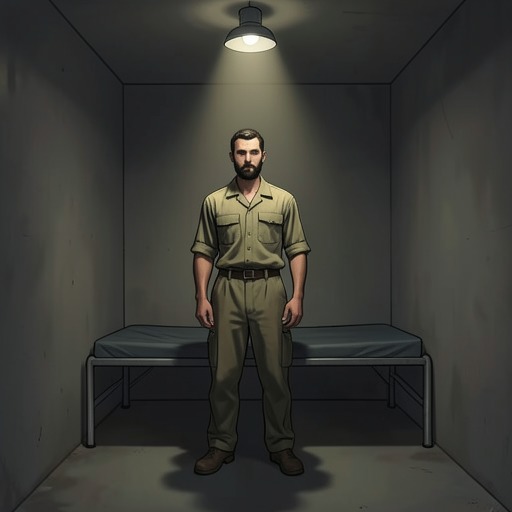
Harrison lives with Stella in a house bordered on three sides by tropical rainforest. When Ted wanders through, he finds Harrison alone on the edge of an unmade bed, occupied with his phone. The beanie, the phone, and the guarded once-over he gives Ted establish a teenager who meets an unfamiliar adult as if assessing a possible threat. The scene offers little access to Harrison’s private life, but its physical details make his isolation tangible: the house opens onto the forest, while he sits in his room with his attention fixed on a small device.
Stella describes Jake as addictive in his habits, listing work, alcohol, shopping, cars, boats, and gadgets. Asked about drugs, she says that she and Jake used them recreationally when they were younger, but not lately; she does not want Harrison to encounter that behavior at his age. Her concern places him at the point where his parents’ past may matter to him, even as he is still a child in their eyes. Asked how he is taking everything, Stella says it is hard to tell and calls him a complete arsehole. Her blunt answer conveys frustration, not a full account of his feelings; the later scenes reveal how much the anger conceals.
Grief and the News of Jake’s Death
Before Harrison knows what has happened, he is already caught in the aftermath of Jake’s disappearance. When Ted asks whether he and his father had some kind of conflict, Harrison answers that he did not feed his dad to a crocodile. The denial turns suspicion into a deliberately shocking image, but it does not establish that Harrison knows what happened to Jake. It shows instead how readily he reaches for the harshest possible framing when an adult presses him about his father.
At a gathering around a fire, Harrison takes command of the conversation by describing how a crocodile may stash its victim beneath a log and wait before eating. His story makes death immediate and bodily, dwelling on the prospect of feeling teeth. The other teenagers fall quiet; some try to laugh off the challenge rather than answer in kind, and one calls him sick. Ted reads the performance as an attempt to make the others say something equally callous about Harrison’s dead father. In that reading, the story is both an act of provocation and a way of keeping the conversation on ground Harrison can control: death is already his subject, and no one else can claim it as easily.
The performance gives way when Harrison learns that Jake has died. He comes out of the rainforest-side bushes with condensation on the shoulders of his black wool jumper, looking down at his phone. Ted sees that the news has already reached him through his mother, who had told him Jake had simply gone away with someone. Harrison says he thought Jake had run off. He grips the phone, but the object he carries everywhere offers no comfort. Then grief breaks through: he ends up with his face against Ted’s chest, and Ted holds him tightly, without having planned to hug him. The unplanned embrace is a sharp reversal of Harrison’s earlier hostility and of Ted’s expectation that the boy will meet him only with resistance.
Defiance and Vulnerability
Harrison’s manner changes with the company and the moment. On another visit, Ted sees him sitting in a beat-up grey Datsun half a block from the house with a gothic-looking girl, both smoking. Harrison’s buckled boot hangs out the passenger-side window and taps along to music that reaches Ted as a toneless roar of white noise. When Ted circles back, the girl and car are gone; Harrison is walking toward the house with a paperback. His eyes quickly turn away from Ted, and the narrator recognizes the return of the cocky, angry version of the boy. Ted interprets the shift as embarrassment at having allowed an adult to see his vulnerable side. That interpretation belongs to Ted, but the abrupt contrast between the grieving embrace and Harrison’s renewed brusqueness is unmistakable.
When Ted tries to speak with him, Harrison calls him the help and reminds him that the help should be seen and not heard. The retort is quick and cutting. Ted hears more than adolescent anger in it: he suspects the practiced confidence of someone accustomed to being bullied, and wonders whether Harrison has received too much parental money and too little parental love. Those are the investigator’s impressions, not confirmed facts about Harrison’s upbringing. The exchange nevertheless shows how Harrison uses contempt to establish distance from an adult who has entered his home and asked questions about his family.
The Lead on Local Harassment
Ted later seeks Harrison out in Crimson Lake township, trying to learn who has been throwing things at his house. Ted finds him on the east side of town at the moment he predicts, after piecing together a set of assumptions: that Harrison attends either St Agnes School or Crimson Lake Christian College rather than Smithfield’s state high school; that he takes the bus rather than accepting a ride from his girlfriend; and that he is likely to detour through town with a friend instead of eating breakfast at home and talking with Stella. Ted imagines him picking up an Ice Break and chips on the way. Harrison appears around the corner of the post office with a beaten-up denim bag over his shoulder and an iced coffee in his hand. The successful interception demonstrates Ted’s observational method, but it also exposes how much of his portrait of the teenager is conjecture.
When Ted asks why people would target his house, Harrison reports what he has heard: a girl’s older brother had talked about a paedophile who had moved from Sydney to hide from the police, and people were discussing frightening that man. They imagined him as old. Harrison’s account gives Ted a concrete lead about the talk surrounding the harassment and about the gap between the person being targeted and the figure described in rumor. It does not show that Harrison joined the plan or took part in any attack. His importance in the exchange is that he passes on what the teenagers have said, connecting his own school-age world to the hostility Ted faces in town.
Narrative Role
Harrison’s scenes repeatedly unsettle the easy reading of a hostile teenager as simply cruel or unfeeling. His crocodile story makes him appear to command death as a spectacle; his collapse into Ted’s arms reveals the bereaved son beneath that performance. The narrative preserves both sides rather than treating one as a disguise that cancels the other. His quick insults and his grief are equally present, and Ted’s attempts to interpret him remain visibly uncertain, especially when they depend on assumptions about his home life or habits.
Through Harrison, the novel also brings the wider damage of public rumor into the intimate spaces of family and adolescence. He hears the label attached to Ted from other young people, while Ted, in turn, approaches him through an investigator’s guesses about where he goes and how he behaves. Harrison does not resolve Ted’s danger, but he supplies information that clarifies how local hostility is being discussed. At the same time, his grief over Jake resists being reduced to evidence: for a moment, the man asking questions is simply the adult who holds him while he mourns.