Monster Ted
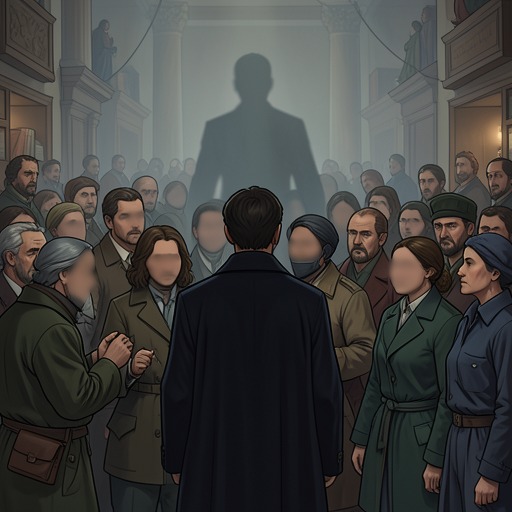
Crimson LakeMonster Ted is the imagined child rapist that Ted Conkaffey fears has taken up residence in his mind: a version of himself fashioned by the prosecution and sustained by public judgment. Its significance lies in the gap between a withdrawn charge and an accusation that remains psychologically and socially active. The figure is not evidence that Ted committed the crime; it is the form in which the accusation returns to haunt him, even in moments that should belong to his present life.
An Accusation Given a Face
Monster Ted takes shape from the prosecution’s courtroom account of the attack on Claire Bingley. During a moment of intimacy with Stella Scully, Ted suddenly hears again the prosecutor’s description of him as a physically powerful man who abducted a child. The remembered speech proceeds through accusations about the child’s pleas and the journey in Ted’s car, then returns to the alleged assault in the bushland. The scene does not present this voice as a fresh discovery or a recovered memory of guilt: it is the language of the trial breaking into the present.
That distinction is central to the expression. The prosecution’s account gives the imagined monster a vivid, coherent shape, while Ted experiences it as an alien version of himself. Later, he understands the figure as a fictional monster created by the prosecution and made real in other people’s minds. Yet calling it fictitious does not make it harmless. The accusation has acquired enough force to intrude on his perception and behavior, leaving him afraid that this constructed figure has remained above ground and intends to stay.
The legal history preserves the uncertainty that feeds this fear. Ted was never acquitted of the rape and attempted murder charges relating to Claire Bingley. He was committed to stand trial, but halfway through the trial the Director of Public Prosecutions withdrew the charges, explaining that the evidence was not strong enough to satisfy a properly instructed jury beyond reasonable doubt. The withdrawal did not declare him innocent; Ted understands that the charges might re-emerge if stronger evidence were found. Monster Ted therefore occupies the space between accusation and proof: a compelling image, but not a verdict.
Intrusion into the Present
The figure returns at a moment when Ted is trying to be present with Stella. The courtroom voice interrupts the intimacy, and he abruptly pulls away. As the imagined accusation continues, he loses his hold on the immediate scene, repeats Stella’s name, and tries to distinguish where he is from the setting described in the trial. The contrast is stark: Stella is physically present, but the prosecutorial account displaces her with the child in its narrative. Ted’s attempt to remain in the present fails; he ends up at the window, struggling to breathe and pressing his hands against his head.
His distress also changes the encounter for Stella. She sees his agitation and reacts with alarm and disgust. The episode is not simply an inward recollection: it disrupts a relationship and makes the accusation visible in Ted’s conduct. The figure’s power comes partly from this displacement. The trial’s version of events can intrude without invitation, and Ted cannot reliably prevent it from governing what he sees or how he responds.
The next morning, Ted arrives at Amanda Pharrell’s office exhausted and unsettled by what happened. He recognizes that even the suggestion of sex has become entangled with the allegations he heard in court. He describes the monster as a finely rendered fictitious version of himself, a huge and violent figure made by the prosecution and given a life in the public imagination. At the same time, he admits that this imagined Ted played with his mind easily and that the images felt real. The expression thus holds two facts together: Ted can identify the source of the figure, but that knowledge does not restore control over it.
From Courtroom Image to Public Label
Monster Ted is reinforced by a broader process of public identification. Claire’s disappearance becomes a national story; her missing poster is shared hundreds of thousands of times, and the first public suggestion of a suspect appears in an online comment. Ted becomes the man attached to that story. Later, when he tries to order a beer, the bartender and another customer stare rather than respond. He realizes that they recognize him and retreats, unprepared to be seen again through the accusation.
Media attention turns the courtroom image into a recurring public spectacle. After video of Ted circulates, a newspaper prints an old mugshot alongside lines from the recording, while a large volume of reader comments includes demands that he deserve death. The difference between a charge and a conviction matters legally, but the response treats suspicion as settled fact. Monster Ted is therefore not confined to Ted’s private distress: it is also a public role imposed on him, renewed whenever his face or name reappears in the news.
The consequences extend beyond recognition. Journalists gather outside Ted’s home, and shadowed figures stand farther along the street as police officers wait at his porch. Ted cannot tell whether the officers are there to arrest him or whether the situation is connected to the corrupt officers who have threatened him. Even before he knows their purpose, the possibility of being watched or detained revives his old wounds. In another encounter, when Dynah Freeman becomes distressed during Ted’s questioning, Ted’s public identity as a danger to children shapes the pressure around the investigation. He reflects that the public may find him especially frightening because he does not fit its familiar stereotype of a violent paedophile. The monster is sustained not only by the charge but by expectations about what guilt is supposed to look like.
The Figure’s Limits and Significance
The expression’s force depends on a painful paradox: Monster Ted is described as fictional, yet its effects are concrete. It disrupts Ted’s intimacy with Stella, distorts his access to the present, and follows him into public encounters. The social environment gives the imagined figure further life, treating Ted as guilty even though the case against him did not proceed to a verdict. Legal uncertainty and public certainty move in opposite directions, leaving him unable to rely on either acquittal or acceptance.
The figure also marks a boundary in how Ted understands himself. He fears the imagined monster precisely because he experiences it as separate from the man he believes himself to be, but it is made from his own name, body, and place in the case. The narrative does not resolve that tension by turning the image into proof or by making its psychological effects disappear. Instead, Monster Ted names the enduring afterlife of accusation: a prosecutorial construction that can be recognized as constructed and still feel terrifyingly real.