The white dog clue
Crimson LakeThe white dog clue is a chain of circumstantial evidence assembled by Amanda Pharrell while she re-examines the Claire Bingley abduction. It offers a possible account of how Claire may have been drawn away from the bus stop and a route toward the unknown man connected with the dog, but it does not establish that account as fact or identify the man. Its importance lies in the way a detail dismissed amid Claire’s fragmented interviews becomes the starting point for a new investigation—and in the uncertainty that remains between a plausible reconstruction and proof.
How the clue emerges
Amanda’s interest begins with the interview recordings of Claire, the child whose abduction led to Ted Conkaffey’s arrest. After watching the tapes repeatedly, Amanda counts three mentions of a white dog: once in Claire’s hospital interview, again in an interview with a trauma counsellor, and a third time in an interview at the Parramatta police headquarters, where Amanda believes Claire murmurs the word dog while alone with the recorder. The statements occur in the course of interviews in which Claire’s speech is often fragmentary and difficult to follow. To Amanda, however, their recurrence makes the dog worth investigating rather than dismissing as incidental.
That clue sits within a record already shaped by the difficulties of remembering and interpreting what happened. Ted’s recollection of the day is explicitly a composite assembled from what he remembers, what he heard at trial, newspaper accounts, and things told to him in jail; he acknowledges that it is not a wholly reliable history. Other evidence from the roadside is also contested in its details. Witnesses placed Ted’s car at the bus stop at particular times, but differed over whether the rear passenger door was open and whether his gesture to Claire meant goodbye or beckoning her closer. The white dog does not settle those disputes. It introduces another possible piece of the sequence, one whose significance depends on inference.
The recorded interviews likewise require care in interpretation. Claire was deeply traumatised, and her testimony on tape included confused, shifting fragments. In one exchange, a counsellor asked whether she had said that the person was a policeman; the prosecution repeatedly played a clip in which Claire echoed that question. The recordings document what Claire said and the conditions in which her statements were interpreted, but the white dog references do not by themselves prove who took her or how she left the roadside.
The paper trail and the vehicle
Amanda follows the dog reference into a newspaper advertisement from Mount Annan, dated four days before Claire’s abduction. In the local paper’s freebies section, a couple offered a medium-sized cross-breed white dog to a good home because they were moving to England and could not take her. Amanda’s notes on the back record that she contacted the couple from her hospital bed and spoke with them during the quiet of the night. They remembered little about the man who took the dog, but did remember the vehicle he drove: a dark blue ute.
The vehicle description gives Amanda a practical direction for the search. She looks through evidence relating to the time Claire was abducted and searches for relevant footage, beginning near Mount Annan and widening the area outward. One lead is a screenshot from a homewares store in Camden Park, eight kilometres from the abduction site. The store’s camera recording survived because the premises were robbed the following day and its cash register was stolen; footage covering the week had consequently entered police records.
In the image, a blue ute waits at traffic lights outside the store. A man’s figure is visible in the driver’s seat, but the image does not reveal his face. At the edge of the passenger-side window are two small triangular shapes. Their appearance is uncertain: given the distance and the recording quality, they might be reflections or light. Amanda reads them instead as the pointed ears of a medium-sized white dog. That interpretation connects the image to the couple’s recollection, but the screenshot is suggestive rather than conclusive: it cannot establish what the shapes are or who is driving.
The shelter image and Amanda’s reconstruction
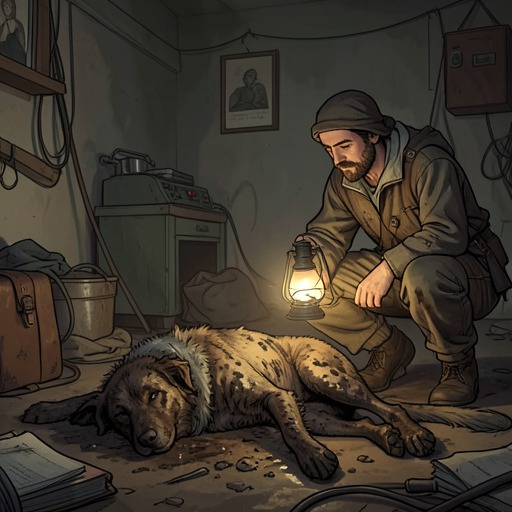
A second security image comes from the Yagoona RSPCA shelter. The shelter routinely keeps screenshots of people leaving animals at its gates. In this one, a man bends to tie a leash to the gate; his face is hidden, leaving the image unable to identify him. Staff found a medium-sized white dog there the next morning. The dog’s front left paw was fractured. The shelter image therefore supplies a later trace of a dog resembling the one Amanda is tracking, but it does not show where the animal had been or prove that the person pictured was the same man who took it from its owners.
Amanda links the newspaper account, the ute image, and the shelter record into a possible reconstruction. She imagines Claire at the bus stop, turning after Ted drives away when she hears a yelp from the nearby bush; in Amanda’s account, the white dog is there, limping and in pain. A child might approach an animal that appeared to need help. This sequence gives the clue its potential explanatory force: it could account for a reason Claire moved from the bus stop and for the dog’s later appearance at the shelter. But the scene is Amanda’s inference, not a witnessed or independently verified account of what happened.
Investigative stakes and limits
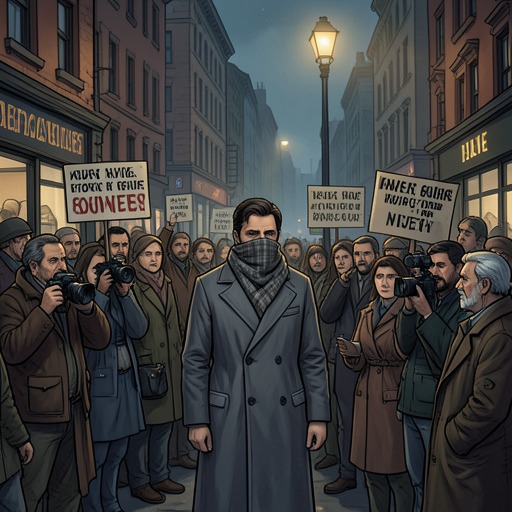
The lead matters because Ted’s legal position is unresolved. He was never acquitted of the charges of rape and attempted murder relating to Claire’s case: the Director of Public Prosecutions withdrew them partway through his trial, saying the evidence was not strong enough to establish guilt beyond reasonable doubt. The withdrawal did not establish that Ted was innocent, and Ted remained conscious that he might be arrested again. The clue thus enters a story in which the public can continue to treat an accusation as settled even when the legal process has not resolved it. When Ted is recognised in a bar, the attention of the room leaves him feeling exposed; the social judgment persists independently of a verdict.
Amanda has spent months pursuing the man associated with the dog and judges herself capable of patiently tracking someone elusive. Yet giving Ted the information and investigating together could change their relationship: if he were fully cleared, she fears he would have no reason to stay near her. She therefore faces a tension between pursuing the clue to its most consequential outcome and holding back a lead that may alter her connection with Ted. The evidence available at this point does not say whether the pair identify the man or resolve the case. The white dog remains both a promising investigative lead and an uncertain link—enough for Amanda to continue, not enough to close the gap between suspicion and proof.