
Silence, Cover-Ups, and the Manufacture of Nonexistence
Crow GirlThis thread follows how private silence, institutional failures, and legal erasure allow abuse to continue while making vulnerable people seem to have no history or claim on justice.
increasing Bearing strength in each event
 decreasing
Bearing strength in each eventdecreasingSilence Inside the Family
The Family’s Closed World
Complicity without words
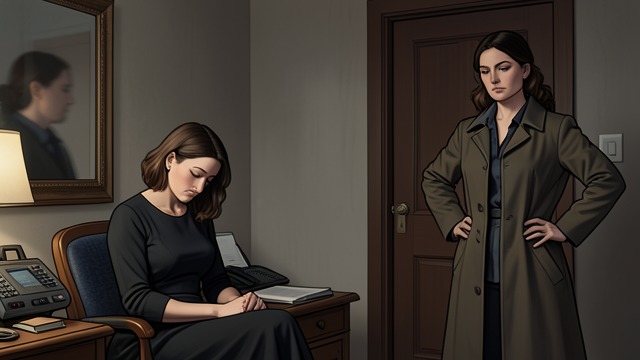
Bengt Bergman’s abuse is sustained not only by his own actions but by Birgitta Bergman’s repeated failure to intervene. Victoria sees her mother look away, absorb humiliation, and preserve the appearance of domestic normality.
The child learns that speech will not necessarily bring help. In such a household, quiet becomes a survival strategy, while the adult’s silence protects the person with power and teaches the child that her account may not matter.
A rule that travels outward
That pattern recurs in families connected to the wider network. Adults know enough to sense danger, yet explanations, denial, or passivity keep the children exposed and the respectable household intact.
The narrative treats silence as an action with consequences rather than an empty space. It can disguise abuse as ordinary family life, and it leaves victims carrying both the original injury and the burden of being disbelieved.
The School’s Sealed Ritual
The Institution Protects Its Image
Humiliation as initiation
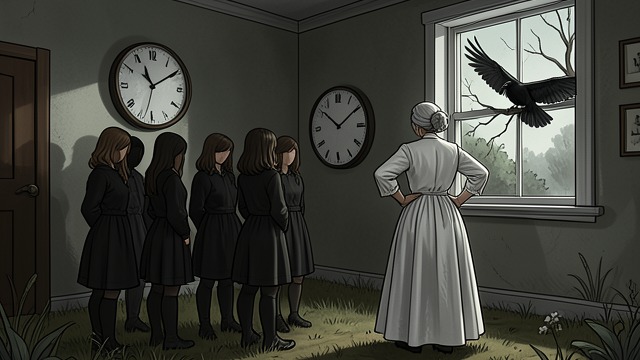
At Sigtuna boarding school, an initiation ritual turns three younger girls into objects of spectacle. The older pupils stage the humiliation, and Fredrika Grünewald’s influence helps make cruelty look like a tradition that the group can carry out together.
Victoria’s apparent composure afterward obscures the deeper structure of the event. The girls are not simply frightened by a prank; they learn that power belongs to those who can define what happened and decide who is allowed to speak about it.
Respectability as a shield
The school’s reputation and the social standing of families around it help contain scandal. The rule that events remain inside the institution echoes the closed silence Victoria already knows from home.
The episode links childhood cruelty to the book’s larger pattern of protected adults and abandoned victims. Institutions can make abuse disappear from public view without making its consequences disappear from the people who experienced it.
Law Turns Testimony into Doubt
When Evidence Is Not Heard
Repeatedly abandoned cases
Reports involving abused children and young women are dropped after credibility is questioned, investigations are narrowed, or influential adults supply accounts that are accepted without sufficient checking. The cases involving Bengt Bergman, Karl Lundström, and Per-Ola Silfverberg show different forms of the same failure.
Ulrika Wendin is dismissed as unreliable after describing a rape; Victoria’s abuse is documented, yet no prosecution identifies her father; and Madeleine’s allegations are treated as delusions. The results are not identical, but each decision leaves a victim with less public recognition than the accused adult.
How institutions erase a person
The repeated failures reveal how procedure can create a formal record while still refusing to establish what happened. Legal caution becomes selective when the powerful receive the benefit of ambiguity and the vulnerable are expected to prove an experience they can barely recount.
The theme is not that all allegations are automatically true or that evidence does not matter. It is that a system cannot claim neutrality when its habits repeatedly favour status, convenience, and a polished adult account over the testimony of children and marginalized people.
The Children Who Do Not Count
Lives Outside the Record
Unseen victims
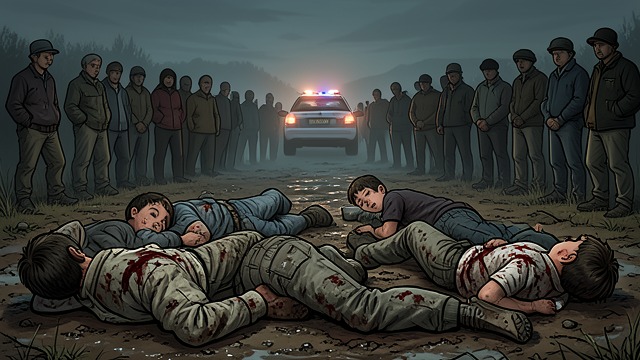
The first murdered boys are undocumented, displaced, or otherwise disconnected from the official systems that might register their absence. Their bodies are discovered, but no family immediately appears to demand attention, and the police struggle to establish names or histories.
Jeanette recognizes the cruel inversion: the boys have not simply disappeared from society; society had barely recorded them as present. Their vulnerability makes them easy targets for traffickers and makes their deaths easier for institutions to treat as a low priority.
The unequal measure of concern
The contrast with the resources later assigned to the murder of a wealthy Swedish man exposes an unequal distribution of public concern. The number of detectives, the attention of the press, and the seriousness of official response follow social status as much as the gravity of the violence.
By recovering Itkul and Karakul Zumbayev’s names and connecting them as brothers, the investigation restores more than a label. It challenges the assumption that lives outside official records are less real, less mourned, or less worthy of protection.
Protected Identity, Exposed Network
Erasure Is Not Justice
A hidden system
The investigation gradually links prominent men, former schoolmates, lawyers, police officials, and a foundation whose charitable appearance conceals connections among people accused of exploiting children. Official records are incomplete, confidential, or destroyed, while key witnesses have been silenced or paid.
Victoria’s protected identity once served a necessary purpose: it separated her from an abusive father and reduced the immediate threat to her safety. Yet secrecy also makes it harder for the police to locate her when her knowledge may matter to other victims and crimes.
Exposure without repair
The tension is not solved by treating confidentiality as inherently corrupt. The same protection can be a lifeline for a survivor and a barrier when institutions use secrecy to avoid examining powerful networks. The book asks who benefits when records vanish and whose safety the rules actually serve.
Even as Jeanette uncovers more of the network, several deaths and missing histories prevent a complete public reckoning. The story’s bleak insight is that exposing a pattern does not automatically restore the people whom that pattern erased.
Victoria’s childhood in Grisslinge
1984, during Victoria’s first year at Sigtuna boarding school
The years before the main investigation, as abuse complaints are dismissed
Spring and early summer, during Jeanette’s investigation into the murdered boys
Late in the investigation, after records link the Sigtuna group to a wider circle
