
The Unequal Price of a Human Life
Crow GirlThis thread traces how the novel measures human worth against money, status, citizenship, and institutional attention, from anonymous refugee children to celebrated Swedish adults.
increasing Bearing strength in each event
 decreasing
Bearing strength in each eventdecreasingChildren Outside the System
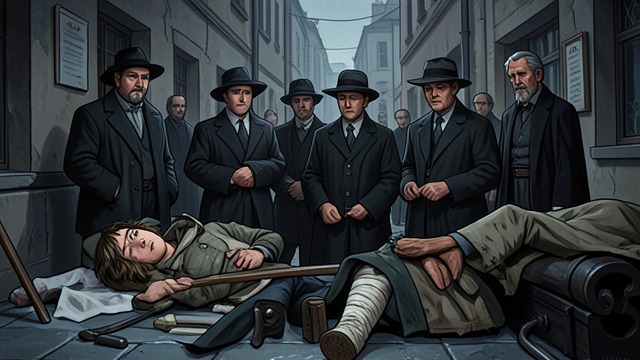
Missing on Paper
The investigation meets absence
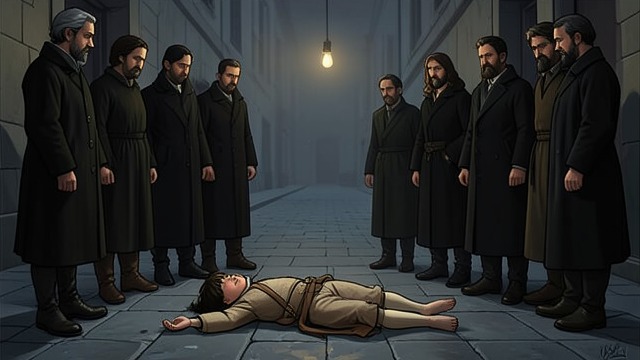
When Jeanette begins investigating the mummified boy at Thorildsplan, she finds no straightforward missing-person report and no reliable family contact. Outreach workers describe children who take food and then disappear from sight, while institutions struggle to know who has entered or left the country.
The boy’s anonymity is not an incidental obstacle. It reflects the way undocumented children can move through a society without leaving the records that make other people legible to the state.
The moral consequence
A body can be physically present while its social identity is missing. That condition makes the child particularly vulnerable to exploitation and can make the effort to investigate his death seem less urgent to people who allocate police resources.
The narrative turns identification into an ethical act. Naming a child does not reverse the crime, but it challenges the system’s assumption that a person without documents, relatives, or public visibility counts for less.
The Rich Receive Attention
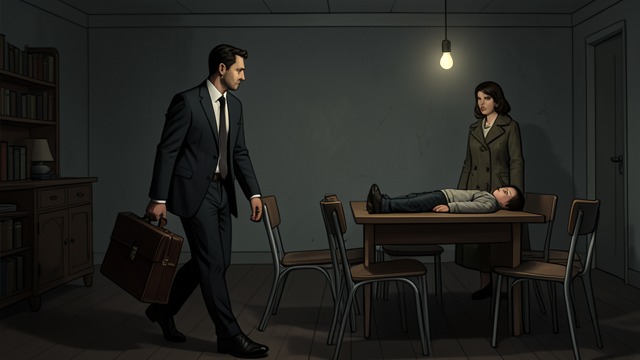
Two Standards of Response
Resources follow status
Jeanette’s first murder investigation is assigned limited staff and money despite evidence of an organized, repeated pattern. Later, the murder of Per-Ola Silfverberg—a prominent businessman—receives a much larger budget and immediate institutional attention.
The difference is not presented as a neutral administrative detail. Jeanette recognizes that the dead boys’ precarious status makes them less likely to produce public pressure, while Silfverberg’s wealth and social connections give his death an immediate institutional weight.
The value assigned by society
As Jeanette reflects on the cost of investigations and the public response to famous victims, the novel asks whether a life is valued by mourners, money, media attention, or the resources devoted to its death.
There is no comforting formula that resolves this disparity. The contrast instead exposes a political reality: the justice system can treat equally grave loss as unequal, allowing power and social recognition to shape the seriousness with which a death is pursued.
Children as Property
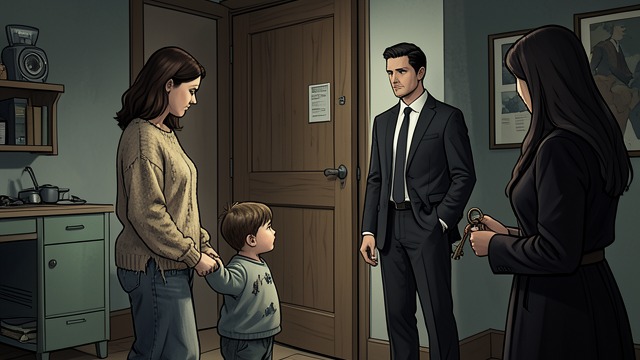
Ownership Masquerading as Care
Adults claim the child
The book repeatedly shows adults describing control as protection, upbringing, treatment, or rescue. Parents, foster-parents, traffickers, and religious or charitable networks can all claim authority over children while denying them meaningful choice.
The language of benevolence becomes especially dangerous when an institution treats a child as an asset to place, discipline, or exchange. The adult decides what counts as the child’s best interest, while the child’s fear or testimony is discounted as immaturity, illness, or misbehavior.
The historical pattern
Lars Mikkelsen explains that the treatment of children as adult property has deep roots, just as laws and social attitudes have often treated women’s bodies as possessions to be controlled. The historical framing does not make every present case identical, but it helps expose the assumptions that survive inside modern institutions.
The theme connects domestic abuse with trafficking and adoption arrangements. A child cannot be protected merely by changing guardians or transferring legal papers if the adults’ underlying entitlement to the child’s body remains unquestioned.
Charity as a Respectable Mask
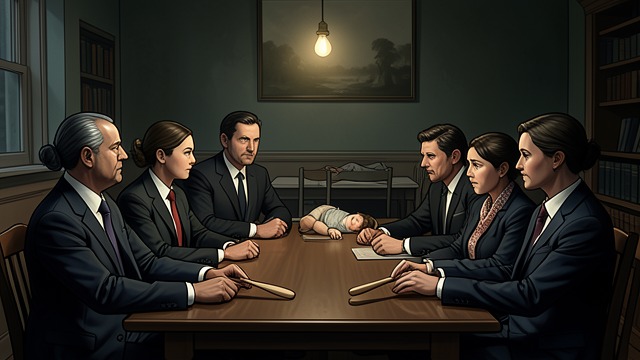
Benevolence and Power
A charitable surface
Sihtunum i Diasporan presents itself as a foundation intended to improve children’s living conditions. Its membership and donors include successful adults whose public standing can make the organization appear trustworthy and respectable.
As Jeanette follows the connections among the foundation’s members, she finds a different pattern beneath the charitable language: influential people meet, exchange favors, and appear alongside allegations of child exploitation that have repeatedly failed to reach court.
The cost of respectable silence
The contrast does not prove that every person connected to a foundation is guilty. Instead, it shows how charitable purpose can create moral cover, making scrutiny seem improper and turning victims’ accounts into threats to reputations rather than grounds for investigation.
The foundation’s significance lies in the social architecture it reveals. A network does not need to announce its crimes to protect its members; shared status, institutional access, and repeated acts of omission may be enough to keep vulnerable children unrecognized.
Restoring Names, Not Equality
Recognition After the Crime
From unknown bodies to named brothers
DNA and cross-border police work connect the boys found in Stockholm to Itkul and Karakul Zumbayev, two missing brothers from Ukraine. Their names restore a family relationship and a history that the first stages of the investigation could not recover.
That identification matters because it refutes the notion that these children simply appeared without anyone to miss them. They belonged to a world beyond Stockholm, with parents and a past, even if geography and legal invisibility had kept that world out of the case file.
What justice cannot equalize
The investigation also exposes extensive evidence of other children who were abused or killed, while the perpetrators and intermediaries have often escaped legal judgment or died before they could be tried. The recovered names make the scale of violence more visible without making its victims interchangeable.
The ending refuses the easy claim that discovery means justice. The dead are acknowledged more fully, and the network becomes legible, but the years of indifference and unequal protection cannot be undone. Recognition is necessary; it is not restitution.
Early in the story, after the first body is discovered at Thorildsplan
From the spring murders to Per-Ola Silfverberg’s autumn case
Across the earlier abuse cases and the investigation into trafficking
As the investigation connects Sihtunum i Diasporan to the abuse cases
Late in the story, when the brothers’ identities and the wider evidence emerge
