Annette Lundström
Crow GirlAnnette Lundström is at once a witness to a hidden history and one of its damaged survivors. Her childhood connects Sigtuna College’s humiliating initiation culture with the Psalms of the Lamb, a sect in Polcirkeln whose reported abuse was never proved in a police investigation. In the present, she becomes profoundly psychotic; her confused accounts of Karl Lundström, Viggo Dürer, Linnea Lundström, and a promised return to Polcirkeln blur time and belief. Yet those accounts also help expose connections that conventional inquiry had failed to establish.
Identity and Background
Annette grew up in Polcirkeln, a real place in Lapland, and was Karl Lundström’s cousin. As a young woman she belonged to the Psalms of the Lamb, a breakaway group from the Laestadian movement. The sect’s name and its remote setting become important when her later speech turns toward a return to the place where she grew up. Her personal history is therefore entangled with a collective past that had been allowed to disappear from public view.
Another part of that past belongs to Sigtuna College. Annette and Henrietta Dürer had been in the same class, and both had taken part in the school’s masked culture. Annette recalls Henrietta wearing a pig mask and joining in the grunting and laughter; she also recognizes that Henrietta later married Viggo Dürer. The school’s rituals thus connect Annette not only to her own youth but to people whose adult relationships and actions matter to the investigation.
The account of an initiation ceremony further complicates Annette’s place in that history. She tells Jeanette Kihlberg that, during the first week of a school year, Fredrika Grünewald and her followers selected three girls for a degrading initiation. The group wore dark capes and homemade pig masks, took the girls to a tool shed, and poured ice-cold water over them. Annette’s account presents the ceremony as an episode of girls goading one another into conduct they might not otherwise have chosen. But a later film changes the emphasis: Annette is identified among the masked girls, and her brief unmasked appearance shows her looking sick. The evidence places her within the scene without simplifying her into either an uncomplicated aggressor or an uninvolved observer.
The Sect and Its Buried History
The history of the Psalms of the Lamb was already difficult to recover before Annette began speaking about it. A report to the police alleged child sexual abuse by members of the movement and named Annette and Karl, as well as their parents. Because the complaint was anonymous and investigators could prove nothing, the inquiry was dropped. The sect later dissolved, and the matter was forgotten rather than resolved.
The ages attached to the report underline the imbalance within the group: Annette was thirteen, Karl was nineteen, and their parents were in their fifties. The investigation does not supply a judicial finding, and the allegations must remain allegations. But its failure left no public account capable of distinguishing what had happened from what powerful or connected people wished to keep hidden. Years later, Annette’s fragmented memories reopen the question without making her psychosis a substitute for proof.
Her account also reaches beyond the sect. During a conversation with Jens Hurtig, Annette speaks favorably of a foundation associated with Viggo Dürer, Karl, and Bengt Bergman. She describes adopted children settling well in Sweden and an overseas project helping poor people. Hurtig recognizes the organization as Sihtunum i Diasporan, but he cannot yet tell how much of her account reflects verifiable events and how much belongs to her illness. The contrast is consequential: Annette presents benevolence as part of the same world in which the police had received reports of abuse and the past had been allowed to close over them.
Psychosis, Memory, and the Return to Polcirkeln
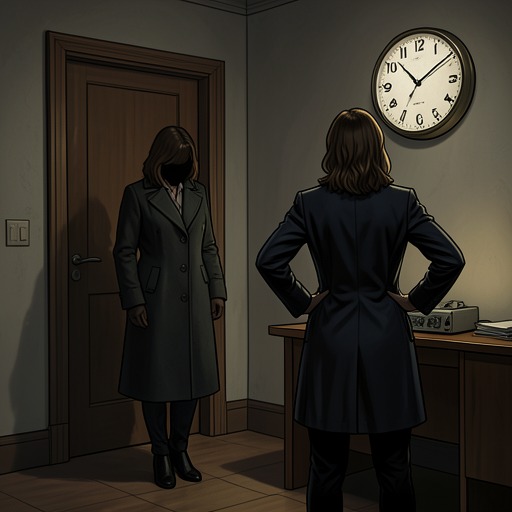
By the time Sofia Zetterlund encounters Annette, she is behaving in ways that signal a severe break with her former self. Annette is dressed lightly and wearing slippers, and her speech is faint and difficult to understand. When she says she intends to move back to Polcirkeln, Sofia takes her ice-cold hand and offers to get her coffee. The ordinary gesture of care sits beside the urgency of Annette’s declaration: the past is no longer simply something she remembers but somewhere she believes she must go.
Annette’s references to Karl, Viggo, and Linnea intensify this collapse of past and present. She says she must first go to Polcirkeln, to Karl and Viggo, and then go home to God and Linnea. She also says Viggo gave her money and told her that Linnea no longer needed to see psychologists, so that Linnea could go home to God. Annette treats the payment and its stated purpose as kindness. Sofia instead hears a possible confession within the psychosis: the account seems to make sense when set against the history she is uncovering. The novel preserves the distinction between an interpretation and a verified fact, while showing why Annette’s words cannot simply be dismissed.
The place Annette calls the Home of Shadows is at once spiritual doctrine and geography. She describes it as an original country belonging to children and to adults who understand an ancient way of life. She locates it among the faithful, on sacred ground in Jutland and in the forests around Polcirkeln. Sofia recognizes the disturbing implication in adults creating a supposed country for children according to adult desire. Annette’s language may be delusional, but its images gather together the sect’s beliefs, childhood, and the return to a place where the old order can supposedly be restored.
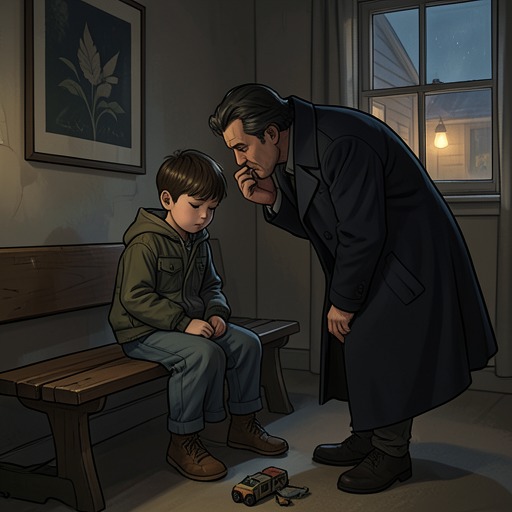
Sofia later learns that Linnea has hanged herself at home while Annette watched television in the living room. The news gives Annette’s earlier speech an immediate and devastating context: the daughter she had placed within her imagined return has died, while Annette was physically present but unaware. Sofia remembers Linnea as a young woman who had wanted to talk and feel better, and she grieves the loss of the progress they had made in their sessions. Annette’s psychosis does not erase the consequence of that death; it leaves her unable to meet it as an ordinary, shared reality.
Evidence and Investigation
Annette’s words acquire a different weight as Jeanette and Hurtig compare them with other evidence. Jeanette first finds her name in the class registers for students who attended Sigtuna College at the same time as Fredrika Grünewald. Later, Annette’s account of the initiation gives Jeanette a recorded recollection of what happened at the school. In the film, Jeanette recognizes Annette among the masked girls, making the remembered episode and the surviving image converge while preserving the ambiguity of Annette’s part in it.
Hurtig’s interview adds another layer. He sees Annette at Rosenlund Hospital, where her face is sunken and her body frail; she says she does not want to remain there and wants to be with Linnea, Karl, and Viggo, where everything can be as it was. When he speaks about Viggo helping poor children and finding adoptive families, Annette confirms the benevolent version of his work and recalls Sofia having spoken with her before. Hurtig takes notes because, despite Annette’s confusion about time and space, recurring names and relationships form a pattern. Her statements corroborate much of what Sofia had already told Jeanette, but the investigators still have to separate recollection, belief, and independently supportable fact.
That distinction is central to Annette’s narrative role. She is not presented as a dependable, orderly expositor of the past: her accounts are fractured, and her illness shapes what she can say. Yet the investigation repeatedly returns to details she supplies—the school, the sect, Polcirkeln, the family ties, and Viggo’s connections. Her speech functions less as a complete confession than as a damaged route into a history that had been left unexamined.
Isolation and Significance
Annette’s wish to return to Polcirkeln is also a wish to return to a world in which the dead and the living can occupy the same place. In the hospital she wants to be with Linnea, Karl, and Viggo and to recover the way things used to be. The wish turns the past into shelter, but the same past contains the school’s masked humiliations, the sect’s unresolved allegations, and the relationships now being investigated. Her imagined home offers reunion by refusing the separations that reality has imposed.
By the end, Annette stands as the sole survivor among the people caught up in the chain of events Jeanette and Hurtig are investigating. That survival is not presented as freedom or recovery. Linnea is dead, the sect has dissolved, and Annette remains hospitalized, with the people she longs to join present to her through psychosis rather than ordinary contact. Her position makes her both a remaining witness and a figure of the damage left behind when violence and complicity are buried instead of confronted.
Annette’s story therefore holds two forms of truth in tension. Her psychosis makes her testimony unstable, demanding caution from investigators and readers; at the same time, the history she circles has concrete points of contact with school records, film, police reports, and other characters’ accounts. The novel does not grant her the authority of a clear, reliable narrator. Instead, it lets the repetition of names and places make her broken speech matter, showing how a suppressed past can return through a witness who cannot fully separate memory, longing, and delusion.