Birgitta Bergman
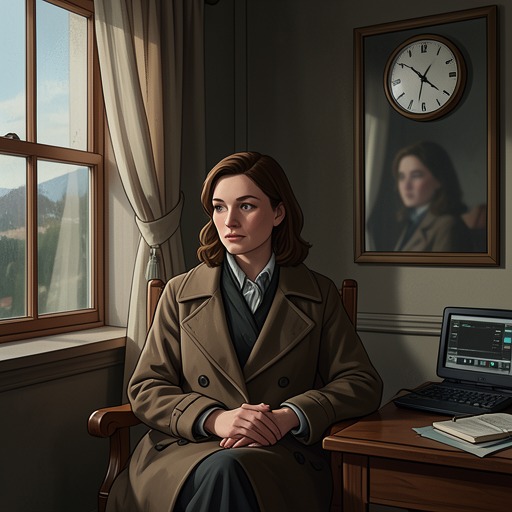
Crow GirlBirgitta Bergman, the mother of Victoria Bergman and wife of Bengt Bergman, is presented through a small number of consequential details: a daughter who stays awake to comfort her, a family history marked by conflict, and a death first reported as an assumption after a fire. Her place in the story is shaped by the tension between private family experience and the uncertain public account of what happened to the Bergmans.
Identity and Family
Birgitta is identified as Victoria’s mother and as one of the two parents later believed to have died in a fire. The report places the fire at their house in Värmdö and says that two bodies were found. At first, the identification is explicitly uncertain: the authorities believe the bodies are Birgitta and Bengt’s and proceed on that assumption. A later account states that both parents died in the fire, giving the earlier report a firmer outcome while preserving the distinction between initial uncertainty and subsequent confirmation.
Relationship with Victoria
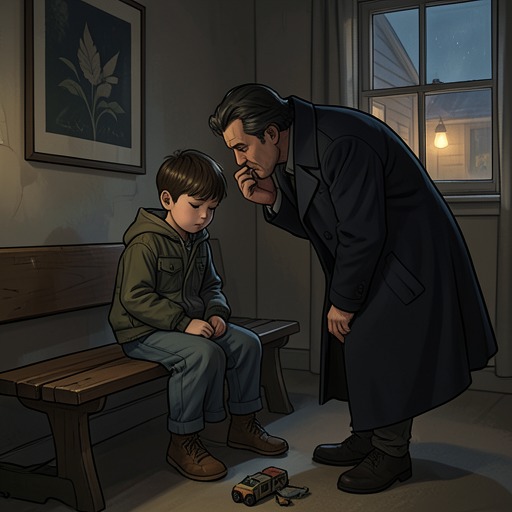
One remembered image gives the relationship an unusual emotional balance. Birgitta does not hit back; instead, she cries and curls up beside Victoria, seeking comfort. Victoria, in turn, tries to help and remains awake until her mother falls asleep. In this moment, the child takes on a watchful, consoling role, while Birgitta appears as the one needing reassurance. The detail does not resolve the wider conflict between them, but it shows that their relationship includes vulnerability and care as well as tension.
The reference to Birgitta not hitting back also establishes conflict without specifying its full circumstances. It would be unwarranted to infer from this detail alone how the conflict began or how often it occurred. What the account does make clear is that Victoria’s response is to stay with her mother and attend to her distress, rather than to leave her alone.
Disappearance and Death
A later discussion connects Birgitta and Bengt’s deaths with the gap in Victoria’s history. Victoria is said to have ceased to exist in the available record after November 1988, while her parents are described as having died more recently in a fire. The two pieces of information belong to different points in the chronology: Victoria’s record falls silent decades earlier, whereas the fire accounts for the parents’ later deaths. The available details do not explain what happened to the family between those points.
The circumstances of the fire are initially conveyed indirectly. A speaker says that two people died in what appeared to be an accident while having a sauna at a property in Värmdö. This account corresponds to the report about the parents’ house fire, but the first notification to the family still treats the bodies’ identities as an assumption. That progression—from apparent accident, to presumed identification, to a later statement that Birgitta and Bengt died—makes the fire a point where official knowledge and family history meet.
Narrative Significance
Birgitta’s limited but distinct presence rests on contrasts. In the remembered family scene, she is emotionally dependent on her daughter; in the later report, she is reduced to one of two presumed victims of a fire. The gap between those views reflects how personal relationships can remain vivid even when the public record offers only disappearance, death, and an uncertain identification. Her story also forms part of the unresolved background to Victoria’s absence: the parents’ deaths are established, but the supplied accounts do not explain the intervening history or settle every question surrounding Victoria’s disappearance.