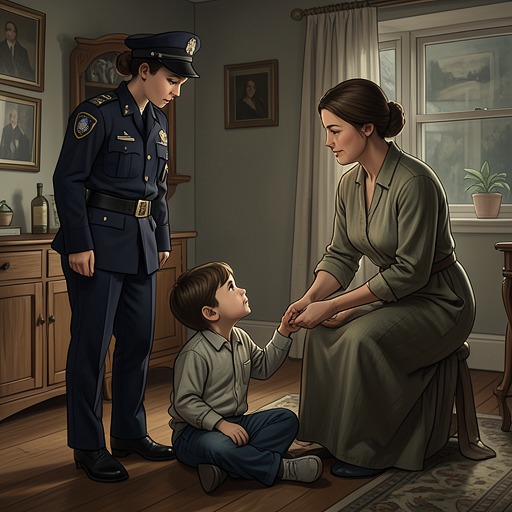
Karolinska Hospital
Crow GirlKarolinska Hospital is both a place of urgent care and a point where the investigation’s personal and criminal consequences converge. Johan Kihlberg is brought there in critical condition after being found near the old windmill at Waldemarsudde; his mother, Jeanette Kihlberg, keeps vigil as his condition improves. The hospital also becomes the setting for Jeanette’s meeting with Sofia Zetterlund and for the final developments surrounding Karl Lundström, whose death removes a crucial lead from the murder investigation.
Setting and medical role
The hospital is identified in the narrative as being in Solna, north of central Stockholm. Its intensive care unit receives Johan after an exceptionally cold late-summer night outdoors. Paramedics initially think he may be dead: his breathing and heartbeat are barely detectable, and his body temperature is dangerously low. He has vomited several times, prompting concern that gastric acid may have entered his lungs and affected his breathing.
Just after ten o’clock, Jeanette climbs into the ambulance carrying her son to intensive care. At his bedside, the hospital’s equipment makes the precariousness of his condition visible. Artificial lights from a heart-lung machine pulse across the bed, while Jeanette watches the monitor and strokes the back of his hand. His temperature is approaching normal, but the room’s medical apparatus and the dreamlike quality of the scene preserve the sense that recovery is not yet assured.
Johan’s treatment and Jeanette’s vigil
Jeanette remains at Johan’s bedside as the immediate danger passes. The doctors eventually give an unequivocally positive assessment: he is alive and expected to make a full recovery. His face regains some colour, his temperature rises toward normal, and his eyes begin moving beneath his closed eyelids as he starts to come round. The progression from almost imperceptible breathing and heartbeat to these small signs of returning consciousness gives the hospital scenes their central movement: a crisis becomes a guarded, then confident, expectation of recovery.
The vigil does not remove Jeanette from her work. She knows that, as a police officer and a woman in a demanding professional environment, taking time away could later be used against her. After leaving Johan’s room, she goes toward the cafeteria by the main entrance. The bustle of people there—smiling and moving through ordinary life—makes her aware of the contrast between the public hospital and the private intensity of the bedside. She also recognizes that she needs a brief respite. The hospital therefore holds together her roles as a mother under strain and an officer who feels unable simply to set work aside.
Encounters at the hospital
During a storm, Sofia comes into Johan’s room to see Jeanette and her son. Rain beats against the windows, and lightning intermittently illuminates the room. Jeanette is pleased to see Sofia, although she notices something unfamiliar in Sofia’s expression. Their exchange is affectionate and unguarded: Sofia looks anxiously toward Johan, Jeanette touches her back, and they embrace. Jeanette gives her the good prognosis, describing Johan’s return toward consciousness and the improvement in his appearance. Sofia relaxes in response. The visit briefly allows Jeanette to be with someone outside her workplace hierarchy, rather than having to act as a supervisor.
The hospital also contains Karl Lundström’s room. A woman enters it quietly, checks that he is alone, and reads the medical chart identifying him. Medical equipment surrounds the bed: two drip stands connect to his neck, tubes run from his nostrils and mouth, and a respirator is audible. His eyes move beneath closed lids, leaving open whether he is aware of the visitor. She takes a small syringe from her bag and goes to the drips, whose labels identify morphine and nutrition. The scene establishes the vulnerability of Karl’s condition and the possibility of an intrusion into his care, without clarifying what the woman intends or what the syringe will be used for.
Death and investigative consequence
Karl’s hospitalization ends with news of his death. In a car outside the house, Jens Hurtig tells Jeanette that Mikkelsen called that morning: Lundström died during the previous night. Hurtig gives her the news before she can encounter it in the evening papers. Jeanette slumps as the rain drums on the windscreen, recognizing that the only lead she had in the search for the person responsible for the dead boys is gone. Her attention turns at once to getting Johan inside. The hospital’s two strands of care and investigation thus meet in the aftermath: Johan is returning from a life-threatening crisis, while Karl’s death closes off a route toward answers and leaves Jeanette’s inquiry more difficult.