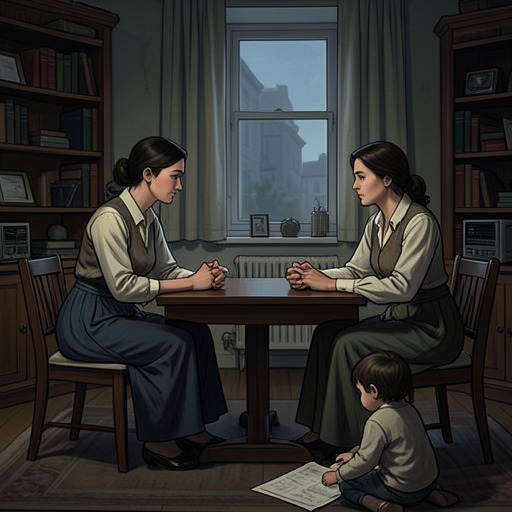
Let the memory emerge naturally; don’t force recall
Crow Girl“Let the memory emerge naturally; don’t force recall” is a rule about how memory can be approached without being seized or directed. It offers an alternative to deliberate retrieval: relax, allow recollection to arrive on its own, and resist the effort to make fragments yield an answer. Repeated alongside the image of a slippery bar of soap, the rule becomes especially significant as the narrator tries to distinguish remembered experience from the static records that have helped her understand her past.
The rule and its image
The clearest formulation begins with a distinction between effort and readiness. The memories should come naturally, the narrator thinks, when she is not making an effort; she compares this to holding a slippery bar of soap, which can be held if the grip is relaxed but is lost if squeezed too tightly. The image makes the instruction concrete: grasping harder does not secure the memory. It may instead make it slip away. The rule therefore does not promise that recollection can be commanded, nor does it prescribe forgetting. It asks for a less forceful attention, one that leaves room for an experience to surface without forcing it into a planned shape.
The comparison also gives the rule a practical rhythm. First comes recognition that effort can be counterproductive; then a brief command to relax; then the reminder not to try to remember, but to let the process happen. The same formulation returns later, again beside the soap image. This repetition makes the instruction more than an isolated thought: the narrator must remind herself of it, as though the impulse to grip the past too tightly keeps returning. The words recur, but their meaning depends on a changed context. What had been a way to let memories arrive becomes part of a larger effort to decide how to live with the record of a life.
Memory against the archive
That larger context appears when the narrator recognizes that the notes, newspaper cuttings, and concealed room at home have become reminders of the lies that helped her survive. She anticipates burning the notes and cuttings, removing the room’s walls, and getting rid of what is inside. The proposed destruction is not presented as proof that the past can simply be erased. Rather, it marks her awareness that the documents have come to govern her movement through the present: at home, she can hardly move without being reminded of them.
Against this accumulation of evidence, the rule identifies another route to knowledge. She needs to learn to remember properly, she thinks, and not to look for answers in static documents. The contrast is not between truth and falsehood in any simple sense; the documents have helped sustain her, but they cannot substitute for her own emerging memories. Her instruction to let recollection happen gives this difference a method. Instead of treating the archive as an answer that can be read and controlled, she attempts to make room for a less deliberate, less certain recovery. The passage does not claim that this method resolves the past. It shows her choosing to approach it differently.
The divided self and the danger of disappearance
The rule also operates amid the narrator’s effort to hold together different aspects of identity. She tells herself, “Let Victoria act,” but adds, “try not to disappear.” The balance is deliberately unstable: Victoria is allowed to act, yet the speaker recognizes a danger in yielding so completely that she herself vanishes. The sentence places the problem of memory beside the problem of agency. Allowing one part of the self to emerge is not the same as surrendering all control or abandoning the person who is doing the remembering.
This qualification keeps the rule from becoming a simple celebration of spontaneity. Letting memory arrive may open access to what deliberate searching cannot reach, but the narrator is also alert to the possibility of losing her present position in the process. The soap image and the warning not to disappear work in parallel: both resist an all-or-nothing grip. One cautions against squeezing memory until it slips away; the other cautions against giving way so completely that the self who must live with the memory is lost. The rule thus names a precarious practice rather than a guaranteed cure.
A changed focus
The later passage puts the practice to work through a change of attention. The narrator takes a notepad from her study and a bottle of French Merlot from a glass-fronted cabinet. Unable to find the corkscrew, she pushes the cork in with her thumb. She plans to concentrate that night on her daughter, writing down her thoughts and trying to get to know her; the next day, Sofia is to return to work on the perpetrator profile. These concrete plans place private recollection beside an ongoing professional task, without suggesting that either has been completed.
In this setting, letting memory emerge naturally is not merely an instruction to recover buried facts. It accompanies an attempt to turn toward her daughter rather than continue searching only through the materials of the past. The repeated reminder remains necessary, and the future work remains unfinished. Its significance lies in the modest change it proposes: memory cannot be forced into certainty, but attention can be redirected, and the self can try to remain present as what has been divided begins to act.