Sofia Zetterlund
Crow GirlSofia Zetterlund is defined by the unstable boundary between her present identity and the life of Victoria Bergman. She recognizes Bengt Bergman as her father and understands herself not as wholly one person or the other, but as someone whose identity includes both. That recognition makes the division more than a concealed biography: it is an active condition of her inner life, shaping what she can remember, what she fears others will see, and how she inhabits her own home.
Identity and the divided self
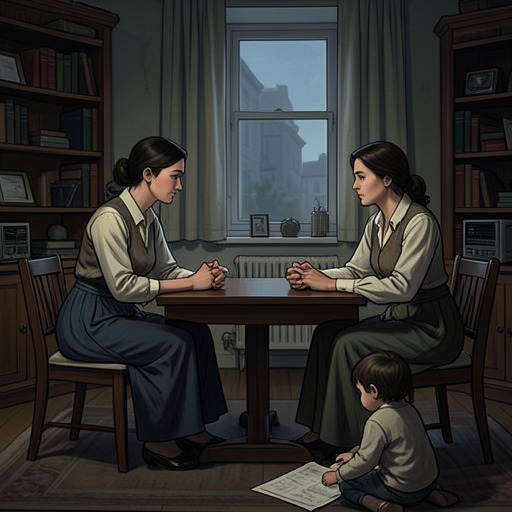
Sofia’s sense of identity does not arrive as a settled revelation that resolves the past. Her awareness of Victoria instead describes a self in which distinct histories and points of view coexist. The thought that she is Victoria as well as Sofia places their connection inside her own understanding, while the image of Victoria moving through Sofia’s home makes that connection feel present in an intimate, private space. Victoria is described as everywhere and nowhere there: not simply absent, but not available as a separate person whose presence could be clearly located.
The account keeps this recognition complicated. Sofia can name her father as Bengt Bergman, and she can acknowledge Victoria within herself, but neither fact erases the distance between the identities. Her statement of shared identity suggests recognition without complete integration. Victoria’s closing of her eyes marks a pause in this sequence, but the evidence does not explain what she sees or decides in that moment. The scene therefore preserves a meaningful uncertainty: the two identities are bound together, yet the experience of that bond remains difficult to contain in a single, stable self.
Memory and the return of the past
Sofia experiences substantial gaps in memory, described as black holes around which she drifts in dreams and during long walks. These absences do not remain fixed. At times, they seem to widen in response to a smell or to the way another person looks at her. Other cues—the sound of wooden shoes on gravel, or the sight of someone’s back in the street—can bring images back into view. The past returns through ordinary details, but not as a continuous, orderly account that Sofia can summon at will.
The varied triggers give her memory a fragmentary rhythm. Dreams and walking form part of the circumstances in which she passes near the gaps; a smell, a particular gaze, a sound, or a fleeting view can alter their force. The remembered images are described as recreated, emphasizing that recollection is not presented as a transparent record. At certain moments, a whirlwind passes through what Sofia calls her sense of self. That image links the instability of memory to the instability of identity: what returns can unsettle the distinction between the person living in the present and the person associated with the buried past.
Encounters and the effort to contain what is known
Sofia’s private recognition of Victoria sits in tension with her concern about Jeanette Kihlberg. She thinks of the possibility of another time and place, then resolves to keep her darkness from Jeanette when they meet. Her wish that Jeanette never encounter Victoria shows that the division is not only an inward experience; Sofia also tries to manage what becomes visible in a relationship. The evidence establishes this intention, though it does not establish how consistently she can maintain the separation.
Her professional encounters show another dimension of how she meets people. In her office at Mariatorget, Samuel Bai initially appears reserved and uninterested. When Sofia proposes speaking Krio rather than English, he becomes more communicative. The change follows a specific adjustment in how they speak, showing Sofia responding to the conditions of an encounter instead of treating his initial reserve as the whole of his character. The moment demonstrates a practical sensitivity to language and rapport; it does not, on its own, reveal what Samuel later shares or how their relationship develops.
A later office scene presents a different connection. When Linnea Lundström arrives, Sofia is surprised by how quickly Linnea has come to trust her. That surprise matters because it registers trust as something emerging between them, rather than as an assumption Sofia takes for granted. Together, the encounters with Samuel and Linnea locate Sofia in a role involving close personal attention, while the scenes provide only particular moments of communication and trust, not a complete account of either relationship.
Narrative role and significance
Sofia’s characterization is built through a contrast between what she can state and what memory leaves inaccessible. She can identify Bengt Bergman as her father and acknowledge Victoria as part of herself, yet recollection still arrives through gaps, dreams, walks, and sensory cues. The reader is therefore given a clear fact of identity alongside an unsettled account of how that identity is lived. This contrast prevents the revelation from functioning as a simple solution: knowing the connection does not make the separated histories easy to retrieve or hold together.
Her efforts to conceal her darkness from Jeanette sharpen that tension. Sofia’s wish to keep Jeanette from meeting Victoria suggests an effort to protect the relationship from an aspect of herself she fears exposing, even as Victoria is already present within her inner world. Meanwhile, her attentive exchanges with Samuel and Linnea show that she can respond to other people with care and adapt her approach to the person before her. The evidence holds these modes together without reducing one to the other: Sofia is both someone navigating a fractured sense of self and someone capable of forming moments of trust. Her defining significance lies in that unresolved coexistence of inward division, incomplete memory, professional attention, and guarded intimacy.