Victoria’s concealed archive
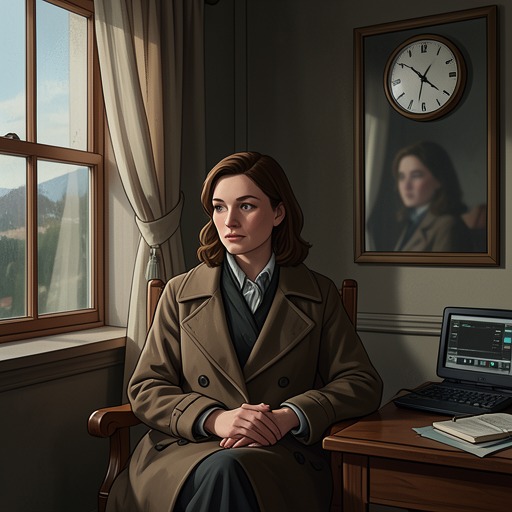
Crow GirlVictoria’s concealed archive is a cache of notes, newspaper clippings, articles, and scraps kept in the hidden room of Sofia Zetterlund’s apartment. Its importance lies in its double role: it preserves material Sofia has used to investigate and interpret violence, but its sheer presence also binds her home to the lies through which she has survived. As she begins dismantling it, the archive changes from a source of answers into an obstacle to remembering herself.
Form and Location
The archive is not a single file or orderly collection. It consists of papers accumulated around the concealed room: notes, newspaper articles, scraps, and marked-up reading material. Sofia imagines burning the notes and clippings, pulling the room’s walls apart, and disposing of everything within. The task is physical as well as symbolic; the papers have become so pervasive that she feels she can hardly move at home without encountering reminders of the deceptions that kept her alive.
The collection also spills beyond the hidden room. When Sofia arranges to meet Jeanette Kihlberg, she considers keeping the evening away from her apartment because it remains festooned with Victoria’s notes, articles, and scraps of paper. She recognizes that the place cannot yet serve as a neutral private setting: the archive occupies it, and its presence would expose the unresolved history she is trying to contain. Her intention to clear it is therefore practical as well as personal.
A Record Used to Interpret Violence
The papers offer Sofia a documentary route into questions she cannot yet settle through memory. At one point she puts aside drawings of Solace Manuti and recognizes that the archive must eventually be burned. She also concludes that she needs to learn to remember properly, rather than continue looking for answers in static documents. The contrast is decisive: the material has helped her collect evidence and construct explanations, but reading more cannot substitute for recovering experience as her own.
Even after reaching that conclusion, Sofia continues to use written material. During a later period of intense concentration, two bin bags full of paper stand behind the kitchen door as she clears the concealed room, while more papers remain on the kitchen table. Among them is an article about Andrei Chikatilo, its pages marked by folded corners. The article gives her a way to consider how a second ego might form and how one part of a divided self could act without the terror felt by another. She connects that account to her questions about the serial killer’s libido and whether studying extreme cases might help her understand her own.
The archive thus records not only what Sofia has collected but how she reads it: selecting pages, returning to marked passages, and drawing connections between psychological division, sexuality, and violence. The papers are evidence, but they are also an interpretive framework. Their limitation becomes visible in the very moment she turns to them for insight: they can describe another person’s divided self, but they cannot by themselves restore her own memories.
The Gein Clipping and the Red Annotation
A second article on the kitchen table concerns Ed Gein. Sofia has stapled it to a picture of a snake swallowing an ostrich egg, described as the largest single cell in the world. The pairing brings together a report about the objects found in Gein’s home and an image of swallowing and containment. The article recounts that Gein’s house looked like an exhibition space and lists human remains fashioned into domestic objects: skulls made into bowls and bed frames, skin made into seats and masks, a belt of women’s nipples, and a face-skin lampshade. The clipping’s details make the home itself part of the horror: a place where violence has been converted into display and ordinary furnishings.
Sofia’s red-pen note beside an account of an interrogation condenses her reading into a phrase: “THE REPTILE CHANGES ITS SKIN.” The surrounding annotations extend the thought to transformations between male and female and to blurred gender identity and sexual belonging. In this context, the archive is not a neutral store of reports. Its clippings are physically joined to images, and its margins carry Sofia’s attempts to make a theory from what she reads. The snake image and the marked words turn the papers into a record of her own questions, not just a record of other people’s crimes.
Clearing the Room, Keeping the Past
Sofia’s decision to destroy the archive does not mean that she has finished investigating or reached a settled understanding. She has started clearing the concealed room, but the work remains incomplete: the bin bags are ready, while papers still cover the kitchen table. She continues to consult them even as she plans to burn the collection. This unfinished state makes the archive’s function unstable. It is simultaneously something she depends on, something that crowds her living space, and something she believes she must remove to become clean and free of her background.
The tension is sharpened by Sofia’s recognition that memory cannot be repaired by accumulating documents. She wants the past to become accessible without forcing it into a static record, yet she also fears losing herself as Victoria acts. The archive stands between those dangers: it preserves traces of the identity and history she is trying to leave behind, while its destruction threatens to remove the material through which she has been trying to understand them. Its papers are therefore neither a simple key to the past nor merely clutter. They embody the conflict between documentary certainty and personal recollection, and between the wish to escape an inherited history and the need to remember it.