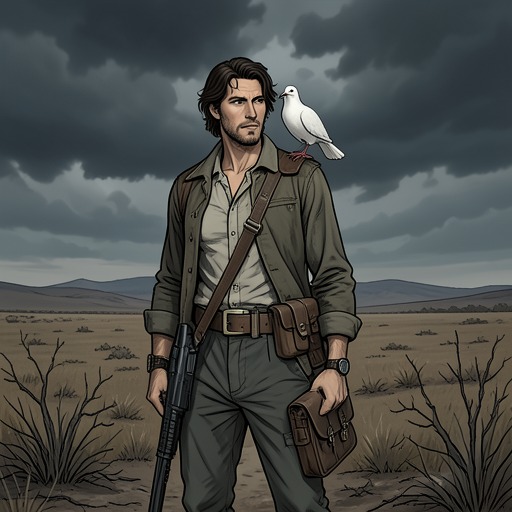
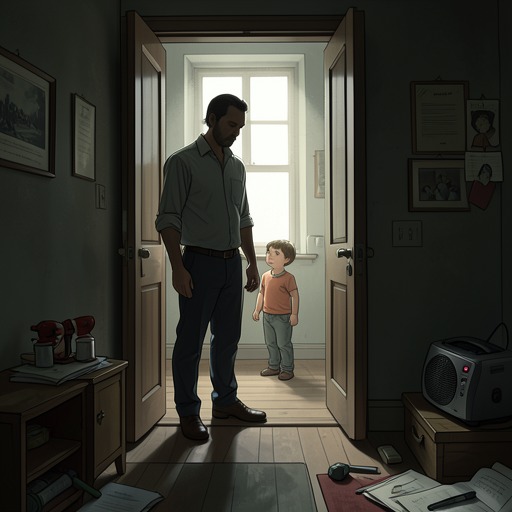
“Compared to never, sometimes was a long time.”
Cry Macho“Compared to never, sometimes was a long time.” is the thought that enables Mike Milo to turn back toward Janasco. The phrase does not promise that love, companionship, or happiness will last; it changes the measure by which he judges them. Against the prospect of inevitable loss, even a limited time of connection becomes worth choosing, and the journey back acquires hope without a guarantee of permanence.
The phrase at the turning point
The words arrive as Mike considers whether to return to Janasco. Texas has not changed in his absence, and it offers no reunion with Donna, Rachel, Cissy, or Laurie, no arena in which to ride, and no escape from his earlier failures. Janasco, by contrast, represents a possible life with Rafo, Marta, and the mustangs. But possibility is not security: Mike imagines Rafo growing up and no longer needing him, a marriage to Marta whose sweetness might not endure, and the eventual deaths of the horses. Even if he reaches peace with Porfirio, the Janasco mesa could become a lonely reminder of the mustangs’ former wildness.
That inventory makes the phrase a response to an actual choice, not an abstract celebration of optimism. Mike can see the heartbreak that may accompany the life he wants before he has returned to it. The possible future contains affection and work, but also departures, aging, and loss. Janasco is desirable precisely as a place of living attachments, not as a refuge from change.
Loss, permanence, and fear
Mike’s reflection moves beyond his particular alternatives to recognize that loss cannot be avoided any more than death can. What has fallen away is his belief in permanence: the dream that love and life might be durable. He wonders whether holding on to that dream for so long made him fortunate or unfortunate, then acknowledges that it is gone. The phrase follows this recognition; it does not restore the illusion or substitute a new promise for it.
The distinction Mike draws between loss and the fear of loss sharpens the thought’s meaning. The tragedy may lie less in losing what matters than in fearing farewells, departures, and the memories that ache afterward. His reluctance to go to Janasco is therefore bound up with the knowledge that returning to it would someday mean leaving it. The phrase answers that anticipatory grief by refusing to make the possibility of an ending a reason to avoid beginning.
Choosing what can be temporary
Once Mike accepts that no alternative to loss exists, he sees that he has to go back: to Rafo, Marta, the horses, and the mesa, for as long as they last. He also allows for whatever love he can receive, even if only briefly, and whatever love he can give for as long as it is wanted. The limits matter. His decision does not treat other people’s affection as something owed to him, or imagine that his return can secure a permanent place in their lives.
The sentence “Compared to never, sometimes was a long time.” condenses this changed scale of value. Sometimes is not forever, but it is more than never; a temporary happiness is not rendered meaningless by its eventual end. In this sense the phrase is both modest and decisive. It relinquishes a lifetime guarantee while still making room for commitment: Mike can choose the time, care, and work that are available without demanding that they last eternally. His instruction to himself is to go back, not because heartbreak has ceased to be possible, but because fear need not decide in advance that love is not worth having.
Hope carried into the return
The thought is followed by movement. Mike turns and starts down into the ravine again, going south. His wound is still bleeding, though less than before; when he climbs out, the bleeding seems to have stopped, while the pain remains. The physical sequence does not erase his damage. Instead, it accompanies a change in how he faces it: he has had wounds of bone and flesh and wounds of the heart, and supposes that damage will recur, sometimes healing and sometimes not.
Mike describes the trip as having begun with damage and dread and now carrying damage again, but also hope. That contrast gives the phrase its narrative consequence: it does not make pain disappear, but lets him move toward a future he knows will be temporary. His final comparison extends the same understanding to both sides of experience. Like joy, pain too is temporary. The thought therefore names neither simple consolation nor certainty of a happy outcome; it is the acceptance that finite joy and unavoidable pain belong to the same life, and that the prospect of losing what matters need not prevent him from returning to it.