Cissy Brewer’s psychological disturbance and memory loss
Cry MachoCissy Brewer’s psychological disturbance and memory loss leave her without a dependable account of her own life, even as she builds moments of affection and recognition with Mike. Her past is not merely concealed from others: she cannot consistently remember it herself. The condition first appears through contradictory stories and her recollection of institutional care, then becomes visible in her uncertain recognition of people, places, and events. Her eventual reunion with Mike offers care and familiarity, but not a cure or a restored history.
Identity and Uncertain Background
Cissy appears at the Red Rio Bar about two weeks after Donna goes to Nevada for a divorce. She is young, blonde, smiling, and funny, with an air of sweetness that makes Mike like her. She works as a sex worker but sets terms for her company: she chooses whom she sees and is candid that affection does not make her work free. Her boundaries distinguish her from the men who resent being refused, while her reluctance to discuss her past makes her a mystery even to those around her.
Her biographical details contradict one another. At different times she says she came from Amarillo or Memphis; she claims both never to have married and to have been married twice. She speaks of two young twin daughters, describing them, and at another point says she is childless. These inconsistencies are more than evasions designed to keep others at a distance. Mike gradually understands that Cissy herself does not know which account is true. The narrative makes a crucial distinction between a person guarding a secret and a person unable to retrieve her own history.
Psychological Disturbance and Recovery
Mike infers that Cissy has experienced severe psychological disturbance and spent part of her life in a sanitarium. The account does not establish a precise diagnosis or explain what caused her condition. When he asks about her time there, she remembers treatments involving different kinds of water baths, injections, and repeated talking. She describes those interventions as unsuccessful in making her well; what she remembers most clearly is her own determination to recover.
Cissy takes pride in having made herself well without relying on medicines or the treatments she recalls. Her story gives her agency: she presents recovery not as something simply bestowed by an institution, but as work she carried out herself. Yet that recovery has a particular cost. She has made do without the past, and the people and events that might ordinarily anchor a life story remain unavailable to her. Mike sometimes envies the apparent simplicity with which she lives without a history, but the later scenes show that this absence is also a source of vulnerability.
Memory, Recognition, and Disappearance
Cissy’s difficulty with memory affects her ordinary relationships as well as her account of the past. She is poor at recognizing rancor and does not understand that Ewell Macmillan resents her rejection of him. After an attack at the stable, she can clearly remember only that Mike kept shouting for it to stop. At the trial, her limited recollection shapes the case: Ewell blames his friends, who have disappeared after jumping bail, and the penalties imposed on him and Mike are comparatively slight. Cissy then disappears from the people who had known her at the Red Rio Bar.
Reports about where she has gone are conflicting and often contemptuous. Mike does not accept the stories as proof that she deserves to be abandoned. He keeps looking for her because he believes she needs help and has little ability to travel far. He eventually finds her by chance at a disused hot-dog stand beside the highway, where Route 73 turns north. She has taken shelter in the boarded-up building and is living there out of sight. The discovery reveals the practical consequences of her isolation: without stable shelter or dependable support, her difficulty remembering and managing daily life leaves her exposed to serious neglect.
Mike’s Visits and Fragmented Recognition
Cissy does not recognize Mike immediately when he first comes to the stand. Over sporadic visits, she begins to recover pieces of who he is; sometimes she remembers his name, and only rarely does she recall the Red Rio Bar or things he told her there. Recognition is therefore neither wholly absent nor reliably restored. It comes in brief returns, leaving Mike unsure whether she will know him on a given visit.
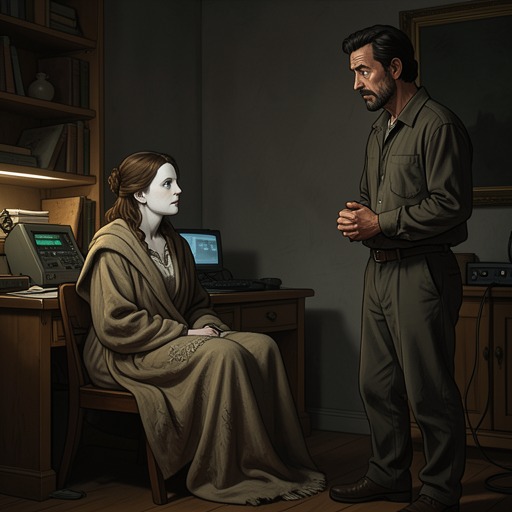
When Mike arrives late one night, he initially intends to leave groceries at the back door rather than wake her. He enters after she recognizes his name, but the dark, cluttered room makes it difficult for him to move around. A small gasoline lamp does not work until he lights it for her. In its weak light he sees the poor state of the dwelling, old food on the table, and a skin disorder that has developed on Cissy. The scene connects memory loss to material deprivation: her condition is not presented only as an inward struggle, but as part of a life in which even basic tasks and surroundings have become difficult to manage.
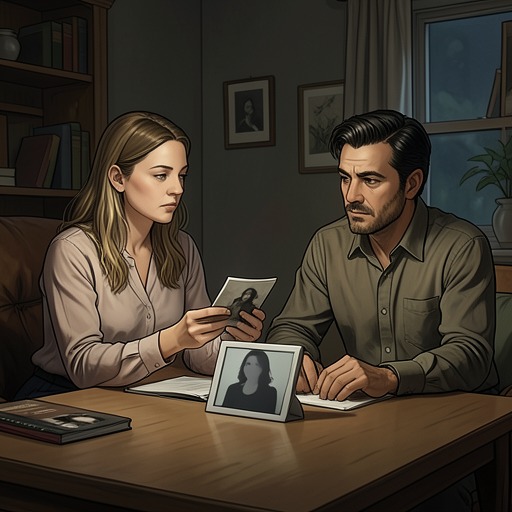
When Cissy recognizes Mike more fully, she asks after Donna and Laurie. She has never met Donna, and Laurie died before Mike knew Cissy; both names are familiar to her only because Mike has spoken of them. The episode shows that memory does not follow a simple rule of personal experience. Cissy can sometimes remember people she has never met more easily than people who have stood before her. Mike tells her that Donna and Laurie are fine, concealing Laurie’s death rather than forcing a painful fact into a moment when Cissy’s grasp of their shared past is uncertain.
Significance
Cissy’s condition complicates the idea that personal identity rests on a continuous, retrievable autobiography. She remains recognizable through her humor, warmth, pride, and attachment to Mike, although the details that would ordinarily explain her life come and go or contradict each other. Her claim that she made herself well coexists with the later evidence of severe precarity; recovery has not guaranteed lasting independence, secure housing, or a reliable memory.
Mike’s visits establish care through small acts rather than through any promise to restore her past. He searches for her, brings groceries, helps with the lamp, and responds gently when her recollection falters. Cissy’s moments of recognition matter precisely because they are incomplete: remembering Mike does not return her whole history, and forgetting him does not erase the affection between them. Her story thus holds self-reliance and dependence in tension, showing a person who once understood recovery as an achievement of her own will and who later needs another person’s patient presence to meet the conditions of the present.