Cry Macho · macho
Cry MachoCry Macho / macho is the novel’s contested ideal of masculine strength: a public performance of courage and command that can also conceal fear and sanction cruelty. Its meaning changes as Mike moves from celebrated rodeo star to a man whose conduct earns Rafo’s quiet admiration, then confronts the violence implicit in the word’s familiar arena rituals.
The advertised cowboy
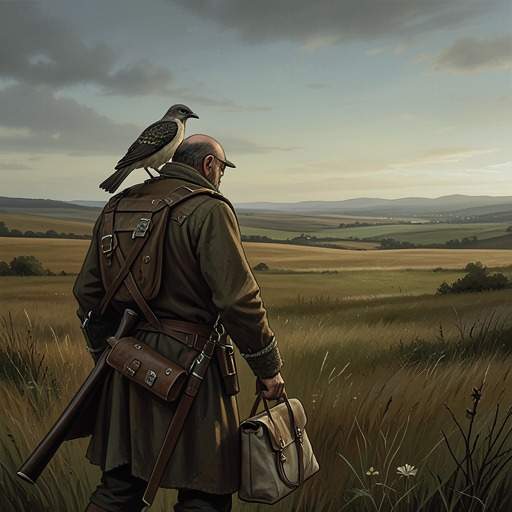
At Polk’s Cow Stadium, macho first appears as an image made for an audience. A huge banner directs attention toward a poster of Mike on a rearing bronc, his hat raised and his smile fixed in the manner of a cowboy spectacle. Mike has trained himself not to notice the photograph. It belongs to the year before he came to the stadium, a difficult final season of competition marked by injuries, little success, growing fear, sleepless nights, and bourbon. The poster’s confident pose therefore stands apart from the experience behind it: the public image promises mastery, while the history Mike would rather ignore includes vulnerability and exhaustion.
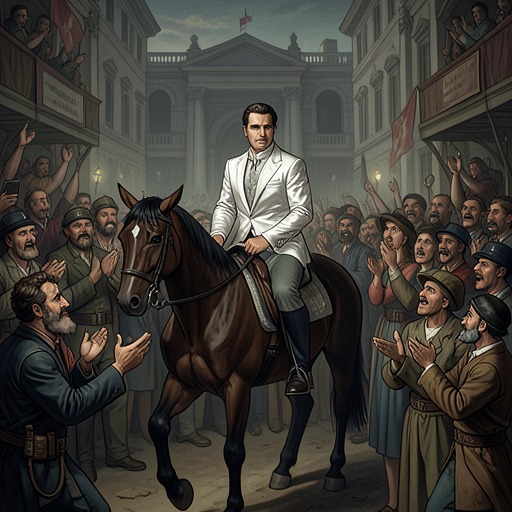
The arena’s announcement makes that heroic image explicit. Mike is introduced as the rodeo’s star, a winner of three National Finals, the Dallas Buckle for bareback riding, and nine Cattlemen Trophies. He then rides Tabasco in the Ride-Out, an event that continues until the rider is thrown or the horse goes quiet. Macho here is not merely a personality trait; it is a role staged before a crowd, attached to a decorated record and tested through physical command. The spectacle offers recognition to the rider, but it depends on an animal being made to resist and submit.
The stadium’s commercial presentation is complicated by Howard’s contempt for cowboy self-mythology. He insists that the salaried performers are actors rather than the cowboy heroes they imagine themselves to be, and compares the change from Texas rodeo to theatrical entertainment to exchanging spurred boots for dancing shoes. The men feel exposed by this description. In that setting, macho is both the language of heroic identity and an image the institution can advertise, while the work is organized as performance and employment. Mike’s poster gives the audience the legend; Howard’s criticism draws attention to the role beneath it.
A word Rafo gives Mike
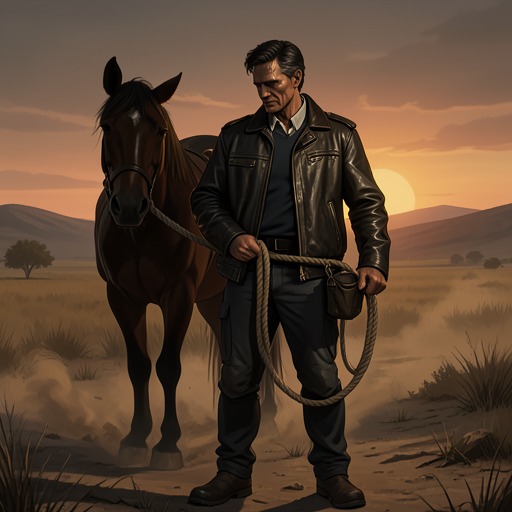
The word acquires a different force when Rafo sees Mike ride the white mustang. From the truck, Rafo watches Mike leap onto the running horse and hold on as it tries to throw its burden. Afterward, he sees the horse trotting and Mike sitting as though it were securely saddled and controlled. The episode recalls the arena’s familiar display of mastery, but its effect on Rafo is not simply admiration for a public champion. He feels pride in what he has witnessed and finds himself thinking of Mike as macho, a judgment he could not have made the day before.
Rafo keeps the word to himself. He knows the change in his own estimation does not mean Mike likes him, and he does not expect Mike to hear the compliment. He repeats it quietly, discovering that its quietness gives it depth for him. In this moment macho becomes relational rather than advertised: it is a name Rafo privately gives to a man he has begun to see differently. The shift matters because it arises from a shared journey and an observed action, not from Mike’s trophies or the stadium’s announcement. The ideal can register respect between two people, even while its meaning remains uncertain to the person being praised.
The arena’s other meaning
Mike’s first cockfight unsettles the admiration attached to macho. The spectators praise Rafo’s rooster for fighting bravely and call it macho; Mike hears the word applied to the victorious animal and finds that he loathes it. He has promised himself he will not watch another fight. The contrast is sharp: the crowd recognizes valor in the contest, while Mike cannot separate that praise from the death that concludes it. The same term that had signified courage now exposes how readily an audience can turn suffering into an occasion for applause.
Mike connects the cockfight to the broader arena culture he has known. Across Texas, Oklahoma, Arizona, and Mexico, he sees a recurring equation: one creature is set against another, and the contest is treated as proof of strength. He names the two sides of the ideal in his own thought as Macho the Hero and Macho the Cruel. The pairing is not a settled verdict on every act of courage; it is the contradiction he can no longer leave out. The word celebrates the winner, but the contest that makes the winner visible can depend on domination and injury.
Courage, grief, and contradiction
The cockfight turns Mike’s attention from the animal spectacle to his own rodeo career. He wonders whether riding down and dominating a horse had been a way to prove he was not a coward, just as a matador’s killing of a bull might enact a comparable claim. These are questions he asks himself rather than answers he reaches. He resists defining himself as cruel, yet considers whether cruelty may be bound up with loneliness, retaliation, or the desire to strike back at life. His reflection returns to Laurie’s death: he remembers that his grief once made him feel capable of killing, and considers whether the desire for revenge might be directed against death itself.
That interpretation does not excuse what happens in the arena. Mike fears that rage aimed at death is instead redirected toward other people and animals, turning arenas into places where cruelty is made grand and communal. His unease is sharpened by his own history: he has spent the first half of his life in such arenas and says he would willingly spend the last half there too. He grieves that nobody wants him anymore, yet does not consider himself entirely finished. He still intends to break wild horses to earn enough money to leave. The contradiction is essential to the expression’s meaning: Mike can recognize the harm bound up with macho and still feel drawn to the work and identity it has given him.
Significance
Across these episodes, macho moves among spectacle, interpersonal recognition, and moral accusation. The poster and announcer turn Mike into a marketable hero; Rafo’s silent use of the word marks a newly earned respect; the cockfight forces Mike to hear the cruelty within the same language of valor. The novel does not simply replace toughness with gentleness or resolve Mike’s attachment to arena life. Instead, it makes the heroic pose answerable to its costs, while leaving Mike’s own desire to return to the work intact. Cry Macho names both the appeal of defying fear and the danger of mistaking domination for courage.